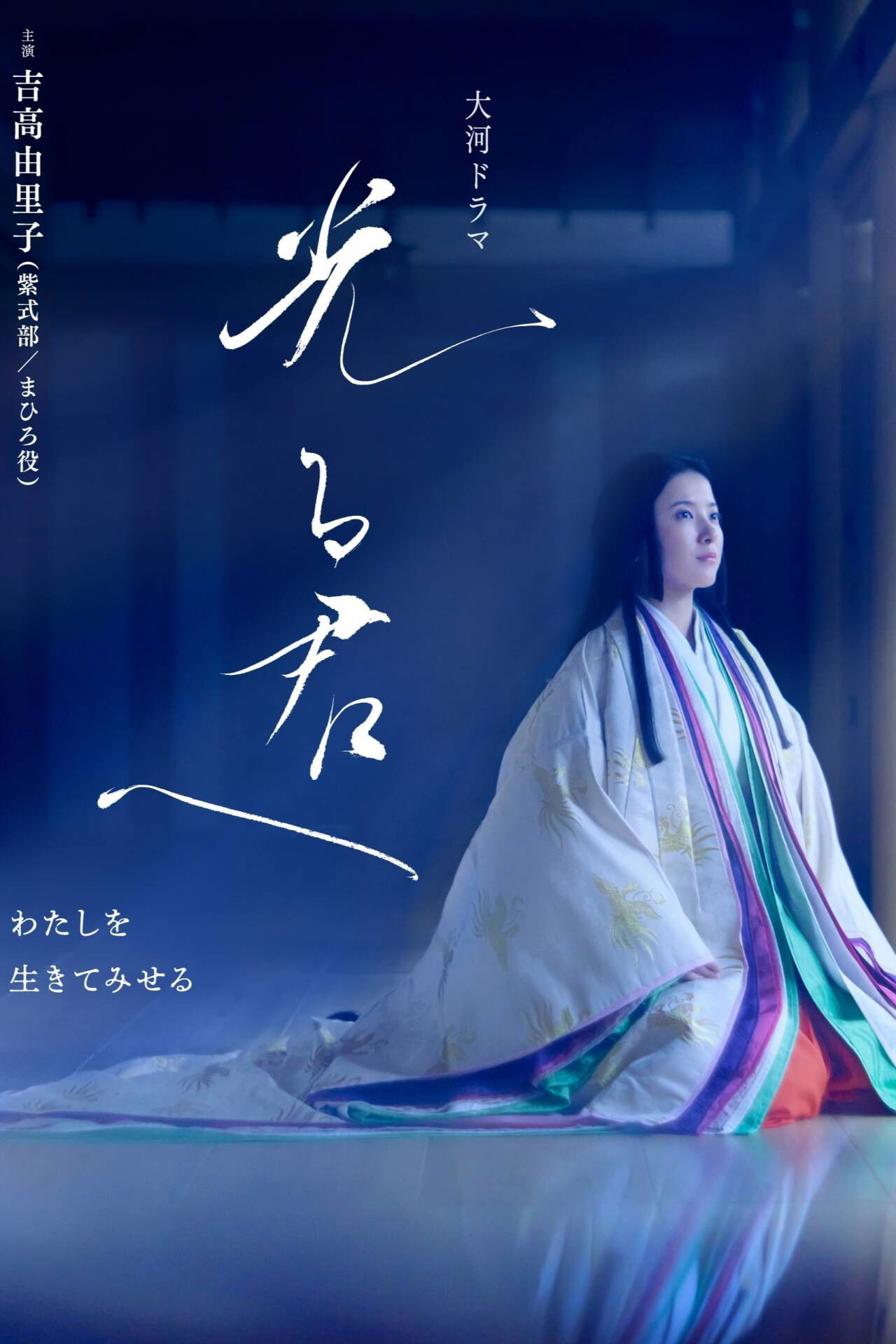
Dear Radiance (2024) character relationship network mapped with AI analysis. Explore the connections, alliances, and conflicts between characters.
Characters
Murasaki Shikibu | Mahiro
(played by Yuriko Yoshitaka) — protagonist
Central protagonist and historical author. In the series, she is referred to as Mahiro. Portrayed by Yuriko Yoshitaka as an adult and Miyuko Ochii as a child.
Fujiwara no Michinaga
(played by Tasuku Emoto) — protagonist
Prominent historical figure and member of the Fujiwara clan. His family dynamics and political influence are central to the narrative. Portrayed by Tasuku Emoto.
Fujiwara no Tametoki
(played by Goro Kishitani) — supporting
Mahiro's father. Portrayed by Gorō Kishitani.
Fujiwara no Nobunori
(played by Mahiro Takasugi) — supporting
Mahiro's brother. Portrayed by Mahiro Takasugi as an adult and Kōki Yuda as a child.
Sei Shōnagon
(played by First Summer Uika) — minor
Historical literary figure known as Kikyō in the series. Portrayed by First Summer Uika.
Minamoto no Akiko
(played by Kumi Takiuchi) — minor
Another wife of Michinaga. Portrayed by Kumi Takiuchi.
Fujiwara no Kaneie
(played by Yasunori Danta) — supporting
Michinaga's father. Portrayed by Yasunori Danta.
Sanjō Tennō
(played by Tatsunari Kimura) — cameo
Emperor Sanjō, the 67th emperor. Portrayed by Tatsunari Kimura.
Ichijō Tennō
(played by Akihisa Shiono) — cameo
Emperor Ichijō, the 66th emperor. Portrayed by Akihisa Shiono.
Fujiwara no Takaie
(played by Ryo Ryusei) — cameo
Second son of Michitaka. Portrayed by Ryo Ryusei.
Canonical Relationships
Family, romantic, and professional connections based on plot evidence.
Minamoto no Akiko → Ichijō Tennō
(Imperial Favor) — A complex romantic and political tie marked by neglect, hidden affection, and imperial duty.
"Akiko gave the Emperor a son, has become forgotten, until one day the Emperor reveals how he truly feels."
Murasaki Shikibu | Mahiro → Fujiwara no Nobunori
(Shared Upbringing) — Sibling bond forged in a restrictive household that values male lineage over female talent.
"Both grow up in a poor, minor aristocratic family where Mahiro's father wishes she were a boy."
Murasaki Shikibu | Mahiro → Fujiwara no Kaneie
(Father) — Fujiwara no Kaneie imposes patriarchal expectations on Mahiro's literary talents.
"Episode 1 states that Mahiro's father's only wish is that she were a boy, so that Mahiro could put her talent to use."
Murasaki Shikibu | Mahiro → Fujiwara no Michinaga
(Marriage Prospect) — Mahiro is positioned as a potential political bride, linking her to the highest echelons of Fujiwara power.
"Mahiro's father sends Mahiro to engage in poetry meetings with the Minister of the Left's daughter, in hopes of finding out if she is to marry the Em...
Minamoto no Akiko → Sanjō Tennō
(Emotional Reconnection) — The Emperor's renewed emotional disclosure shifts the power balance in their relationship.
"Until one day, the Emperor reveals how he truly feels."
Murasaki Shikibu | Mahiro → Fujiwara no Tametoki
(Patriarchal Expectation) — Represents the overarching patriarchal and political forces dictating the lives of minor aristocratic women.
"Mahiro's father's ambitions and the broader Fujiwara political plans indirectly shape her marriage prospects."
Murasaki Shikibu | Mahiro → Sei Shōnagon
(Literary Circle) — Mahiro enters the competitive world of Heian court literature, observing established female writers.
"Mahiro engages in poetry meetings with high-ranking noblewomen, entering a literary tradition."
Story Dynamics
Alliances, conflicts, and narrative interactions that evolve throughout the story.
Minamoto no Akiko → Fujiwara no Tametoki
(Political Strategy) — A strategic alliance where familial loyalty drives high-stakes political maneuvering within the court.
"Akiko's father hatches a plan for his abdication, and Mahiro has a fateful encounter."
Murasaki Shikibu | Mahiro → Minamoto no Akiko
(Mutual Survival) — A pragmatic alliance formed through shared experiences of navigating imperial politics and personal loss.
"Both women navigate a patriarchal court system where favor is fleeting and political maneuvering is essential."
Minamoto no Akiko → Fujiwara no Michinaga
(Court Rivalry) — Implicit political tension as Akiko's lineage competes with the dominant Fujiwara regency.
"Akiko's forgotten status contrasts with the rising influence of the Minister of the Left's faction."
Murasaki Shikibu | Mahiro → Fujiwara no Takaie
(Aristocratic Peer) — They interact within the constrained social rituals of Heian noblewomen.
"engage in poetry meetings with the Minister of the Left's daughter, who is of marriage age"
Minamoto no Akiko → Fujiwara no Kaneie
(Strategic Tension) — Kaneie's political schemes create underlying strain in Akiko's personal and familial life.
"Akiko's father hatches a plan for his abdication."
"hopes of finding out if she is to marry the Emperor or the Crown Prince."
Fujiwara no Nobunori → Sanjō Tennō
(Court Search) — Nobunori's quest intersects with broader court movements, though Saburo remains off-screen.
"Nobunori, sets out to try find Saburo."
Story Analysis
Overall narrative architecture across all 1 seasons
Plot Progression
Season 1: Humble Beginnings & Palace Entry
— Mahiro's early life, mother's death, and coming of age set the stage for her introduction to court politics and a fateful meeting with Akiko.
Season 1: Imperial Favor & Political Scheming
— The Emperor's renewed affection for Akiko triggers abdication plans, while Mahiro navigates poetry meetings and marriage prospects.
Season 1: Court Alliances & Literary Circles
— Mahiro and Akiko form a pragmatic alliance, Nobunori pursues his quest, and Mahiro engages with established court writers.
Season 1: Destiny & Resolution
— Political maneuvering peaks, sibling paths diverge, and the narrative confirms Mahiro's legendary future as Murasaki Shikibu.