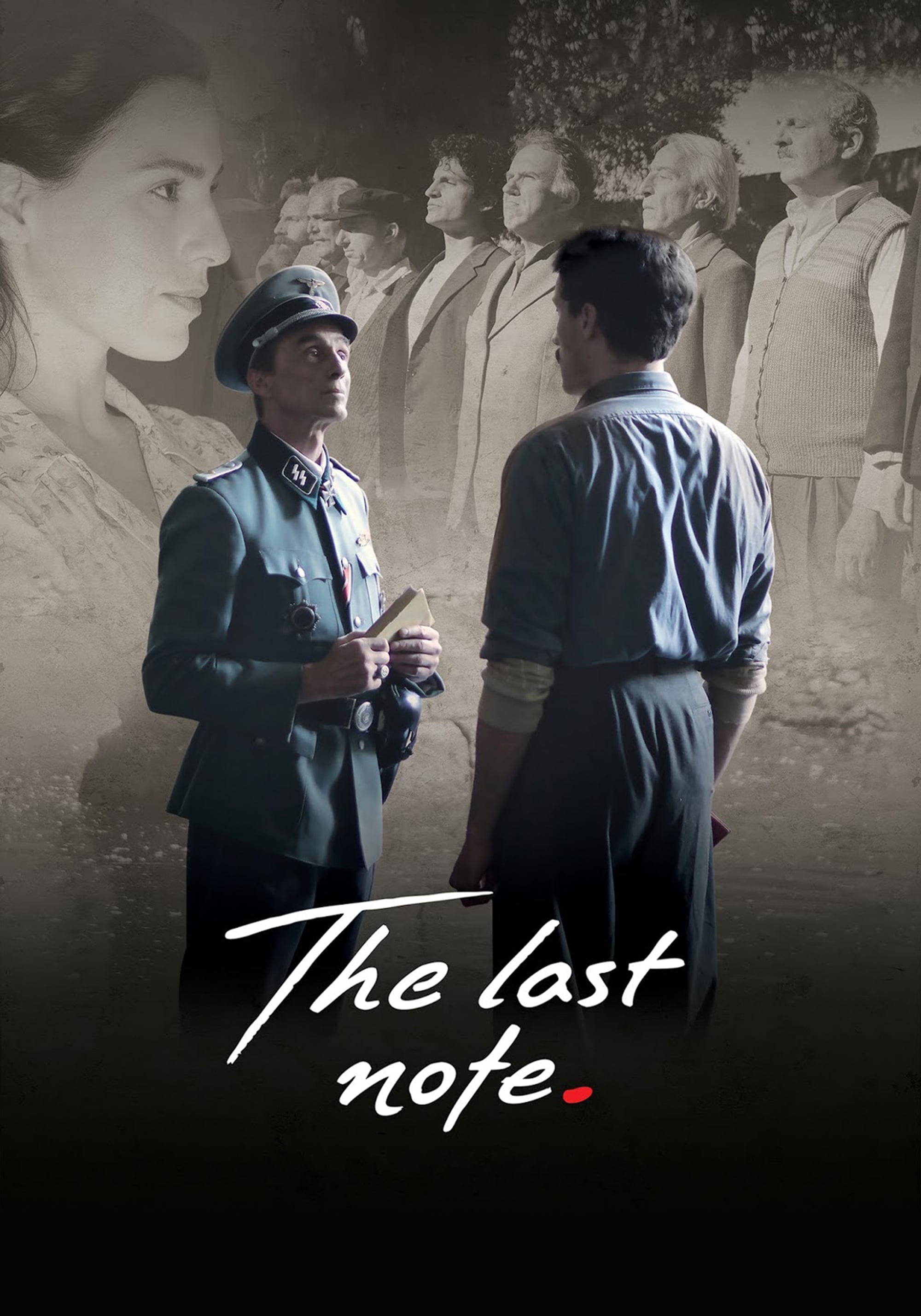
The Last Note (2017) character relationship network mapped with AI analysis. Explore the connections, alliances, and conflicts between characters.
Characters
Napoleon Soukatzidis
(played by Andreas Konstantinou) — protagonist
Napoleon is the camp interpreter who translates prisoners’ answers during German interrogations while refusing to show emotion or look at their faces. His position keeps him alive but makes him compli...
Karl Fischer
(played by André Hennicke) — supporting
Karl Fischer commands Haidari Camp under German occupation, enforcing absolute order, obedience, and cleanliness. He questions prisoners through Napoleon and becomes personally interested in the inter...
Kostas
(played by Tasos Dimas) — supporting
Kostas is one of the imprisoned men facing the camp’s final mass execution. Alongside Sarantos, Christos, Napoleon, and the other prisoners, he confronts fear and death with defiance, memories of home...
Sarantos
(played by Vassilis Koukalani) — supporting
Sarantos is a prisoner of Haidari who is condemned during the mass reprisal ordered by the German authorities. He prepares to walk with Kostas, Christos, Napoleon, and the other prisoners toward the f...
Christos
(played by Aineias Tsamatis) — supporting
Christos is a prisoner who directly challenges Napoleon over his work as the camp interpreter, asking how many people have been condemned through his translations. His accusation forces Napoleon to co...
Xenia
(played by Konstantina Chatziathanassiou) — minor
Xenia is a prisoner involved in one of the early interrogations at Haidari Camp. Her questioning forms part of Napoleon’s routine as an interpreter, exposing him to arrests, torture, confessions, and...
Canonical Relationships
Family, romantic, and professional connections based on plot evidence.
Karl Fischer → Sarantos
(Power Commanding Officer And Prisoner) — Their relationship reflects the occupying command structure and its lethal control over prisoners.
Fischer commands the camp where Sarantos is detained and later included among prisoners facing execution.
Karl Fischer → Kostas
(Power Commanding Officer And Prisoner) — Fischer's authority determines Kostas's confinement and impending death.
Fischer commands Haidari Camp, while Kostas is among the prisoners selected for the mass reprisal execution.
Karl Fischer → Xenia
(Power Interrogator And Prisoner) — Fischer's camp authority places Xenia among the prisoners subjected to interrogation.
Xenia is involved in an early interrogation conducted within the system commanded by Fischer at Haidari Camp.
Napoleon Soukatzidis → Xenia
(Professional Interpreter And Prisoner) — Napoleon's interpreting role directly mediates Xenia's interrogation by the occupying authorities.
Early interrogations involve Xenia, while Napoleon translates prisoners' answers under the camp's strict rules.
Napoleon Soukatzidis → Karl Fischer
(Professional Interpreter And Commanding Officer) — Their professional relationship places Napoleon directly under Fischer's authority and exposes him to the camp's violence.
Napoleon serves as an interpreter during interrogations conducted under Karl Fischer's command at Haidari Camp.
Story Dynamics
Alliances, conflicts, and narrative interactions that evolve throughout the story.
Kostas → Sarantos
(Social Fellow Prisoner) — They belong to the same condemned prisoner group and share its final ordeal.
Kostas and Sarantos are named together among the prisoners who prepare to face the firing squad.
Christos → Sarantos
(Social Fellow Prisoner) — Their connection is grounded in shared imprisonment and collective resistance to erasure.
Christos and Sarantos are included among the prisoners who confront fear, defiance, and the threat of execution.
Christos → Kostas
(Social Fellow Prisoner) — They share the prison community and the final confrontation with execution.
Christos and Kostas are named among the prisoners who face death together after the reprisal order.
Napoleon Soukatzidis → Sarantos
(Alliance Fellow Prisoner) — Their shared fate connects Napoleon to the camp's condemned prisoners.
Napoleon is condemned alongside Sarantos as the prisoners face the approaching execution.
Napoleon Soukatzidis → Kostas
(Alliance Fellow Prisoner) — They share imprisonment, impending execution, and the final collective ordeal.
Napoleon is condemned alongside Kostas as the prisoners prepare to walk toward the firing squad.
Napoleon Soukatzidis → Christos
(Conflict Moral Confronter) — Christos forces Napoleon to confront the consequences of his work as an interpreter.
Christos accuses Napoleon of helping the occupiers identify prisoners and asks how many people were condemned through his translations.
Story Analysis
A condemned interpreter struggles between survival, complicity, loyalty, and moral responsibility inside an occupied prison camp.
Plot Progression
Life Under Camp Authority
— The film establishes Haidari Camp as a German-controlled detention center. Napoleon works as an interpreter while witnessing interrogation, torture, and execution.
Hope Behind The Wire
— Prisoners preserve their courage through jokes, songs, and fragments of hope. News of sabotage, resistance, and military advances raises both expectation and danger.
The Occupier's Justification
— During a journey through the Peloponnese, Fischer displays looted instruments and describes his museum ambitions. Napoleon challenges his beliefs about superiority and obedience.
The Interpreter's Burden
— Christos confronts Napoleon about the consequences of his translations. Napoleon admits that the dead haunt him but remains trapped between resignation, survival, and loyalty to the prisoners.
The Reprisal And Dawn
— The killing of a senior officer triggers a mass reprisal. Napoleon and the other prisoners are condemned and prepare to walk toward the firing squad as the camp waits for dawn.
Directed by Pantelis Voulgaris
The Last Note (2017) · 6.7/10 · drama, history, war
Content sources
Related entry on
Wikidata
(Q42956323), public domain (CC0).
Plot breakdown and analysis on this page are AI-generated from the title's synopsis and metadata.