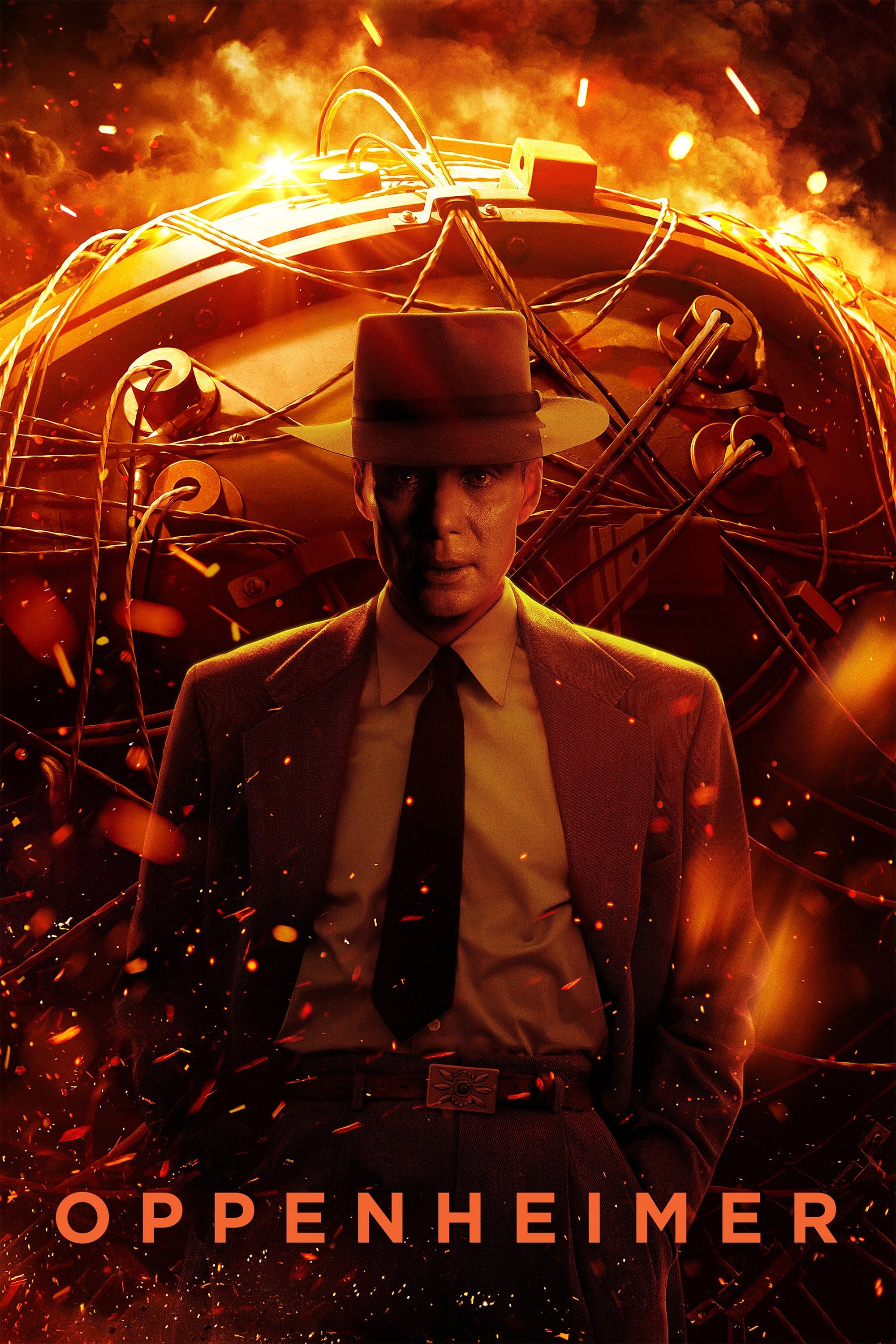
Oppenheimer (2023) character relationship network mapped with AI analysis. Explore the connections, alliances, and conflicts between characters.
Characters
J. Robert Oppenheimer
(played by Cillian Murphy) — protagonist
Theoretical physicist who leads the Manhattan Project at Los Alamos to develop the atomic bomb. After WWII, he advises against further nuclear weapons development, faces a 1954 security clearance hear...
Leslie Groves
(played by Matt Damon) — supporting
Colonel and director of the Manhattan Project who tasks Robert with leading the atomic bomb development and orders the construction of the Los Alamos laboratory.
Lewis Strauss
(played by Robert Downey Jr.) — supporting
Former AEC Chairman whose Commerce Secretary nomination hearing exposes his orchestrated vendetta against Robert. His Senate confirmation vote fails, ending his political career.
Jean Tatlock
(played by Florence Pugh) — supporting
Communist psychology student who has an affair with Robert. They reunite after he receives security clearance, but she is found dead in her bathtub months later.
Ernest Lawrence
(played by Josh Hartnett) — supporting
Berkeley physicist who recognizes the weaponization potential of atomic splitting and warns Robert to sever communist ties to participate in the war effort.
Edward Teller
(played by Benny Safdie) — supporting
Haakon Chevalier
(played by Jefferson Hall) — supporting
Canonical Relationships
Family, romantic, and professional connections based on plot evidence.
Leslie Groves → Ernest Lawrence
(Professional Project Stakeholder) — Lawrence's research supports the project Groves administers.
Lawrence's Berkeley radiation work helps establish the weaponization possibility that motivates the Manhattan Project led by Groves.
Leslie Groves → Edward Teller
(Power Program Authority) — Teller's work is pursued under the military program Groves oversees.
Teller presents his fusion-bomb proposal within the Manhattan Project structure directed by Groves.
Edward Teller → J. Robert Oppenheimer
(Professional Scientific Colleague) — Teller works within Robert's scientific project while advancing a more powerful weapon concept.
At Los Alamos, Teller proposes a fusion-based bomb while Robert leads the broader atomic-bomb development effort.
Leslie Groves → J. Robert Oppenheimer
(Power Project Director) — Groves places Robert in charge of the scientific leadership of the Manhattan Project.
Colonel Leslie Groves tasks Robert with leading atomic bomb development for the United States.
Ernest Lawrence → J. Robert Oppenheimer
(Professional Scientific Collaborator) — Lawrence helps validate the weaponization premise that drives Robert toward wartime research.
Lawrence agrees with Robert that atomic splitting could be weaponized into an atomic bomb.
J. Robert Oppenheimer → Jean Tatlock
(Romantic Lover) — Their intimate relationship shapes Robert's personal life and later becomes part of the scrutiny surrounding him.
The plot states that Robert and Jean begin an affair and later reunite after he receives security clearance.
Story Dynamics
Alliances, conflicts, and narrative interactions that evolve throughout the story.
Lewis Strauss → Ernest Lawrence
(Social Policy Network Associate) — Lawrence belongs to the scientific network affected by the political conflict over Robert.
The plot places Lawrence among the scientists and former colleagues connected to the government debates surrounding Robert's career.
Jean Tatlock → Haakon Chevalier
(Social Political Associate) — They belong to the same political milieu surrounding Robert before the war.
The plot identifies Jean and Chevalier as communist figures within Robert's Berkeley social circle.
Ernest Lawrence → Haakon Chevalier
(Conflict Political Counterforce) — Lawrence's security-minded position conflicts with the political world represented by Chevalier.
Lawrence warns Robert to sever communist associations, while Chevalier is identified as one of Robert's communist friends.
Lewis Strauss → J. Robert Oppenheimer
(Conflict Political Adversary) — Strauss becomes the principal political force behind Robert's downfall.
Strauss orchestrates a personal vendetta against Robert after conflicts over radioactive-isotope exports and opposition to the hydrogen bomb.
J. Robert Oppenheimer → Haakon Chevalier
(Social Friend) — Chevalier is an early Berkeley friend whose political associations later affect Robert's security concerns.
After returning to the United States, Robert befriends Haakon Chevalier at Berkeley.
Story Analysis
A brilliant physicist gains power by creating the atomic bomb, then loses influence when he confronts its political and existential consequences.
Plot Progression
Physics Before the Bomb
— Robert returns from Europe, teaches at Berkeley, and becomes involved with Jean and Chevalier. Scientific advances and war in Europe transform abstract physics into a possible weapon.
The Secret Laboratory
— Groves recruits Robert to direct the Manhattan Project and establishes Los Alamos as its secret center. Security concerns, political associations, and Jean's death deepen Robert's personal strain.
Fire Over New Mexico
— Teller introduces the possibility of a still more destructive fusion weapon while Robert prepares the fission project for its decisive test. The successful test brings triumph together with moral shoc...
The Price of Dissent
— Robert turns against continued nuclear escalation after the war, alienating political authorities. His associations and policy views are used against him in the hearing that removes his clearance.
A Bitter Reconciliation
— Strauss's vendetta is exposed during his Senate confirmation struggle, ending his political career. Robert later receives the Fermi Award, but his vision of nuclear catastrophe remains unresolved.