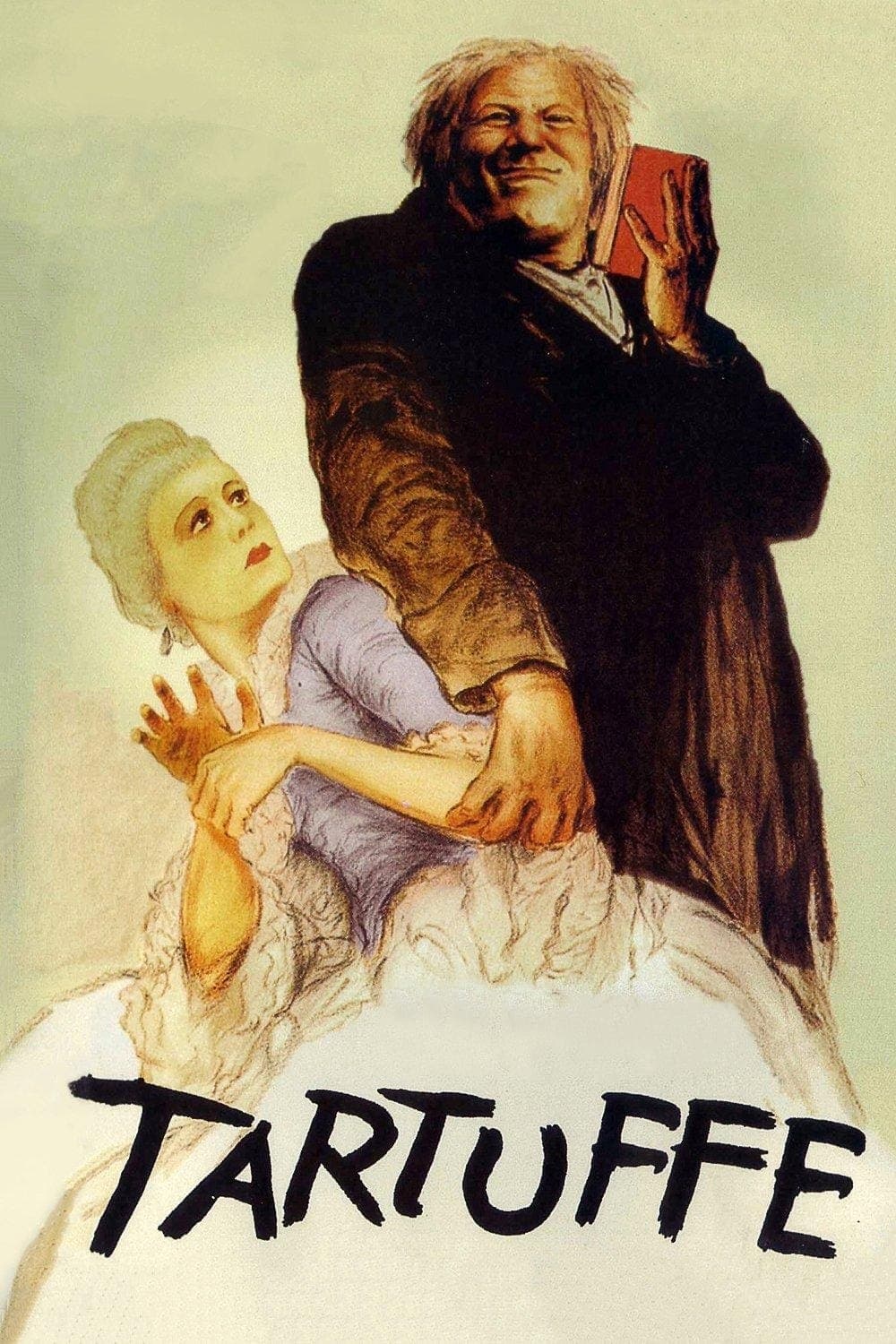
Tartuffe (1926) character relationship network mapped with AI analysis. Explore the connections, alliances, and conflicts between characters.
Characters
Tartüff
(played by Emil Jannings) — protagonist
Tartüff is the hypocrite at the center of the film shown during the household screening. His exposure demonstrates how easily people can believe a false moral figure, and his downfall mirrors the hous...
Herr Orgon
(played by Werner Krauss) — supporting
Frau Elmire / Elmire, Orgon's wife
(played by Lil Dagover) — supporting
Seine Haushälterin / Housekeeper
(played by Rosa Valetti) — supporting
The Housekeeper cares for a wealthy old man but secretly covets his fortune. She repeatedly pressures him to name her rather than his grandson in the will and succeeds before beginning to poison him s...
Sein Enkel / Grandson
(played by André Mattoni) — supporting
The Grandson suspects that the housekeeper is endangering his wealthy grandfather but cannot get close enough to warn him. Using his profession as an actor, he disguises himself as a traveling cinema...
Dorine
(played by Lucie Höflich) — supporting
Canonical Relationships
Family, romantic, and professional connections based on plot evidence.
Frau Elmire / Elmire, Orgon's wife → Herr Orgon
(Family Spouses In Crisis) — Their marriage is strained by Orgon's misplaced trust, then restored when he secretly witnesses Tartüff's confession.
Elmire is identified as Orgon's wife and warns him that Tartüff is deceptive, but Orgon initially refuses to believe her.
Tartüff → Herr Orgon
(Power Manipulator And Victim) — Tartüff exploits Orgon's religious trust until Elmire's staged meeting exposes his hypocrisy and Orgon rejects his influence.
Tartüff enters Herr Orgon's home as a seemingly pious guest, gains control of the household, and persuades Orgon to value devotion to him above love f...
Story Dynamics
Alliances, conflicts, and narrative interactions that evolve throughout the story.
Seine Haushälterin / Housekeeper → Herr Orgon
(Narrative Thematic Counterpart) — Their connection is a deliberate parallel between the real household's deception and the staged household's deception.
The Housekeeper's influence over the wealthy old man is exposed through the play in which Tartüff similarly controls Herr Orgon by exploiting trust an...
Sein Enkel / Grandson → Herr Orgon
(Narrative Parallel) — The Grandson's real conflict with the Housekeeper is reflected through Orgon's fictional victimization by Tartüff.
The Grandson's screening centers on a grandson-like situation in which Herr Orgon is deceived by a trusted hypocrite and must recognize the truth.
Sein Enkel / Grandson → Tartüff
(Narrative Thematic Counterpart) — The Grandson turns Tartüff's fictional exposure into a practical strategy against deception in his own household.
The Grandson disguises himself as a traveling cinema operator and presents the play about Tartüff so that its lesson can expose the Housekeeper.
Seine Haushälterin / Housekeeper → Tartüff
(Narrative Parallel Hypocrites) — Tartüff functions as the fictional example through which the Housekeeper's own deceptive behavior becomes recognizable.
The film states that Tartüff's downfall mirrors the Housekeeper's exposure after the screening and warns that hypocrites may be close by and unseen.
Seine Haushälterin / Housekeeper → Sein Enkel / Grandson
(Conflict Manipulative Adversaries) — The Housekeeper attempts to remove the grandson from the inheritance, while the grandson uses the screening to expose her influence.
The Housekeeper pressures the wealthy old man to leave his fortune to her instead of his grandson, initially rejects the disguised grandson, and is co...
Frau Elmire / Elmire, Orgon's wife → Dorine
(Alliance Truth-Seeking Allies) — They share the recognition that Tartüff is false, with Elmire taking the decisive action to make Orgon witness the truth.
Elmire and Dorine both recognize that Tartüff's piety is a disguise, and Elmire develops the private-meeting plan that exposes him.
Tartüff → Dorine
(Conflict Moral Opponents) — Dorine's skepticism contrasts with Tartüff's false devotion and supports the household's recognition of his deception.
Dorine recognizes that Tartüff's piety is a disguise, placing her among those who see through him while he controls Orgon's household.
Tartüff → Frau Elmire / Elmire, Orgon's wife
(Conflict Predatory Adversaries) — Elmire counters Tartüff's attempted seduction by turning his secret misconduct into evidence against him.
Tartüff confesses that he desires Elmire during their private meeting, while Elmire arranges the meeting to reveal his true behavior to Orgon.
Story Analysis
A staged exposure of religious hypocrisy teaches a household to recognize deception hidden behind familiar appearances.
Plot Progression
The Hidden Inheritance
— The Housekeeper persuades a wealthy old man to redirect his fortune away from his grandson. The Grandson promises to return and challenge her influence.
A Play Within the Household
— The disguised Grandson gains entry through a traveling cinema. The screening introduces Tartüff, whose false piety is welcomed by Herr Orgon.
Faith Under Manipulation
— Tartüff takes control, accepts money intended for the poor, and persuades Orgon to place him above Elmire. Elmire and Dorine recognize the deception.
The Hidden Witness
— Elmire arranges a private meeting while Orgon secretly observes. Tartüff's confession of desire destroys the appearance of piety.
The Lesson Returns Home
— Tartüff is expelled and Orgon regrets his trust. The Grandson applies the screening's lesson to confront the Housekeeper and expose the danger of trusting appearances.
Directed by F. W. Murnau
Tartuffe (1926) · 7.2/10 · comedy, drama
Content sources
Related entry on
Wikidata
(Q571173), public domain (CC0).
Plot breakdown and analysis on this page are AI-generated from the title's synopsis and metadata.