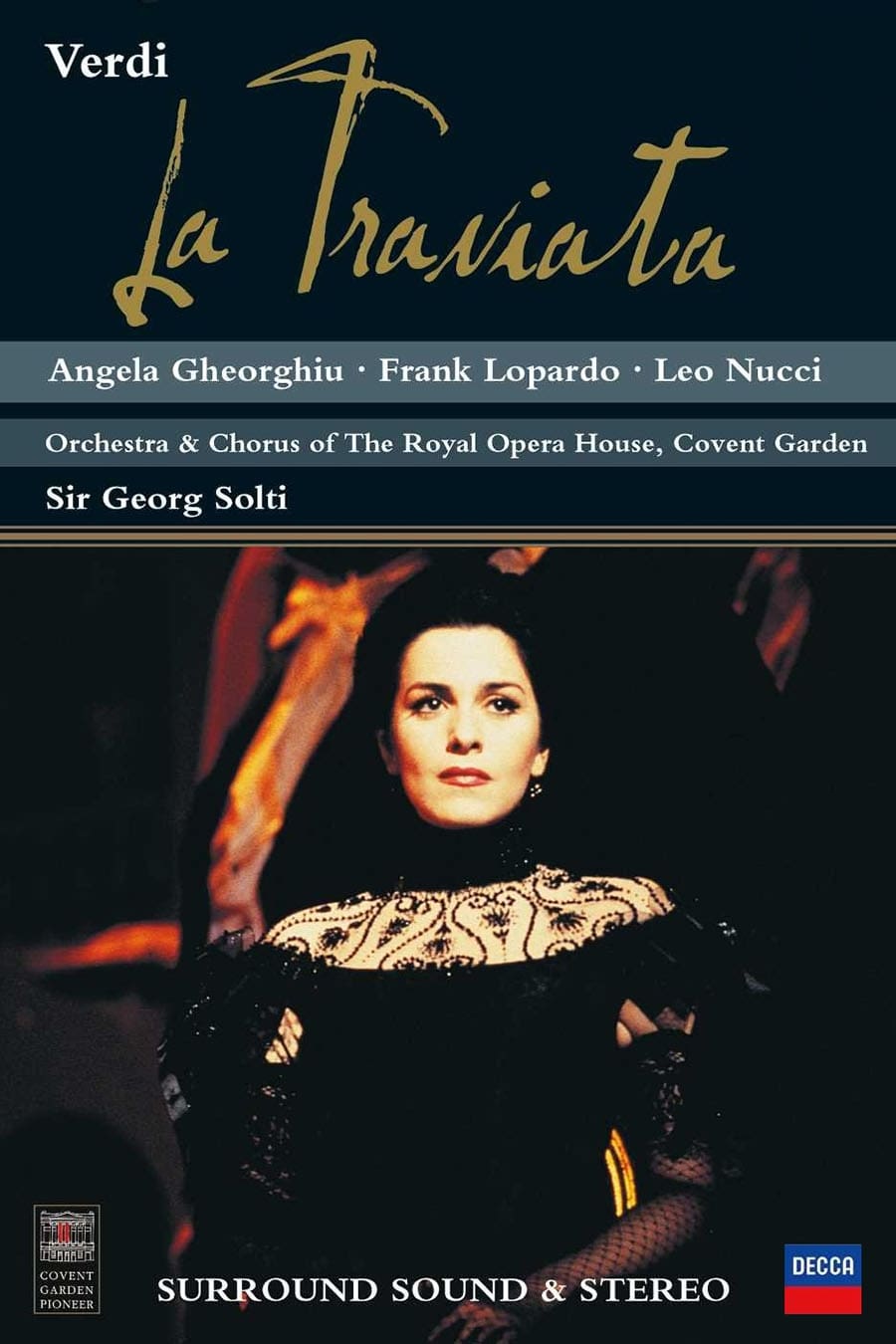
The reference presents the opera's authorship, literary origins, premiere history, and dispute over its setting rather than a detailed film narrative.
Story Structure — 4 Plot Phases
The Opera and Its Sources
The reference identifies La traviata as a three-act opera by Giuseppe Verdi with an Italian libretto by Francesco Maria Piave. It also traces the work through La dame aux Camélias to a novel by Alexandre Dumas, fils.
Key Events
Opera Identified — La traviata is identified as an opera in three acts by Giuseppe Verdi.
Italian Libretto Created — The opera uses an Italian libretto written by Francesco Maria Piave.
Literary Source Established — The opera is based on La dame aux Camélias.
Play Adaptation Noted — La dame aux Camélias is identified as a play adapted from a novel.
A Title Centered on Violetta
The opera was originally titled Violetta after its main character. This detail presents the work's initial naming focus without providing a scene-by-scene narrative.
Key Events
Novel Source Traced — The literary lineage is traced to a novel by Alexandre Dumas, fils.
Original Title Violetta — The opera was originally entitled Violetta after its main character.
Venice Premiere — The opera was first performed at La Fenice in Venice.
Location: La Fenice opera house
The Venetian Premiere
The first performance took place at La Fenice in Venice on 6 March 1853. The premiere establishes the opera's documented performance history.
Key Events
Venice Premiere — The opera was first performed at La Fenice in Venice.
Location: La Fenice opera house
Premiere Date Recorded — The first performance took place on 6 March 1853.
Location: La Fenice opera house
Contemporary Setting Proposed — Piave and Verdi wanted the opera to use a contemporary setting.
Authority Intervention — Authorities at La Fenice insisted on a setting around 1700.
Location: La Fenice opera house
The Setting Dispute
Verdi and Piave wanted a contemporary setting, but La Fenice authorities required the action to be placed in the past. The original creative preference was only reflected in realistic productions during the 1880s.
Key Events
Historical Setting Enforced — The opera was set in the past, approximately around 1700.
Original Wishes Delayed — The creators' original setting preferences were not realized immediately.
Realistic Productions Appear — Realistic productions following the original wishes appeared in the 1880s.
Story Breakdown
Operatic Identity — The work is defined as a three-act opera by Giuseppe Verdi.
Three Act Structure — The reference explicitly describes La traviata as an opera in three acts.
Verdi Composition — Giuseppe Verdi is identified as the opera's composer.
Libretto Origins — The opera uses an Italian libretto associated with Francesco Maria Piave.
Italian Libretto — The libretto is identified as Italian.
Piave Contribution — Francesco Maria Piave is named as the librettist.
Literary Adaptation — The work is connected to a chain of literary adaptations.
Dame Aux Camélias — La traviata is based on La dame aux Camélias.
Dumas Novel — The source play was adapted from a novel by Alexandre Dumas, fils.
Original Naming — The opera initially carried the title Violetta.
Violetta Title — The original title was Violetta.
Main Character Focus — The title was connected to the opera's main character.
Venetian Premiere — The first performance established the opera's early public history.
La Fenice Venue — The premiere occurred at the La Fenice opera house in Venice.
March 1853 — The first performance took place on 6 March 1853.
Setting Conflict — The creators' preferred contemporary setting conflicted with institutional requirements.
Contemporary Preference — Piave and Verdi wanted a contemporary setting.
Historical Requirement — La Fenice authorities required a setting around 1700.
Later Realism — The creators' original setting wishes were realized in later production practice.
1880s Productions — Realistic productions appeared during the 1880s.
Original Wishes Restored — Later productions followed the creators' intended realistic approach.
La traviata (Italian: [la traˈviaːta], "The Fallen Woman"[1][2]) is an opera in three acts by Giuseppe Verdi set to an Italian libretto by Francesco Maria Piave. It is based on La dame aux Camélias (1852), a play adapted from the novel by Alexandre Dumas, fils. The opera was originally entitled Violetta, after the main character. It was first performed on 6 March 1853 at the La Fenice opera house in Venice. Piave and Verdi wanted to follow Dumas in giving the opera a contemporary setting, but the authorities at La Fenice insisted that it be set in the past, "c. 1700". It was not until the 1880s that the composer and librettist's original wishes were carried out and "realistic" productions were staged.[3]