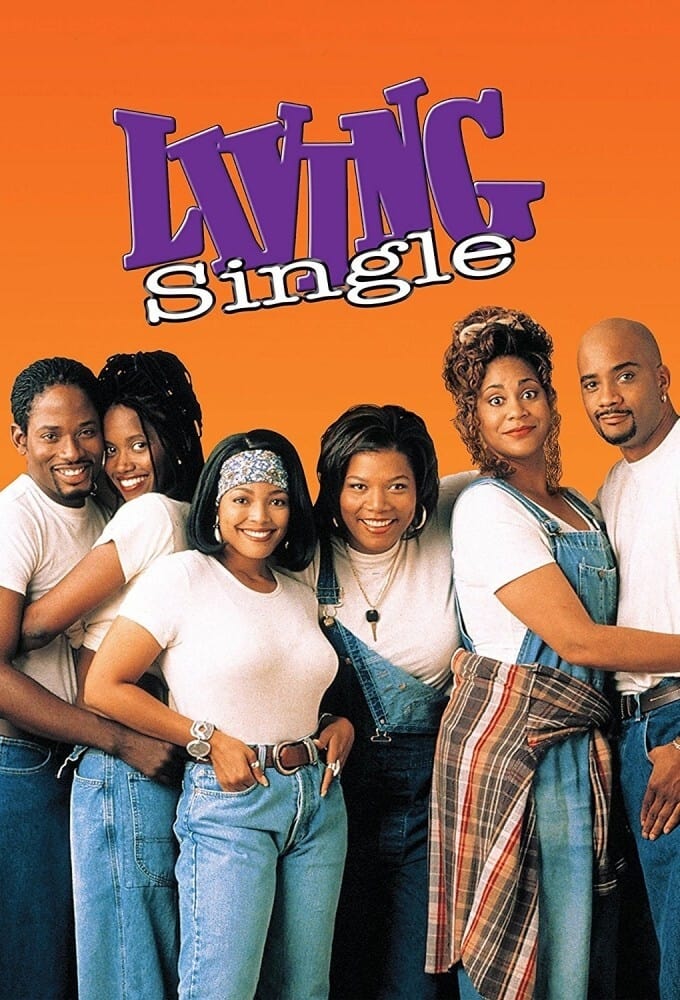
Living Single (1993) character relationship network mapped with AI analysis. Explore the connections, alliances, and conflicts between characters.
Characters
Kyle Barker
(played by Terrence 'T.C.' Carson) — supporting
Stockbroker and Overton's roommate. Shares a long-simmering romantic and sexual relationship with Maxine, which includes a brief separation and eventual reconciliation in the series finale.
Ira Lee "Tripp" Williams
(played by Mel Jackson) — supporting
Songwriter who had a brief fling with DJ Roni DeSantos and moved into the brownstone when Synclaire's room opened up.
Regine Hunter
(played by Kim Fields) — supporting
Image-conscious boutique buyer constantly searching for a wealthy partner. Later works as a costume assistant and wedding planner before moving in with her fiancé, Dexter Knight.
Russell
(played by Shaun Baker) — cameo
Story Dynamics
Alliances, conflicts, and narrative interactions that evolve throughout the story.
Regine Hunter → Ira Lee "Tripp" Williams
(Roommates) — Their connection is primarily domestic and social, shaped by shared living arrangements and disagreements over household boundaries.
"In Season 5, Tripp moves into the brownstone, and Regine argues with him about proper roommate etiquette."
Regine Hunter → Russell
(Friends and social allies) — Russell provides social support and protection, while Regine is comfortable using their connection in a social setting.
"Russell defends Regine against an art critic in Season 4, and Regine later attends a party as Russell's date while using his connections."
Ira Lee "Tripp" Williams → Russell
(Household acquaintances) — Their documented connection is a cooperative social outing after Tripp joins the household.
"In Season 5, Tripp, Russell, and another housemate travel together to a football game and pick up a hitchhiker."
Kyle Barker → Russell
(Shared social circle) — Their relationship is grounded in recurring group settings rather than a separately developed personal storyline.
"Both characters participate in the group's social activities, including the cafe performance storyline and the gay-bar outing."
Story Analysis
Across five seasons, the narrative follows a shared household adapting to romantic uncertainty, professional change, personal reinvention, and the gradual transformation of its domestic structure.
Plot Progression
Season 1: Household Foundations
— The opening season establishes Regine's romantic complications, image-conscious worldview, and dependence on the household's social network. Security problems, betrayals of confidence, and competing r...
Season 2: Independence and Pressure
— The second season increases pressure around work, self-image, personal independence, and unresolved romantic tension. The characters repeatedly turn private anxieties into public confrontations before...
Season 3: Reinvention and Commitment
— The third season focuses on professional reinvention and the costs of emotional avoidance. Regine discovers a more satisfying creative path, while Kyle confronts stagnation and the ensemble faces majo...
Season 4: Public Choices
— The fourth season moves private conflicts into public spaces such as elections, courts, workplaces, ceremonies, and social events. Regine receives support from Russell, while the wider group deals wit...
Season 5: Transition and Continuity
— The final season reshapes the household through departures, marriage, new roommates, and changing career ambitions. Tripp's arrival creates a new domestic configuration, while Regine faces a possible...