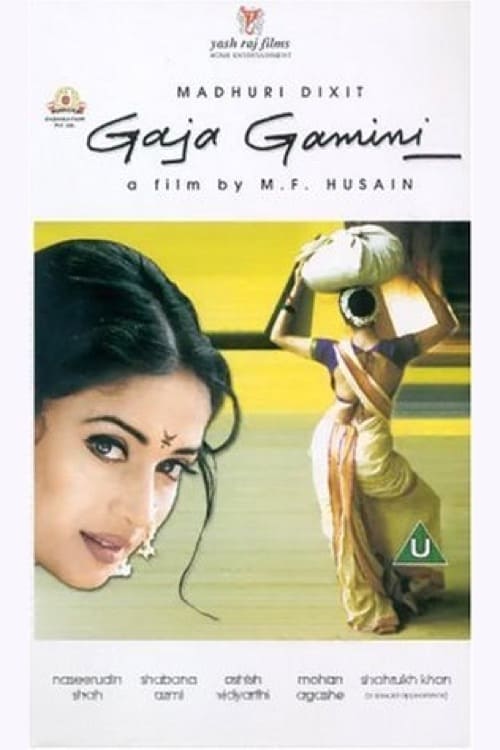
Plot Analysis Summary
A symbolic journey through history presents one feminine presence as muse, rebel, beloved, and bearer of enduring cultural ideas.
Story Structure — 5 Plot Phases
The Woman Across Time
The film introduces Gaja Gamini as a mysterious figure appearing in several forms. Her presence is linked to inspiration, desire, and confusion across historical periods.
Key Events
-
The Enigmatic Central Figure — Gaja Gamini is introduced as a mysterious figure who inspires, arouses, and confuses ordinary people. Characters: Gaja Gamini / Sangeeta / Shakuntala /Monika / Monalisa
Location: Across history
-
The Four Forms — The central figure is presented through four female identities linked by a shared symbolic presence. Characters: Gaja Gamini / Sangeeta / Shakuntala /Monika / Monalisa
Location: Across history
-
Sangeeta in Banaras — Sangeeta appears as a blind girl in Banaras at the beginning of time. Characters: Gaja Gamini / Sangeeta / Shakuntala /Monika / Monalisa
Location: Banaras
-
Women Challenge Patriarchy — Sangeeta inspires village women to revolt against a male-dominated system. Characters: Gaja Gamini / Sangeeta / Shakuntala /Monika / Monalisa
Location: Banaras
-
A Place for Women — The women's revolt establishes a lasting symbolic place for women. Characters: Gaja Gamini / Sangeeta / Shakuntala /Monika / Monalisa
Location: Village community
Sangeeta's Revolt
In Banaras, Sangeeta is presented as a blind girl who inspires village women to resist a male-dominated system. Their revolt gives women a lasting symbolic place.
Key Events
-
A Place for Women — The women's revolt establishes a lasting symbolic place for women. Characters: Gaja Gamini / Sangeeta / Shakuntala /Monika / Monalisa
Location: Village community
-
Shakuntala Enters the Forest — Shakuntala becomes the figure associated with Kalidas' poem. Characters: Gaja Gamini / Sangeeta / Shakuntala /Monika / Monalisa
Location: Forests of Kerala
-
Jealousy and Desire — Shakuntala provokes jealousy among women and love among men around her. Characters: Gaja Gamini / Sangeeta / Shakuntala /Monika / Monalisa
Location: Forests of Kerala
-
The Forest Enchantment — Shakuntala charms both humans and animals in the forest. Characters: Gaja Gamini / Sangeeta / Shakuntala /Monika / Monalisa
Location: Forests of Kerala
Desire in the Forest
Shakuntala enters the forests of Kerala as the figure associated with Kalidas' poem. She creates jealousy among women, love among men, and enchantment around her.
Key Events
-
Kamdev Walks Through Time — Kamdev repeatedly follows the central figure while seeking her love. Characters: Kamdev, Gaja Gamini / Sangeeta / Shakuntala /Monika / Monalisa
Location: Across history
-
The Renaissance Image — Gaja Gamini appears as Mona Lisa during the Renaissance. Characters: Leonardo da Vinci, Gaja Gamini / Sangeeta / Shakuntala /Monika / Monalisa
Location: Renaissance Italy
-
Leonardo's Obsession — Leonardo da Vinci becomes obsessed with the Mona Lisa figure. Characters: Leonardo da Vinci, Gaja Gamini / Sangeeta / Shakuntala /Monika / Monalisa
Location: Renaissance Italy
Images of the Modern Woman
The Renaissance image of Mona Lisa connects Gaja Gamini to Leonardo da Vinci's obsession. Monika and Shahrukh's photographs extend the motif into the New Millennium.
Key Events
-
Monika of the Millennium — Monika is introduced as the most confusing version of the modern woman. Characters: Gaja Gamini / Sangeeta / Shakuntala /Monika / Monalisa
Location: The New Millennium
-
Shahrukh's Photographs — Shahrukh's photojournalistic images are inspired by Gaja Gamini. Characters: Shahrukh, Gaja Gamini / Sangeeta / Shakuntala /Monika / Monalisa
Location: The New Millennium
-
The Black Wall — A large black wall separates two different periods. Characters: Gaja Gamini / Sangeeta / Shakuntala /Monika / Monalisa
Location: Between historical periods
-
Art Meets Science — The film stages confrontations between scientific proof and artistic intuition. Characters: Gaja Gamini / Sangeeta / Shakuntala /Monika / Monalisa
Location: Between historical periods
Art Beyond the Wall
The black wall separates periods while the film contrasts scientific proof with artistic intuition. The gathri and recurring artistic forms suggest that historical change does not erase original ideas.
Key Events
-
The Brain and Heart — Science is associated with the brain, while art joins the brain with the heart. Characters: Gaja Gamini / Sangeeta / Shakuntala /Monika / Monalisa
Location: Conceptual space
-
Shakespeare Across Centuries — A Shakespeare play remains performable across centuries despite changing actors. Characters: Gaja Gamini / Sangeeta / Shakuntala /Monika / Monalisa
Location: Fifteenth and twenty-first centuries
-
The Burdened Gathri — The gathri symbolizes a burden carried by a woman throughout life. Characters: Gaja Gamini / Sangeeta / Shakuntala /Monika / Monalisa
Location: Historical and modern spaces
-
Ideas Remain Unchanged — Changing worlds retain the same original ideas expressed through art and desire. Characters: Gaja Gamini / Sangeeta / Shakuntala /Monika / Monalisa, Kamdev, Leonardo da Vinci, Shahrukh
Location: Across history
-
The Timeless Woman — Gaja Gamini endures as a timeless feminine idea across artistic and historical forms. Characters: Gaja Gamini / Sangeeta / Shakuntala /Monika / Monalisa, Kamdev, Leonardo da Vinci, Shahrukh
Location: Across history
A mysterious and beautiful woman, in her various incarnations, inspires artists throughout the ages.