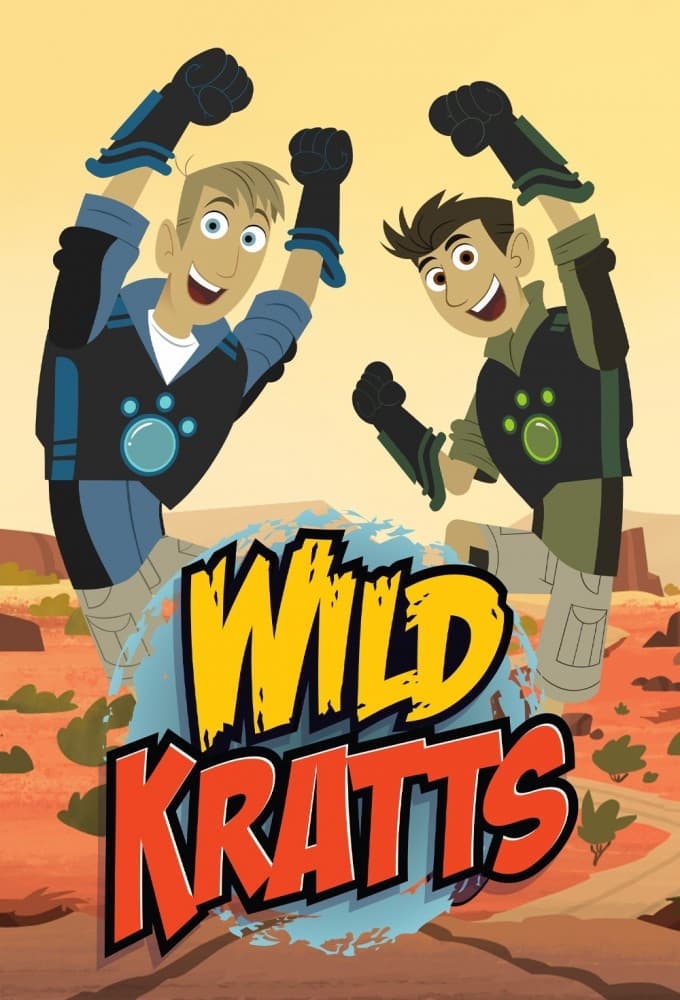
Wild Kratts (2011) interactive character relationship network and AI-powered story timeline. Explore the connections, alliances, and conflicts between characters across the narrative arc.
Comprehensive narrative architecture spanning seven seasons of wildlife conservation and scientific exploration.
"Aviva develops specialized suits for Martin, including the groundhog power in S2E26 and the snub-nosed monkey suit in S4E12."
"Martin often handles research and miniaturization while Chris leads action sequences, as seen in S1E4, S2E8, and S3E11."
"Both brothers experience time travel together in S3E6-7 and S5E17, sharing pivotal historical moments."
"Aviva's inventions enable nearly every major mission, as seen in S1E5, S2E15, and S4E1."
"Koki frequently joins Chris on missions, such as the elephant HQ takeover in S1E17 and the prairie tornado in S3E9."
"Chris relies on Aviva's gear while Aviva trusts Chris's field judgment, as seen in S1E2, S2E1, and S5E5."
"They share field missions and banter, such as the desert supply run in S2E19 and the tardigrade expedition in S6E16."
"They frequently split and reunite during complex missions, such as S2E4, S3E9, and S4E3."
Rating: 7.5/10 (66 votes)
The series establishes the core team dynamic and introduces the miniaturizer and creature power suits. Early missions focus on basic animal behaviors and introducing recurring villains like Donita and Zach. The brothers learn to balance competition with cooperation while protecting habitats.
Aviva's inventions become more complex, introducing specialized creature powers and miniaturization risks. The team faces increased villain coordination and internal rivalries that test their unity. Conservation efforts expand to include ecosystem interdependence and predator-prey dynamics.
The introduction of the time trampoline shifts the narrative to historical conservation and extinction prevention. The team confronts ancestor villains and learns how past human actions impact present wildlife. Character bonds deepen through shared temporal experiences.
Focus shifts heavily toward endangered species protection and global conservation networks. New villains like Paisley Paver emerge, targeting rare animals for profit. The team develops advanced tracking and rescue protocols while balancing field work with lab research.
The narrative explores ecological mysteries and animal adaptations across diverse biomes. The team investigates anomalies like Arctic penguins and fire salamanders, requiring innovative creature powers. Trust and communication within the crew reach new levels of efficiency.
Episodes emphasize interconnected habitats and species survival strategies. The team faces coordinated villain attacks and technological sabotage. Field missions require rapid adaptation and cross-species cooperation, highlighting the fragility of natural systems.
The series culminates in high-stakes global missions and the introduction of Kid Power. The team reflects on their journey while facing their most complex conservation challenges. Relationships solidify, and the narrative emphasizes education, legacy, and sustainable wildlife protection.
Plot analysis generated from content on Wikipedia, licensed under CC BY-SA 4.0.
Related entry on Wikidata (Q2875960), public domain (CC0).