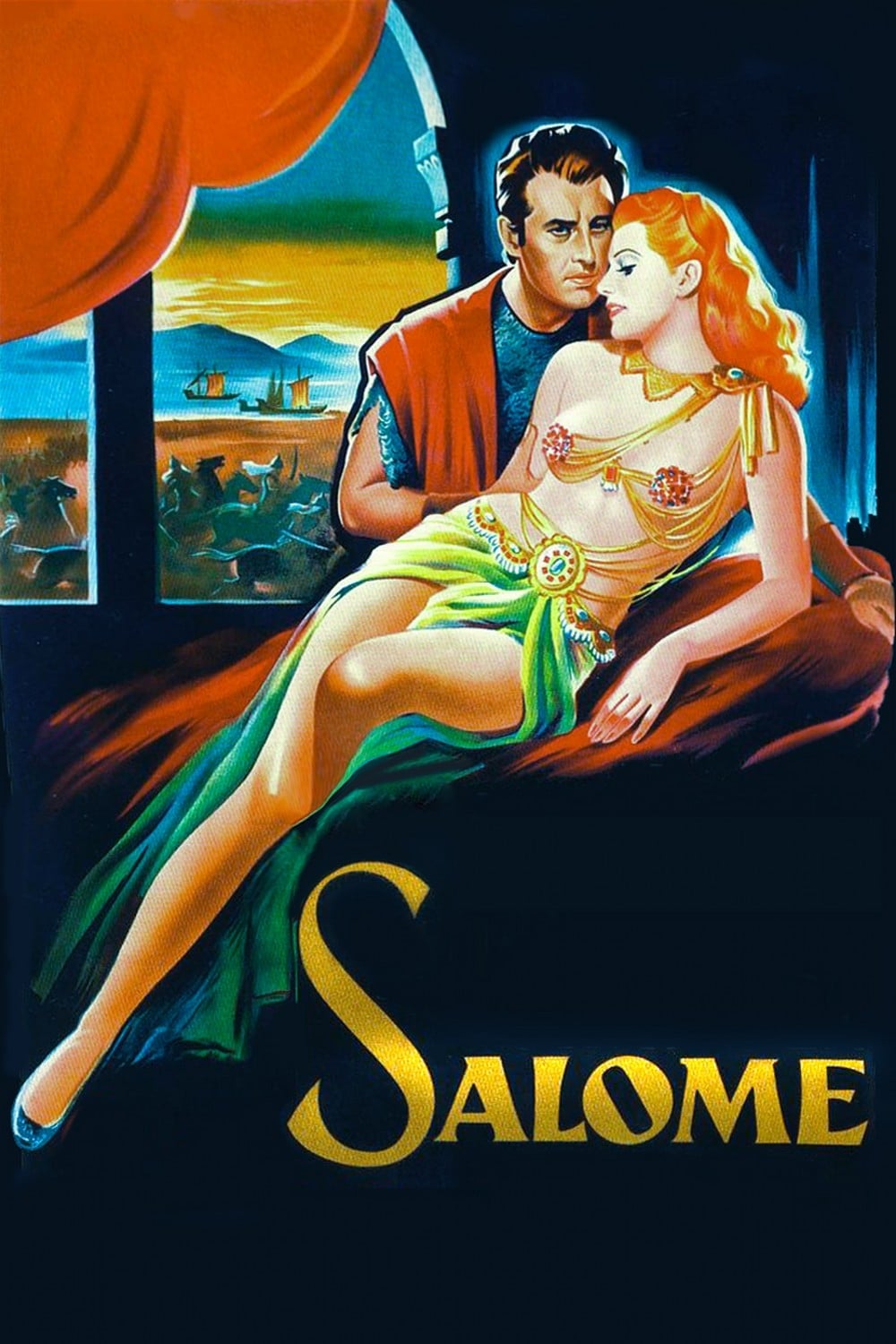
King Herod (played by Charles Laughton) appears in Salome.
Herod rules Galilee with Herodias and fears John's condemnation of their marriage and his own authority. He arrests John under the pretense of treason, lusts after his stepdaughter Salome, and attempts to seduce her with a necklace. Captivated by her dance, he allows Herodias to obtain John's death order. Queen Herodias (played by Judith Anderson) appears in Salome.
Herodias is Herod's queen and Salome's mother, living in a loveless marriage condemned by John. Fearing both scandal and the loss of the throne, she manipulates Herod's desire for Salome and persuades Salome to dance for him. She then uses the opportunity to demand John's execution. John the Baptist (played by Alan Badel) appears in Salome.
John is a prophet who publicly condemns Herodias as an adulteress and criticizes Herod's rule. He calms the crowd when Salome exposes her identity and is later imprisoned after Herodias attempts to have him killed. His faith influences Claudius and Salome, though Herod ultimately permits his beheading. Tiberius Caesar (played by Cedric Hardwicke) appears in Salome.
Tiberius Caesar is the Roman ruler governing during the events in Galilee. When Marcellus petitions to marry Salome, Tiberius sends a message forbidding the marriage and orders Salome's banishment from Rome. His decisions directly separate the two young characters and return Salome to Herod's court. Pontius Pilate (played by Basil Sydney) appears in Salome.
Pontius Pilate is the Roman authority in Jerusalem whom Claudius approaches to secure John's release. Pilate refuses because John's preaching against Rome is considered treasonous. When Claudius urges him to support the new religion, Pilate is shocked, removes Claudius from his post, and forbids him from returning to Galilee.
Salome (1953) character relationship network mapped with AI analysis. Explore the connections, alliances, and conflicts between characters.
Characters
King Herod
(played by Charles Laughton) — supporting
Herod rules Galilee with Herodias and fears John's condemnation of their marriage and his own authority. He arrests John under the pretense of treason, lusts after his stepdaughter Salome, and attempt...
Queen Herodias
(played by Judith Anderson) — supporting
Herodias is Herod's queen and Salome's mother, living in a loveless marriage condemned by John. Fearing both scandal and the loss of the throne, she manipulates Herod's desire for Salome and persuades...
John the Baptist
(played by Alan Badel) — supporting
John is a prophet who publicly condemns Herodias as an adulteress and criticizes Herod's rule. He calms the crowd when Salome exposes her identity and is later imprisoned after Herodias attempts to ha...
Tiberius Caesar
(played by Cedric Hardwicke) — supporting
Tiberius Caesar is the Roman ruler governing during the events in Galilee. When Marcellus petitions to marry Salome, Tiberius sends a message forbidding the marriage and orders Salome's banishment fro...
Pontius Pilate
(played by Basil Sydney) — supporting
Pontius Pilate is the Roman authority in Jerusalem whom Claudius approaches to secure John's release. Pilate refuses because John's preaching against Rome is considered treasonous. When Claudius urges...
Canonical Relationships
Family, romantic, and professional connections based on plot evidence.
Pontius Pilate → King Herod
(Power Parallel Authorities)
King Herod controls John's imprisonment in Galilee, while Pontius Pilate controls the Roman decision concerning John's release in Jerusalem.
King Herod → Tiberius Caesar
(Power Subject Ruler)
The story takes place during the rule of Tiberius Caesar, while King Herod governs Galilee.
King Herod → Queen Herodias
(Family Spouses)
The plot states that Queen Herodias married King Herod, who was her former husband's brother.
Story Dynamics
Alliances, conflicts, and narrative interactions that evolve throughout the story.
Pontius Pilate → John the Baptist
(Conflict Political Opponent)
Pontius Pilate refuses to release John because John's preaching against Rome is considered treasonous.
John the Baptist → Queen Herodias
(Conflict Moral Accuser)
John publicly calls Queen Herodias an adulteress because of her marriage to Herod, her former husband's brother.
King Herod → John the Baptist
(Conflict Imprisoning Adversaries)
King Herod arrests John, officially for treason, while the plot explains that Herod is also trying to protect him from Herodias's assassination attemp...
Story Analysis
A royal court's struggle between political power, moral condemnation, personal desire, and emerging religious faith ends in tragedy and spiritual rejection of the throne.