Story Structure — 4 Plot Phases
Production Foundation
The film is introduced as a silent crime drama produced in the United States. The original screenplay is written in English, establishing the narrative framework for the project.
Key Events
-
Silent Crime Genre Definition — The film is established as a silent crime drama directed by Wilfred Noy.
Location: Production Studio
-
1929 Release Milestone — Circumstantial Evidence is officially released in 1929.
Location: United States
-
American Production Origin — The movie is produced within the United States film sector.
Location: US Film Industry
-
English Script Foundation — The original screenplay is written in English for the silent format.
Location: Writing Room
-
Director Wilfred Noy Appointment — Wilfred Noy is credited and assigned as the primary director.
Location: Studio Office
Creative Assembly
Key creative personnel are appointed, including director Wilfred Noy and lead actor Cornelius Keefe. The production commits to a black and white visual format without synchronized sound.
Key Events
-
Director Wilfred Noy Appointment — Wilfred Noy is credited and assigned as the primary director.
Location: Studio Office
-
Lead Actor Cornelius Keefe Selection — Cornelius Keefe is cast as the principal actor for the film.
Location: Casting Room
-
Black and White Visual Format — The production commits to a black and white visual aesthetic.
Location: Film Set
-
Cinematographer M.A. Anderson Hiring — M.A. Anderson is appointed as the cinematographer for visual composition.
Location: Production Office
-
Principal Photography Start — Main filming begins under the director and cinematographer.
Location: Studio Backlot
-
Crime Narrative Execution — The crime drama storyline is captured through silent visual storytelling.
Location: Set Locations
Technical Execution
Cinematographer M.A. Anderson and editor James Sweeney oversee the visual and post-production phases. The silent crime narrative is captured and refined through meticulous editing.
Key Events
-
Crime Narrative Execution — The crime drama storyline is captured through silent visual storytelling.
Location: Set Locations
-
Post-Production Editing Phase — James Sweeney begins the editing process for the silent film.
Location: Editing Suite
-
Editor James Sweeney Engagement — James Sweeney is recognized as one of the most prolific editors of the era.
Location: Post-Production Facility
-
Silent Era Context Integration — The film is contextualized within the late silent movie period.
Location: Film Industry Archive
-
Technical Soundtrack Absence — The movie is confirmed to be produced without synchronized sound.
Location: Production Studio
-
Visual Composition Finalization — M.A. Anderson's cinematography is finalized during post-production.
Location: Editing Room
Historical Context
The completed film is prepared for theatrical distribution in 1929. It is subsequently archived and documented as a representative work of the American silent film era.
Key Events
-
Visual Composition Finalization — M.A. Anderson's cinematography is finalized during post-production.
Location: Editing Room
-
Film Completion Milestone — The editing and production phases conclude successfully.
Location: Studio Vault
-
Theatrical Distribution Preparation — Preparations are made for the film's theatrical release in America.
Location: Distribution Office
-
Contemporary Audience Reception — The film is screened to 1929 audiences as a silent crime drama.
Location: Cinema Theaters
-
Historical Archival Preservation — The movie is cataloged and preserved for historical reference.
Location: Film Archive
-
Legacy Documentation — Circumstantial Evidence is documented as a 1929 American silent crime film.
Location: Cinema History Records
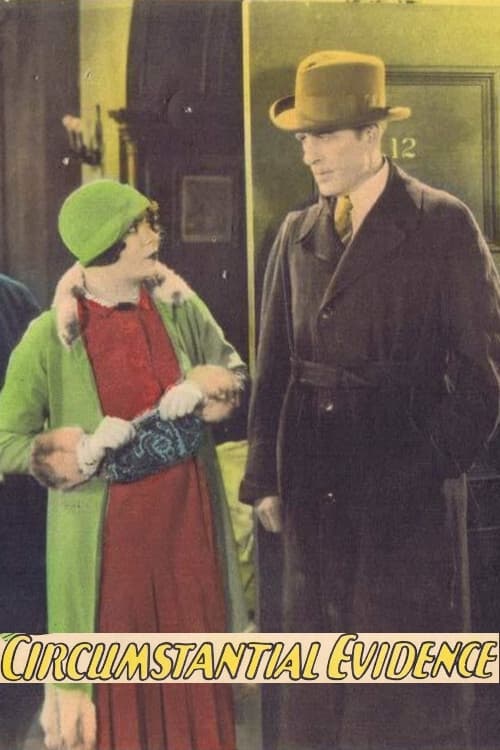
Duplicitous businessman Henry Lord talks Tony Benton, the weakling brother of heroine Jean Benton, into forging a check. The evidence is framed so that innocent clerk Arthur Rowland is accused of the crime.