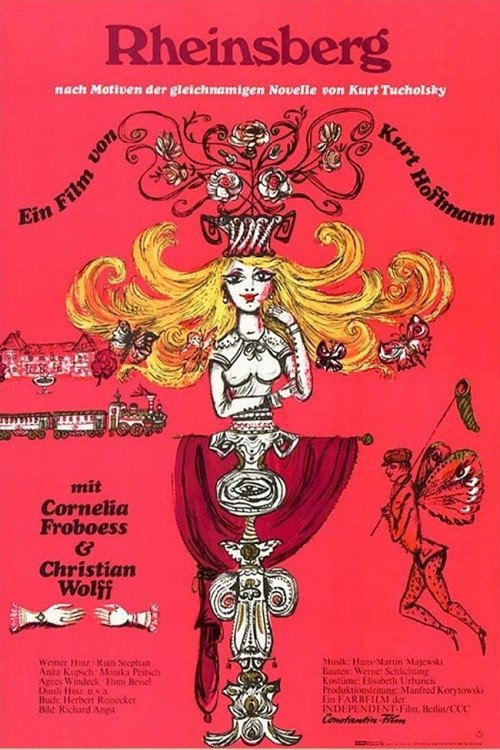
Plot Analysis Summary
Traces the adaptation of Tucholsky's novel into a 1967 West German romantic comedy through casting, location strategy, and artistic execution.
Story Structure — 4 Plot Phases
Literary & Directorial Origins
The project begins with Kurt Tucholsky's novel and Kurt Hoffmann's decision to adapt it. Previous successful adaptations establish the creative foundation.
Key Events
-
Genre Definition — Establishes the film as a 1967 West German romantic comedy.
Location: West Germany
-
Director Appointment — Kurt Hoffmann is selected to direct the adaptation.
Location: Berlin
-
Lead Casting — Christian Wolff is cast in the titular role. Characters: Wolf
Location: Casting Office
-
Ensemble Assembly — Additional cast members join the production team.
Location: Studio
-
Literary Foundation — The adaptation is based on Kurt Tucholsky's novel of the same name.
Location: Archive
Casting & Artistic Vision
Christian Wolff is selected for the titular role alongside supporting cast. Werner Schlichting designs sets to match the romantic comedy tone.
Key Events
-
Literary Foundation — The adaptation is based on Kurt Tucholsky's novel of the same name.
Location: Archive
-
Previous Adaptation Reference — Director references his 1963 Gripsholm Castle adaptation.
Location: Cinema History
-
Art Direction Assignment — Werner Schlichting is tasked with set design.
Location: Design Studio
-
Studio Production Start — Principal photography begins in Berlin.
Location: Spandau Studios
-
Location Scouting — Crew identifies alternative filming sites.
Location: Bremen
-
Political Context — Original Rheinsberg location deemed inaccessible due to communist control.
Location: East Germany
Production Logistics & Location Strategy
Filming shifts from Spandau Studios to Bremen and Schleswig-Holstein due to political restrictions. The crew adapts to West German locations.
Key Events
-
Political Context — Original Rheinsberg location deemed inaccessible due to communist control.
Location: East Germany
-
Geographic Substitution — West German regions stand in for Rheinsberg.
Location: Schleswig-Holstein
-
Set Construction — Art director implements Tucholsky-inspired designs.
Location: Spandau Studios
-
Character Development — Wolf's romantic comedy persona takes shape. Characters: Wolf
Location: Rehearsal Room
-
Ensemble Dynamics — Cast chemistry refined through rehearsals.
Location: Set
-
Principal Photography — Main shooting schedule commences on location. Characters: Wolf
Location: Bremen
Cinematic Realization & Release
Principal photography concludes with atmospheric shooting. The final cut is polished and released as a definitive 1967 West German romantic comedy.
Key Events
-
Principal Photography — Main shooting schedule commences on location. Characters: Wolf
Location: Bremen
-
Atmospheric Filming — Cinematography captures regional romantic ambiance.
Location: Schleswig-Holstein
-
Post-Production Editing — Footage assembled into coherent narrative flow.
Location: Editing Suite
-
Score Integration — Musical elements layered to enhance comedy tone.
Location: Sound Studio
-
Final Cut Approval — Director reviews completed film for release.
Location: Screening Room
-
Theatrical Release — Film debuts as a 1967 West German romantic comedy. Characters: Wolf
Location: Cinema