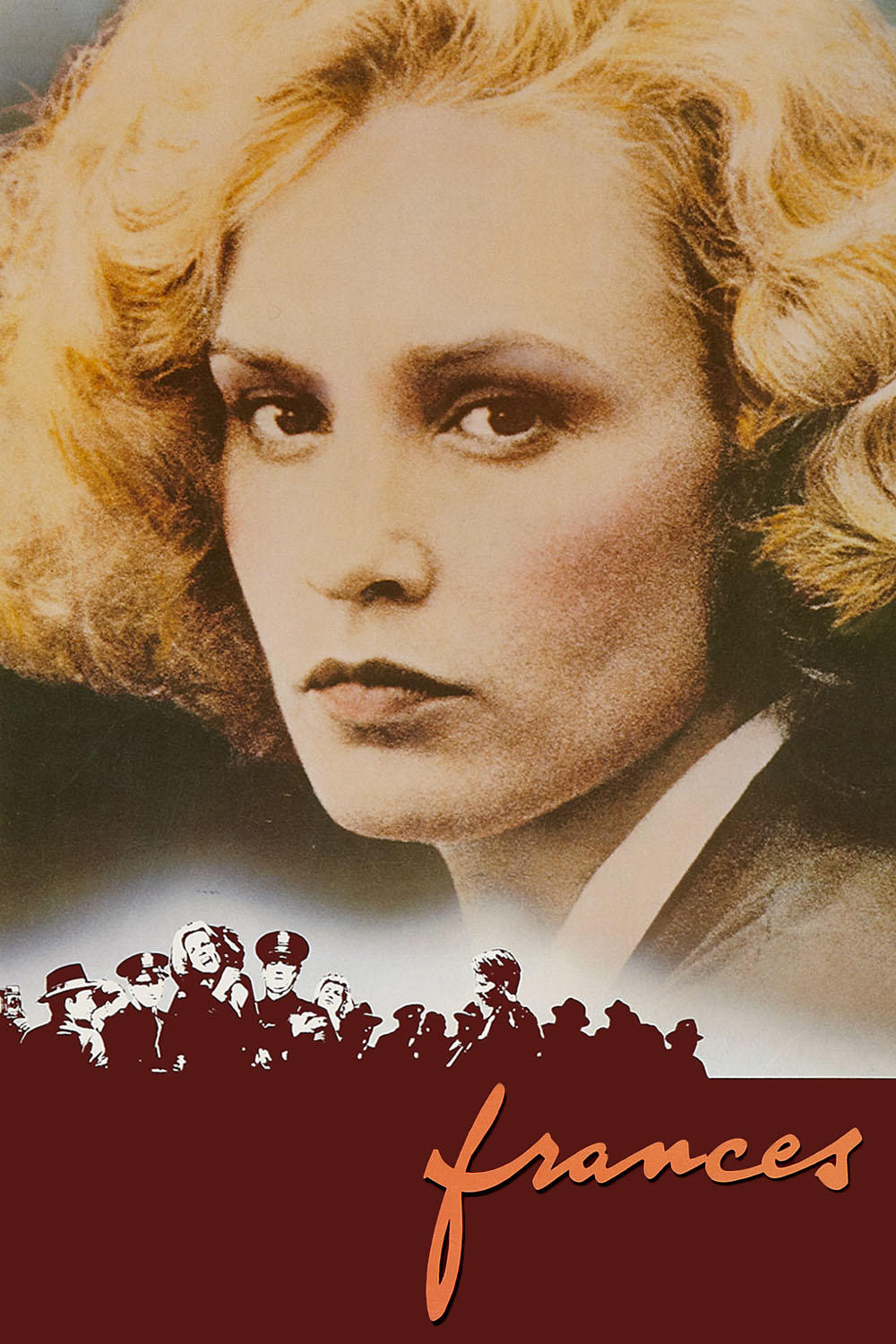
Frances (1982) character relationship network mapped with AI analysis. Explore the connections, alliances, and conflicts between characters.
Characters
Frances Farmer
(played by Jessica Lange) — protagonist
The rebellious protagonist who rejects Hollywood publicity stunts and makeup. She navigates failed marriages, theatrical exploitation, substance abuse, and a severe nervous breakdown, culminating in a...
Harry York
(played by Sam Shepard) — protagonist
An alleged Communist with whom Frances has an affair. He later watches her television program and walks with her in her final days, sharing her reflections on her past.
Lillian Farmer
(played by Kim Stanley) — supporting
Frances' estranged mother who assumes legal guardianship. Her controlling nature and objections to Frances' living arrangements directly lead to Frances' violent outburst and subsequent involuntary ps...
Dick Steele
(played by Christopher Pennock) — supporting
Frances' husband. She cheats on him with Harry York on the night of her hometown film premiere, marking a personal turning point.
Clifford Odets
(played by Jeffrey DeMunn) — minor
Canonical Relationships
Family, romantic, and professional connections based on plot evidence.
Frances Farmer → Clifford Odets
(Romantic Former Lovers And Theater Collaborators) — Clifford draws Frances toward the Group Theatre, but their affair ends while Frances discovers that the company has used her fame to attract audiences.
Clifford convinces Frances that her future lies with the Group Theatre. After she leaves Hollywood and appears in Golden Boy, he ends his affair with...
Frances Farmer → Dick Steele
(Family Wife And Husband) — Their marriage is marked by Frances's infidelity with Harry, which the plot presents as a personal turning point.
Frances marries Dwayne Steele, and the plot identifies Dick Steele as Frances's husband. Frances cheats on him with Harry York on the night of her hom...
Frances Farmer → Lillian Farmer
(Family Estranged Mother And Daughter) — Their strained relationship becomes a major cause of Frances's institutionalization after Lillian assumes legal guardianship and opposes her wish to live independently.
The plot identifies Lillian as Frances's estranged mother and says she becomes Frances's legal guardian. When Frances asks to live alone in the countr...
Frances Farmer → Harry York
(Romantic Lovers And Later Companions) — Their relationship begins as an affair and later becomes a personal connection in Frances's final years, as they walk together and discuss her past.
Frances cheats on her husband with Harry on the night of her hometown premiere. Years later, Harry watches her television appearance and walks with he...
Story Analysis
The story follows Frances Farmer's defiance, professional disappointments, institutional abuse, and later struggle to define a quieter life.
Plot Progression
Defiance and Early Ambition
— Frances earns attention for her writing and accepts a trip to the Soviet Union. She returns determined to act on her own terms, rejecting Hollywood publicity stunts and makeup.
Theater and Disillusionment
— Frances's marriage and affair complicate her personal life as Clifford Odets draws her toward the Group Theatre. Her stage experience turns bitter when she learns the company used her fame and Cliffor...
A Career in Decline
— Frances returns to Hollywood but finds herself in unchallenging films. Increasing substance use and mounting pressures culminate in a nervous breakdown.
Institutional Abuse and Release
— Frances's conflict with Lillian over independent living leads to commitment at Western State Hospital. She experiences abuse and coercive treatments before her release in the 1950s.
Recognition and Solitude
— Frances appears on This Is Your Life and later walks with Harry, reflecting on her past and future. She moves to Indianapolis, hosts a local television program, and dies alone in 1970.