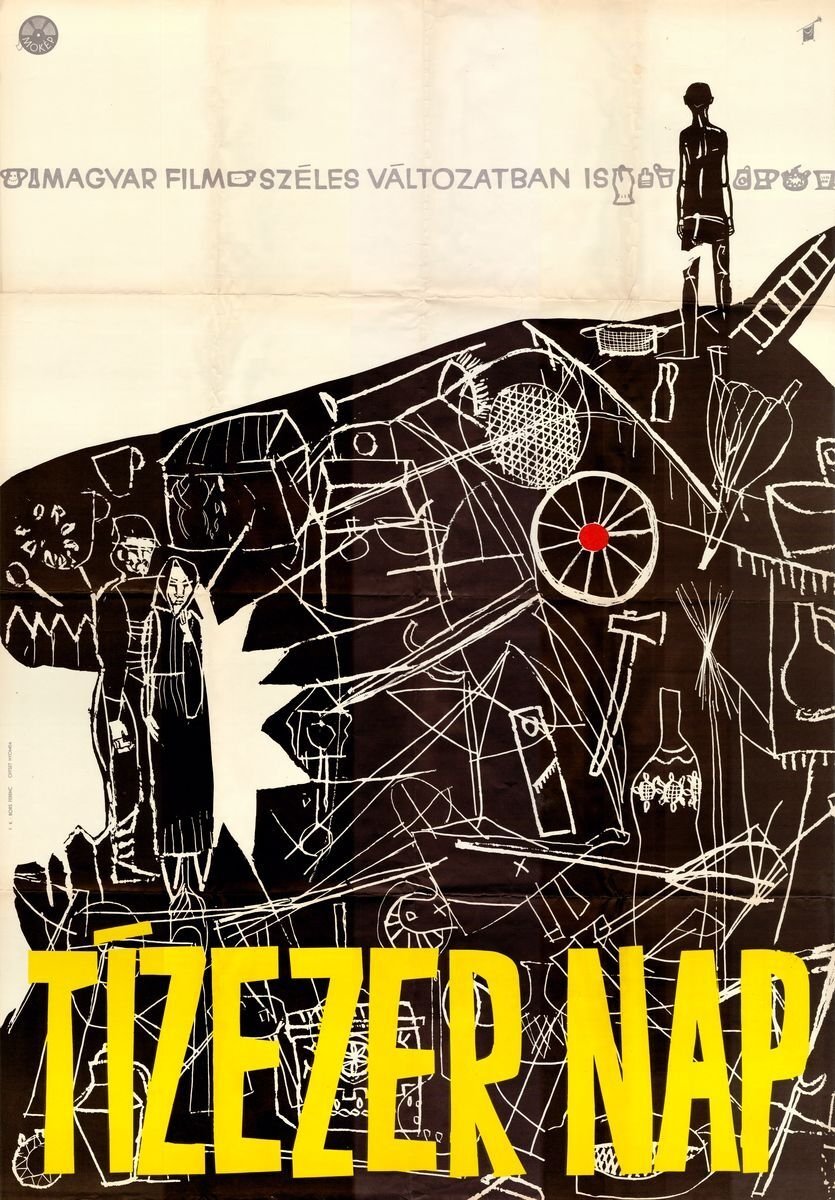
Plot Analysis Summary
Across decades of rural hardship and political upheaval, a family confronts the changing meaning of land, community, and personal freedom.
Story Structure — 5 Plot Phases
A Son Bound for the Sea
The film opens in the 1960s with a son preparing to leave Hungary. His father reveals a recent suicide attempt, establishing a crisis shaped by family history.
Key Events
-
Present-Day Family Crisis — A son prepares to leave for the sea while his father reveals a suicide attempt. Characters: Juli
Location: A Hungarian village
-
Return to the 1930s — The narrative jumps back ten thousand days to rural life in the 1930s. Characters: Juli, Balogh
Location: A rural Hungarian farm
Fields of Marriage and Hunger
The story moves back to the 1930s and follows rural marriage, poverty, violence, and conflict over work. Juli's life is connected to both domestic hardship and the old farm hierarchy.
Key Events
-
Juli Serves Balogh — Juli works as a servant for farmer Balogh before her marriage. Characters: Juli, Balogh
Location: Balogh's farm
-
The Pigpen Incident — A roof is blown into the pigpen, freezing the piglets and provoking an apology. Characters: Juli, Balogh
Location: Balogh's pigpen
-
Knife Fight at New Year — A drunken quarrel becomes a knife attack, with Juli becoming involved in the struggle. Characters: Juli, Fülöp Bánó
Location: A village house
-
A Vow Against Violence — The married couple vows never to strike each other again. Characters: Juli
Location: The family home
-
The Labor Strike — Striking workers beat alleged strikebreakers and tie them to a wheelbarrow. Characters: Fülöp Bánó
Location: A brick factory
-
The Failed Horse Purchase — Juli tries to buy a horse, but the family cannot sell its ox. Characters: Juli
Location: A rural marketplace
-
Salt Against the War — Salt is scattered over the plowed land as a ritual intended to keep war away. Characters: Juli
Location: The Széles fields
Promises of the New Order
After the war, land redistribution and collectivization transform the village. Grain seizures, resistance, and imprisonment expose the cost of political change.
Key Events
-
Salt Against the War — Salt is scattered over the plowed land as a ritual intended to keep war away. Characters: Juli
Location: The Széles fields
-
Postwar Land Redistribution — After the war, large estates are distributed and Fülöp returns as a Communist agitator. Characters: Fülöp Bánó
Location: The village
-
Granary Looting — Peasants loot the granary while Fülöp struggles to stop them. Characters: Fülöp Bánó
Location: The village granary
-
May Day Celebration — A cheerful May Day celebration briefly presents the lighter side of the political era. Characters: Fülöp Bánó
Location: The village festival grounds
-
Forced Grain Collection — Authorities forcibly collect much of the family's grain for urban areas. Characters: Juli, Fülöp Bánó
Location: The family farm
-
Grain Taken Back — Two villagers steal back their share of grain and are taken to the police station. Characters: Fülöp Bánó
Location: The village granary
-
Labor Camp Sentence — A man is deported to a labor camp for complicity after failing to stop the station fight. Characters: Juli
Location: A labor camp
-
Juli's Prison Visit — Juli visits the imprisoned farmer and tells him what happened at home. Characters: Juli
Location: The labor camp
Revolution at the Church
The 1956 revolution brings armed men into the village and places Communist prisoners before execution. The refusal to shoot and Fülöp's defiance create the film's most violent moral crisis.
Key Events
-
Revolutionary Threat — Armed counter-revolutionaries threaten Communist prisoners and force them toward execution. Characters: Fülöp Bánó
Location: A village lake and church
-
The Refused Shooting — A machine gun is handed to a villager, but he refuses to shoot the prisoners. Characters: Fülöp Bánó
Location: The village church
-
Fülöp Faces Execution — Fülöp refuses to kneel or turn away, and the armed group executes the others but spares him. Characters: Fülöp Bánó
Location: The church wall
-
A Son's Withdrawal — A false message about Juli's illness causes the son to withdraw from university. Characters: Juli
Location: The family home
Land, Union, and Survival
Fülöp renews the argument for a cooperative while the family struggles with illness, education, and generational conflict. The union document is signed, followed by a suicide attempt and a return to the present.
Key Events
-
A Son's Withdrawal — A false message about Juli's illness causes the son to withdraw from university. Characters: Juli
Location: The family home
-
Heat in the Potato Field — Juli falls ill in the heat, while a younger family member nearly attacks his father with a hoe. Characters: Juli, Fülöp Bánó
Location: A potato field
-
The Cooperative Argument — Fülöp argues that a cooperative could create a society where people matter more than possessions. Characters: Fülöp Bánó
Location: The village
-
Farmers Reject Union — Other farmers reject the cooperative because they refuse to surrender their land. Characters: Fülöp Bánó
Location: The village farms
-
The Signature — After Fülöp calls him a coward, the farmer signs the document needed to form the union. Characters: Fülöp Bánó
Location: A village office
-
The Failed Suicide — The farmer hangs himself but survives, leading the story back to the present. Characters: Juli
Location: The family home
-
Arrival at the Sea — The son reaches the sea and reflects that all land can belong to him. Characters: Juli
Location: The sea
The changing and turbulent history of Hungary is seen through the eyes of three men over a 30-year period in this somber drama. The three recall the highlights of their lives in flashbacks as they reminisce in the mid 1960s. The venerable trio begin their story in the 1930s, through World War II, and the decade beyond the communist invasion of 1956.