Plot Analysis Summary
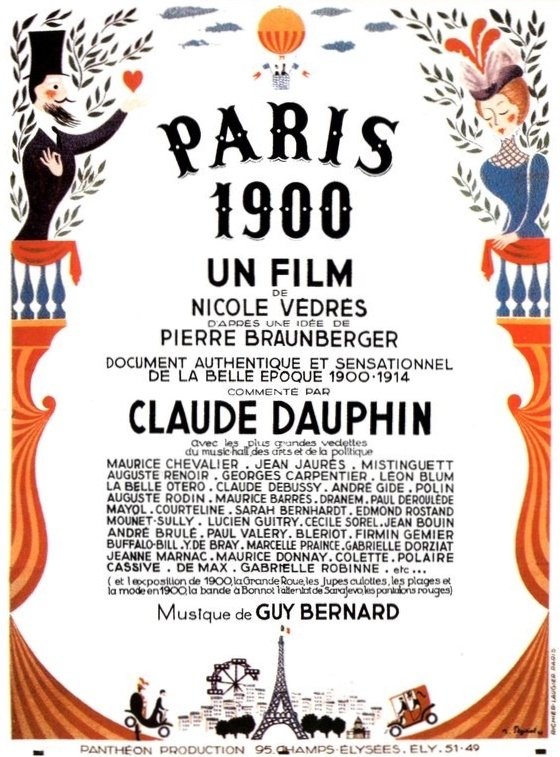
A historical documentary that uses archival footage and critical analysis to explore time, memory, and Parisian life between 1900 and 1914.
Story Structure — 4 Plot Phases
Archival Foundation
The documentary establishes its historical scope by tracing Parisian life from 1900 to 1914. Filmmakers begin compiling over seven hundred authentic newsreels and reportage clips to form the visual backbone.
Key Events
-
Historical Scope Definition — Documentary establishes its focus on tracing daily life in Paris between 1900 and 1914.
Location: Paris
-
Archival Compilation Process — Filmmakers gather and compile over seven hundred authentic period newsreels and reportage clips.
Location: Film Archive
-
Paris Urban Landscape — The physical setting where the archival footage captures everyday life across fourteen years.
Location: Paris Streets
Montage Construction
Private sequences are carefully integrated with public footage to create a layered historical tapestry. The editing process emphasizes rhythm and thematic continuity over linear narrative.
Key Events
-
Private Sequence Integration — Rare private sequences are woven into the montage alongside public newsreels.
Location: Private Collections
-
Period Documentary Text — The accompanying textual commentary that guides the viewer through the visual montage.
Location: Screen
Critical & Philosophical Depth
Critics praise the editing and accompanying text, elevating the film to a reference standard. André Bazin's analysis reveals the core theme: cinema as a machine to recover time only to lose it.
Key Events
-
Critical Acclaim Recognition — The editing and accompanying text receive widespread praise from critics, establishing the film as a reference.
Location: Cinema Circles
-
Cinematic Time Philosophy — André Bazin articulates the core theme: cinema as a machine to recover time only to lose it.
Location: Theoretical Discourse
-
Period Documentary Text — The accompanying textual commentary that guides the viewer through the visual montage.
Location: Screen
Legacy & Cinematic Impact
The documentary is recognized for birthing a specifically cinematic tragedy centered on Time. Its archival excerpts later influence later works like Chris Marker's Level Five, cementing its enduring legacy.
Key Events
-
Birth of Cinematic Tragedy — The documentary is credited with marking the birth of a specifically cinematic tragedy centered on Time itself.
Location: Film Theory
-
Cross-Film Legacy Appearance — Excerpts from the documentary are later featured in Chris Marker's 1996 film Level Five.
Location: Later Cinema
-
Historical Preservation Mission — The film fulfills its purpose as a definitive archival reference for early twentieth-century Paris.
Location: Cultural Memory