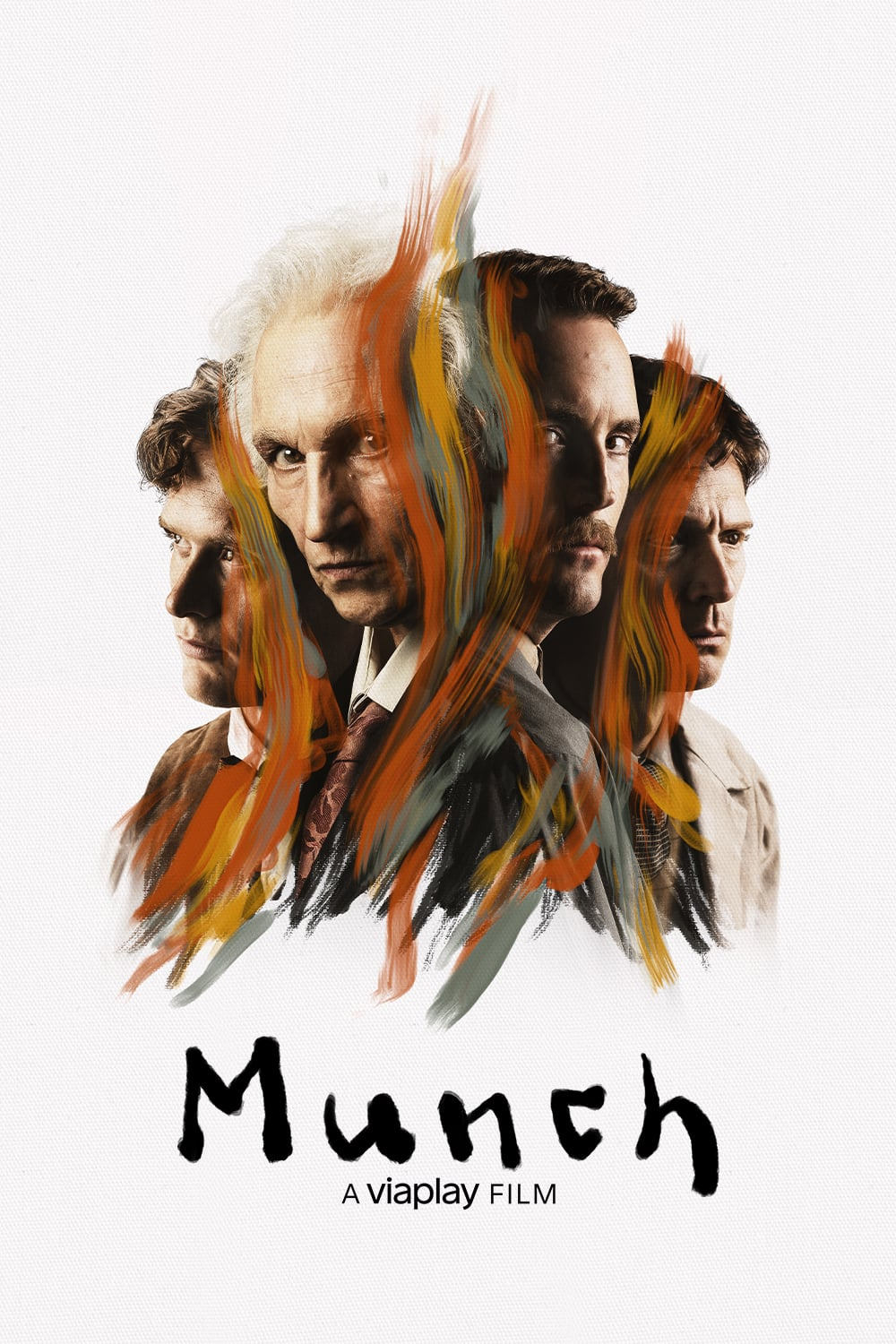
Edvard Munch (21) (played by Alfred Ekker Strande) is a protagonist in Munch.
Edvard Munch (30) (played by Mattis Herman Nyquist) is a protagonist in Munch.
Edvard Munch (45) (played by Ola G. Furuseth) appears in Munch.
Edvard Munch at forty-five is the central artist during the Berlin period. After his exhibition is closed by a narrow vote, he faces criticism that his paintings are unfinished, overly simple, or technically inadequate. He insists that art should portray living people, feelings, suffering, and anxiety, revealing his conflict with conventional artistic judgment. Edvard Munch (80) (played by Anne Krigsvoll) appears in Munch.
Edvard Munch at eighty is living under the German occupation when officials inspect his paintings and praise his international reputation. Fearing that they will seize his work or force collaboration, he rejects any association with them and tells Rolf Stenersen that they will return. His anxiety connects his late life to the continuing defense of his art. Milly Thaulow (played by Thea Lambrechts Vaulen) appears in Munch.
Milly Thaulow is involved with Munch during one of the unstable periods in his personal life. She urges him to enjoy the evening instead of treating every encounter as a crisis, directly challenging his tendency toward anxiety and emotional intensity. Their interaction shows how Munch's inward artistic distress interferes with ordinary social and romantic connection. Gustav Vigeland (played by Nader Khademi) appears in Munch.
Gustav Vigeland is connected to the park near Munch's home, which visiting officials praise alongside Munch's international reputation. The summary gives him no direct conversation or action, but his presence links another major artistic landmark with the authorities' inspection of Munch's work and the uneasy atmosphere surrounding the visit. Inger Munch (played by Ylva Fuglerud) appears in Munch.
Christian Munch (played by Per Frisch) appears in Munch.
Munch (2023) character relationship network mapped with AI analysis. Explore the connections, alliances, and conflicts between characters.
Characters
Edvard Munch (21)
(played by Alfred Ekker Strande) — protagonist
Edvard Munch (30)
(played by Mattis Herman Nyquist) — protagonist
Edvard Munch (45)
(played by Ola G. Furuseth) — supporting
Edvard Munch at forty-five is the central artist during the Berlin period. After his exhibition is closed by a narrow vote, he faces criticism that his paintings are unfinished, overly simple, or tech...
Edvard Munch (80)
(played by Anne Krigsvoll) — supporting
Edvard Munch at eighty is living under the German occupation when officials inspect his paintings and praise his international reputation. Fearing that they will seize his work or force collaboration,...
Milly Thaulow
(played by Thea Lambrechts Vaulen) — supporting
Milly Thaulow is involved with Munch during one of the unstable periods in his personal life. She urges him to enjoy the evening instead of treating every encounter as a crisis, directly challenging h...
Gustav Vigeland
(played by Nader Khademi) — minor
Gustav Vigeland is connected to the park near Munch's home, which visiting officials praise alongside Munch's international reputation. The summary gives him no direct conversation or action, but his...
Inger Munch
(played by Ylva Fuglerud) — minor
Christian Munch
(played by Per Frisch) — minor
Dr. Daniel Jacobson
(played by Jesper Christensen) — supporting
Dr. Daniel Jacobson is the doctor who questions Munch during treatment. He asks about Munch's drinking, physical health, and the uncertain boundary between illness and artistic genius. Through this qu...
Canonical Relationships
Family, romantic, and professional connections based on plot evidence.
Edvard Munch (21) → Inger Munch
(Family Memory)
The film traces Munch's life across different ages and recalls the illness and death of his sister as a formative trauma.
Edvard Munch (45) → Christian Munch
(Family Memory)
The film places Munch's traumatic memories within his family history and his lifelong fear of illness and death.
Edvard Munch (45) → Inger Munch
(Family Sibling Memory)
Munch recalls the traumatic illness and death of his sister, an experience permanently burned into his memory.
Dr. Daniel Jacobson → Edvard Munch (45)
(Professional Physician And Patient)
During treatment, Dr. Daniel Jacobson questions Munch about drinking, health, and the boundary between illness and artistic genius.
Edvard Munch (45) → Milly Thaulow
(Romantic Entanglement)
Munch struggles to communicate with Milly Thaulow, who wants him to enjoy the evening instead of treating every encounter as a crisis.
Edvard Munch (30) → Edvard Munch (21)
(Temporal Past Self)
The film presents Munch at several ages while tracing the development of his artistic and emotional life.
Edvard Munch (45) → Edvard Munch (30)
(Temporal Past Self)
The story shifts through different periods of Munch's life and presents multiple age-specific versions of him.
Edvard Munch (80) → Edvard Munch (45)
(Temporal Past Self)
The film moves between different periods of Munch's life, including his later years and his experiences at age 45.
Story Dynamics
Alliances, conflicts, and narrative interactions that evolve throughout the story.
Edvard Munch (80) → Milly Thaulow
(Narrative Biographical Connection)
The film intercuts Munch's late-life anxiety with earlier memories of unstable relationships, including his difficulty communicating with Milly Thaulo...
Edvard Munch (80) → Gustav Vigeland
(Social Cultural Association)
Officials praise Munch's international reputation and the nearby Gustav Vigeland park during their inspection of his home.
Story Analysis
The film follows Munch across different periods as artistic conviction, emotional instability, trauma, and fear of death become inseparable.
Plot Progression
Occupation at the Door
The Rejected Exhibition
Love and Artistic Crisis
Inside the Treatment Room
The Scream Within
Directed by Henrik Martin Dahlsbakken
Munch (2023) · 6.6/10 · drama, history
Content sources
Related entry on
Wikidata
(Q116943042), public domain (CC0).
Plot breakdown and analysis on this page are AI-generated from the title's synopsis and metadata.