Story Structure — 5 Plot Phases
The Body as a Political Image
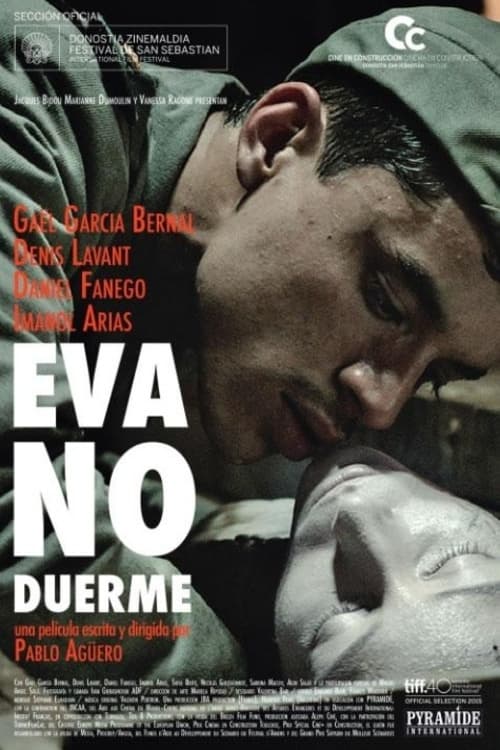
The film recalls the dead woman’s mass following and the hostility it inspired. An embalmer transforms her corpse into a controlled, immaculate symbol, while authorities recognize the danger of its continued existence.
Key Events
-
The Military Announces the Capture — A military voice celebrates the capture of the dead woman’s embalmed body.
Location: Military setting
-
A Funeral Remembered — The funeral speech and mass following are recalled by enemies who resent the woman’s influence.
Location: Argentina
-
The Embalmer Refines the Image — An embalmer removes visible signs of pain and rural identity, creating an immaculate, smiling image.
Location: Embalming room
-
The Body Becomes a Political Threat — Authorities deny destroying the body but recognize that its existence is politically dangerous.
Location: Military setting
The Secret Military Shipment
After a military takeover, the body becomes a covert consignment guarded by Robles. Mishandling, nearby civilian resistance, and disguise efforts reveal the fear surrounding the shipment.
Key Events
-
A Secret Consignment — After a military takeover, the body is moved as a secret consignment under coded orders.
Location: Military transport route
-
Robles Guards an Unknown Cargo — Private Robles is assigned to guard the shipment without being told what it contains. Characters: Robles
Location: Military transport route
-
Warnings of Civilian Resistance — The escort is warned that unionists, laborers, journalists, women, and children may try to seize the body.
Location: Military transport route
-
The Shipment Is Mishandled — The consignment is mishandled during the journey as civilian resistance appears nearby. Characters: Robles
Location: Military transport route
-
A Disguise Is Sought — The escort searches for women’s clothing to disguise the body. Characters: Robles
Location: Military transport route
-
Robles Admits He Cannot Forget — The commander tests Robles’ obedience, but Robles says he cannot forget what he has seen. Characters: Robles
Location: Military transport route
The Guard and the Hidden Secret
The commander tests Robles’ obedience, but Robles admits that he cannot forget what he has seen. The story later shifts to Aramburu, whose refusal to disclose the body’s location makes the secret central to his trial.
Key Events
-
Aramburu Faces a Revolutionary Trial — Years later, revolutionaries put Aramburu on trial over repression, executions, bombings, and social losses. Characters: Aramburu
Location: Unspecified place of captivity
-
The Secret Burial Is Withheld — Aramburu refuses to disclose where the body was hidden and says he wanted a Christian burial. Characters: Aramburu
Location: Unspecified place of captivity
Execution and Uncertain Messages
Aramburu is executed after the revolutionaries demand the body’s return to the people. A mysterious call and a sealed message involving an Italian nun keep the chain of custody uncertain.
Key Events
-
Aramburu Is Executed — The revolutionaries execute Aramburu and say his remains will not be returned until the dead woman is restored to the people. Characters: Aramburu
Location: Unspecified place of captivity
-
A Call and Sealed Message — A mysterious call and a sealed message involving an Italian nun deepen uncertainty about the secret.
Location: Unspecified
Return, Burial, and Persistent Memory
The body returns to Argentina and is displayed under renewed military authority. Although a ruler claims to have buried it beneath concrete, the ending insists that the woman’s memory continues to inspire resistance.
Key Events
-
The Body Returns to Argentina — The body is returned to Argentina and displayed as if its former power has returned.
Location: Argentina
-
A Ruler Claims Authority — A new military ruler declares himself the defender of Western Christian civilization.
Location: Argentina
-
Buried Beneath Concrete — The ruler says that in 1976 he buried the body beneath six meters of concrete.
Location: Unspecified burial site
-
Memory Fuels the Uprising — The closing words call the dead woman the mother of the uprising, asserting that repression cannot end her memory.
Location: Argentina