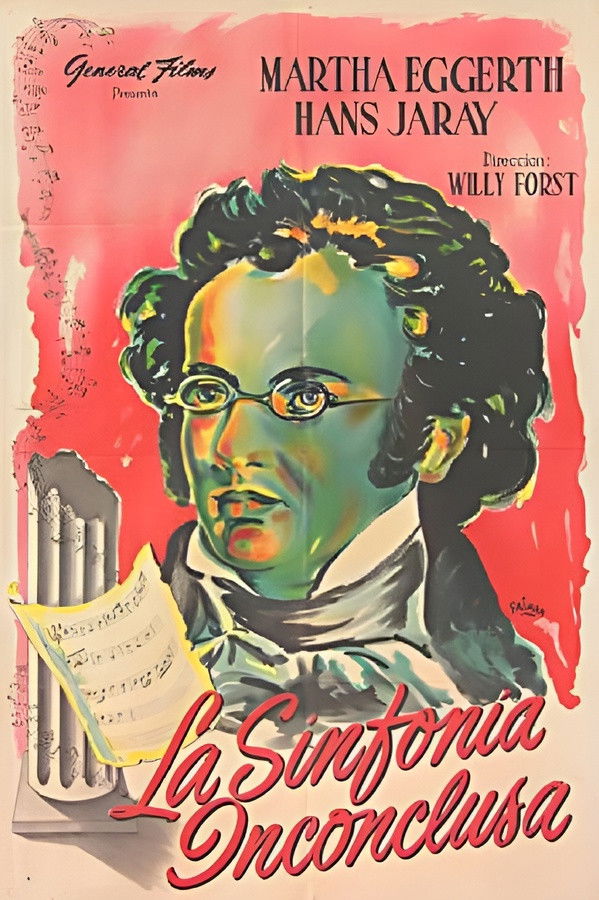
Plot Analysis Summary
A biographical musical drama tracing a composer's creative journey through love, loss, and artistic legacy.
Story Structure — 4 Plot Phases
Cinematic Genesis
The film introduces its British-Austrian production and historical setting in the 1820s. Schubert is established as the central figure navigating early creative endeavors.
Key Events
-
Film Production Launch — British-Austrian musical drama begins production. Characters: Franz Schubert
Location: Studio
-
Directorial Collaboration — Forst and Asquith shape the cinematic vision. Characters: Franz Schubert
Location: Production Office
-
Historical Setting Establishment — Story anchors in early nineteenth century Europe. Characters: Franz Schubert
Location: 1820s Vienna
-
Composer Introduction — Schubert is introduced as the central creative figure. Characters: Franz Schubert
Location: Music Room
-
Creative Process Begins — Early symphony composition takes shape. Characters: Franz Schubert
Location: Study
-
Romantic Encounter — Protagonist experiences initial romantic connection. Characters: Franz Schubert
Location: Social Gathering
Romantic Ascent
A deep emotional bond forms as the protagonist experiences profound love. The narrative builds toward a peak of personal happiness and artistic inspiration.
Key Events
-
Romantic Encounter — Protagonist experiences initial romantic connection. Characters: Franz Schubert
Location: Social Gathering
-
Deep Affection Develops — Emotional bond strengthens between lovers. Characters: Franz Schubert
Location: Garden
-
Sudden Romantic Loss — Protagonist loses the love of his life. Characters: Franz Schubert
Location: Private Chamber
-
Emotional Despair — Grief halts daily life and creative flow. Characters: Franz Schubert
Location: Isolated Room
Tragic Descent
Sudden loss shatters the protagonist's world, halting his symphony composition. Grief dominates the middle act, creating a stark emotional shift.
Key Events
-
Emotional Despair — Grief halts daily life and creative flow. Characters: Franz Schubert
Location: Isolated Room
-
Symphony Abandonment — Major symphony project left unfinished. Characters: Franz Schubert
Location: Composition Desk
-
Unfinished Legacy — Historical record preserves the incomplete work. Characters: Franz Schubert
Location: Archive
-
German Version Adaptation — Alternate German-language cut produced. Characters: Franz Schubert
Location: Dubbing Studio
Musical Resurrection
The story transitions to cinematic adaptation and performance. The famous serenade is brought to life, transforming personal tragedy into enduring art.
Key Events
-
German Version Adaptation — Alternate German-language cut produced. Characters: Franz Schubert
Location: Dubbing Studio
-
Title Inspiration Source — Film title derives from famous serenade line. Characters: Franz Schubert
Location: Music Library
-
Musical Performance Setup — Preparation for live musical presentation. Characters: Franz Schubert
Location: Concert Hall
-
Serenade Debut — Ständchen performed for cinematic audience. Characters: Franz Schubert
Location: Performance Stage
-
Cultural Impact Assessment — Film gains recognition as famous serenade adaptation. Characters: Franz Schubert
Location: Press Room
-
Biographical Tribute — Story serves as artistic homage to composer. Characters: Franz Schubert
Location: Cinema
-
Narrative Closure — Film concludes with lasting musical resonance. Characters: Franz Schubert
Location: Screen
-
Historical Reflection — Audience reflects on tragic creative journey. Characters: Franz Schubert
Location: Memory
-
Legacy Preservation — Unfinished symphony immortalized through cinema. Characters: Franz Schubert
Location: Cultural Archive
Composer Franz Schubert--broke, struggling and unhappy--gets a break when a wealthy friend wangles him an invitation to a command performance in front of a princess of the royal family. Schubert performs a version of his new work, "Symphony in B Minor", for the princess, but a misunderstanding results in Schubert storming out of the concert in a rage. Complications ensue. English-language version of "Leise flehen meine Lieder."