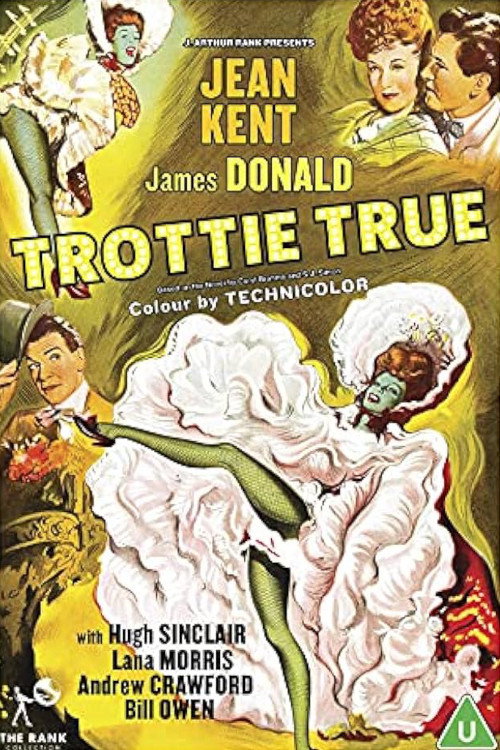
Trottie True (1949) character relationship network mapped with AI analysis. Explore the connections, alliances, and conflicts between characters.
Characters
Trottie True
(played by Jean Kent) — protagonist
A 1890s Gaiety Girl who marries Lord Digby and becomes Duchess of Wellwater. Her music hall background initially clashes with aristocratic in-laws but earns respect. She reflects on her past while wat...
Lord Digby Langdon
(played by James Donald) — protagonist
Aristocrat who marries Trottie. Plans to escort chorus girl Ruby Rubato to lunch at Romanoff's to enable the Marquess's affair. Misinterprets Trottie's innocent meeting with an old beau as an assignat...
Maurice Beckenham
(played by Hugh Sinclair) — supporting
Sid Skinner
(played by Andrew Crawford) — supporting
Mr True
(played by Harold Scott) — supporting
Joe Jugg
(played by Bill Owen) — supporting
Bouncy Barrington
(played by Lana Morris) — supporting
Saintsbury
(played by Campbell Cotts) — minor
Clare as a child
(played by Carole Lesley) — minor
Bertha True
(played by Daphne Anderson) — minor
Perce True
(played by Tony Halfpenny) — minor
Perce as a child
(played by David Lines) — minor
Mrs True
(played by Joan Young) — minor
Daisy Delaware
(played by Hattie Jacques) — minor
Monty, Marquis of Maidenhead
(played by Michael Medwin) — supporting
Married aristocrat invited to lunch at Romanoff's. Fails to arrive, accidentally causing a misunderstanding between Digby and Trottie while intending to philander.
Stage Door Johnny (uncredited)
(played by Roger Moore) — minor
The Bellaires' footman
(played by Anthony Steel) — minor
Trottie as a child
(played by Dilys Laye) — minor
Duke Of Wellwater
(played by Harcourt Williams) — supporting
Title held by Digby's family. Digby succeeds to the dukedom, making Trottie the Duchess.
Hon. Bongo Icklesham
(played by Christopher Lee) — supporting
Story Analysis
A music hall performer navigates aristocratic expectations, marital misunderstandings, and personal authenticity to find her place in high society.
Plot Progression
Gaiety Girl Origins
— Trottie True establishes her background as a 1890s music hall performer. She navigates a brief romance and transitions into aristocratic life through marriage.
Aristocratic Integration
— The Duchess faces initial prejudice from traditional in-laws while winning over the household staff. Social friction builds as she adapts to elite expectations.
The Romanoff Misunderstanding
— A planned lunch and an innocent Hyde Park reunion trigger a marital crisis. Miscommunication and missing context escalate tension at the restaurant.
Window Reflection & Acceptance
— Trottie gains noble validation for her authenticity and reflects on her journey. The narrative closes with her contemplating the future while observing a wedding.