Story Structure — 4 Plot Phases
Rediscovering The Bells
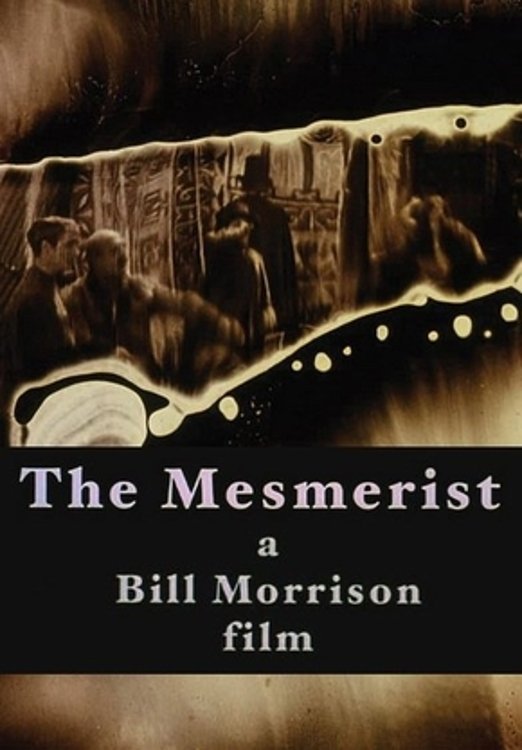
The work introduces an old silent-film source and emphasizes its very old, apparently decomposed print. The source material establishes the visual foundation for the experiment.
Key Events
-
The Mesmerist Begins — The work presents an experimental treatment of an older silent film.
-
The Bells Source Film — The source material is identified as the silent film The Bells.
-
Silent Film Format — The Bells is presented as an older silent-film work.
-
Aged Film Copy — The filmmaker uses a very old and apparently decomposed copy.
A Score Enters Decay
Jazzy music is added to the silent imagery. The pairing begins to transform visible damage into part of the viewing experience.
Key Events
-
Visible Decomposition — The print visibly displays signs of decomposition.
-
Jazzy Musical Score — Jazzy music is added to the silent-film imagery.
-
Music Meets Images — The musical accompaniment begins working in tandem with the film.
-
Film Skips — The damaged film visibly skips during playback.
Rhythm Inside Damage
Skips and decomposition bubbles become noticeable as the film continues. The music works in tandem with these irregularities.
Key Events
-
Film Skips — The damaged film visibly skips during playback.
-
Decomposition Bubbles Appear — Bubbles caused by decomposition appear across the moving image.
-
Rhythmic Damage — The skips and decomposition interact with the jazzy musical rhythm.
-
Simple Experimental Premise — The work is characterized as simple, and perhaps initially foolish.
Cleverness Revealed
What may initially seem simple or foolish is reassessed as an interesting and clever experiment. The musical fit becomes the work's strongest quality.
Key Events
-
Clever Film Experiment — The combination is recognized as an interesting and clever experiment.
-
Music Works Well — The reviewer specifically notes that the music works very well with the film.
-
Questions About Construction — The reviewer wonders whether the print was altered to fit the music or vice versa.
-
Appreciative Final Assessment — The work is recommended for viewers who appreciate the sublime, despite being difficult to rate.