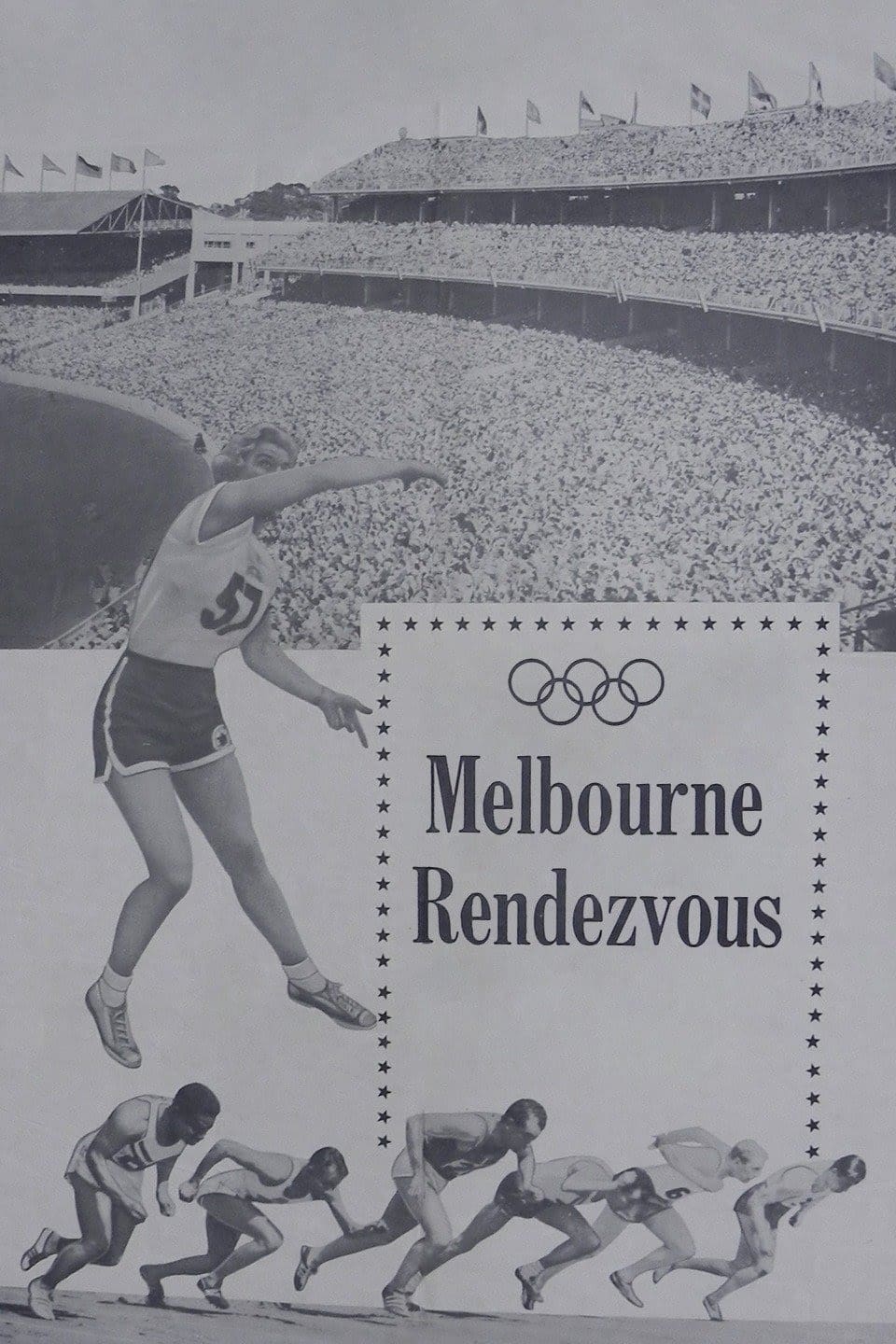
A French documentary records and presents the 1956 Summer Olympics held in Melbourne.
The documentary establishes Melbourne as the setting and introduces the 1956 Summer Olympics. Its French documentary identity frames the presentation.
The film documents the Olympic gathering and its athletic spectacle. The central subject remains the event organized in Melbourne.
Recorded images are organized through cinematography, narration, and documentary presentation. The film continues following the Olympic period.
The documented Olympic period concludes on December 8, 1956. Editing, sound, music, and narration lead to the film's French release in 1957.
Rendez-Vous a Melbourne is the official filmed record of the 1956 Olympic Games in Australia. At the time of its release, there was much controversy in the documentary-filmmaking world over the fact that the Aussies signed over exclusive distribution rights to a French firm, resulting in a boycott from other movie companies. None of this matters when the film is seen today: though not in the same league as Leni Reifenstahl's Olympiad, this 110-minute extravaganza is consistently entertaining. Fifteen cameras were utilized to lens every aspect of the event; it was then up to editors Jean Dudrumet and Monique Lacombe to burrow through miles and miles of film to cull the highlights seen herein. Portions of Rendez-Vous a Melbourne have since resurfaced in practically every Olympics documentary -- not to mention the many TV specials attending the now-biannual event.
René Lucot
Rating: 5.7/10 (6 votes)
Plot analysis generated from content on Wikipedia, licensed under CC BY-SA 4.0.
Related entry on Wikidata (Q3932920), public domain (CC0).