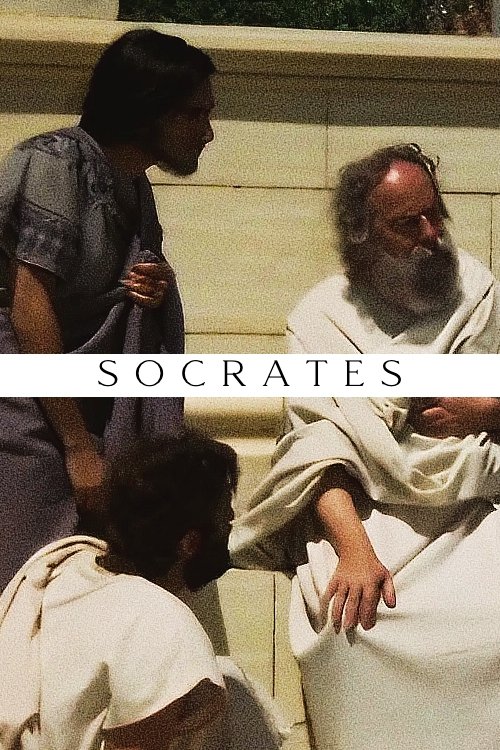
Socrates (1970) character relationship network mapped with AI analysis. Explore the connections, alliances, and conflicts between characters.
Characters
Socrate
(played by Jean Sylvère) — protagonist
Classical Greek philosopher, founder of Western ethical and dialectical traditions.
Hippias
(played by Adolfo Thous) — supporting
Sophist and polymath frequently debated by Socrates.
Story Dynamics
Alliances, conflicts, and narrative interactions that evolve throughout the story.
Socrate → Hippias
(Conflict Philosophical Opponent) — Their interaction represents Socrates' critical examination of sophistry through philosophical questioning and dialogue.
The film presents excerpts from the dialogue Hippias major, in which Socrates debates Hippias, a sophist and polymath.
Story Analysis
The final period of a philosopher's life becomes a test of truth, justice, law, and philosophical integrity amid Athens' political collapse.
Plot Progression
A City Under Defeat
— Athens suffers military defeat as the Spartans demolish its walls and the Thirty Tyrants take power. The political crisis establishes the historical pressure surrounding Socrate's life.
The Search For Truth
— Socrate is introduced as an elderly philosopher surrounded by young followers. Dialogues with figures such as Hippias present questioning, irony, maieutics, and awareness of ignorance.
A Hostile Democracy
— Athens becomes increasingly intolerant of criticism and traditional values. Socrate's poverty, philosophical priorities, and opposition to sophistry deepen the tension around him.
The Trial Of Socrate
— Socrate is accused of corrupting the youth and rejecting the traditional gods. His calm defense and provocative proposal do not prevent the court from imposing capital punishment.
The Last Argument
— In prison, Socrate rejects escape and remains committed to justice and the laws. He drinks hemlock while continuing to reason about death and the immortality of the soul.