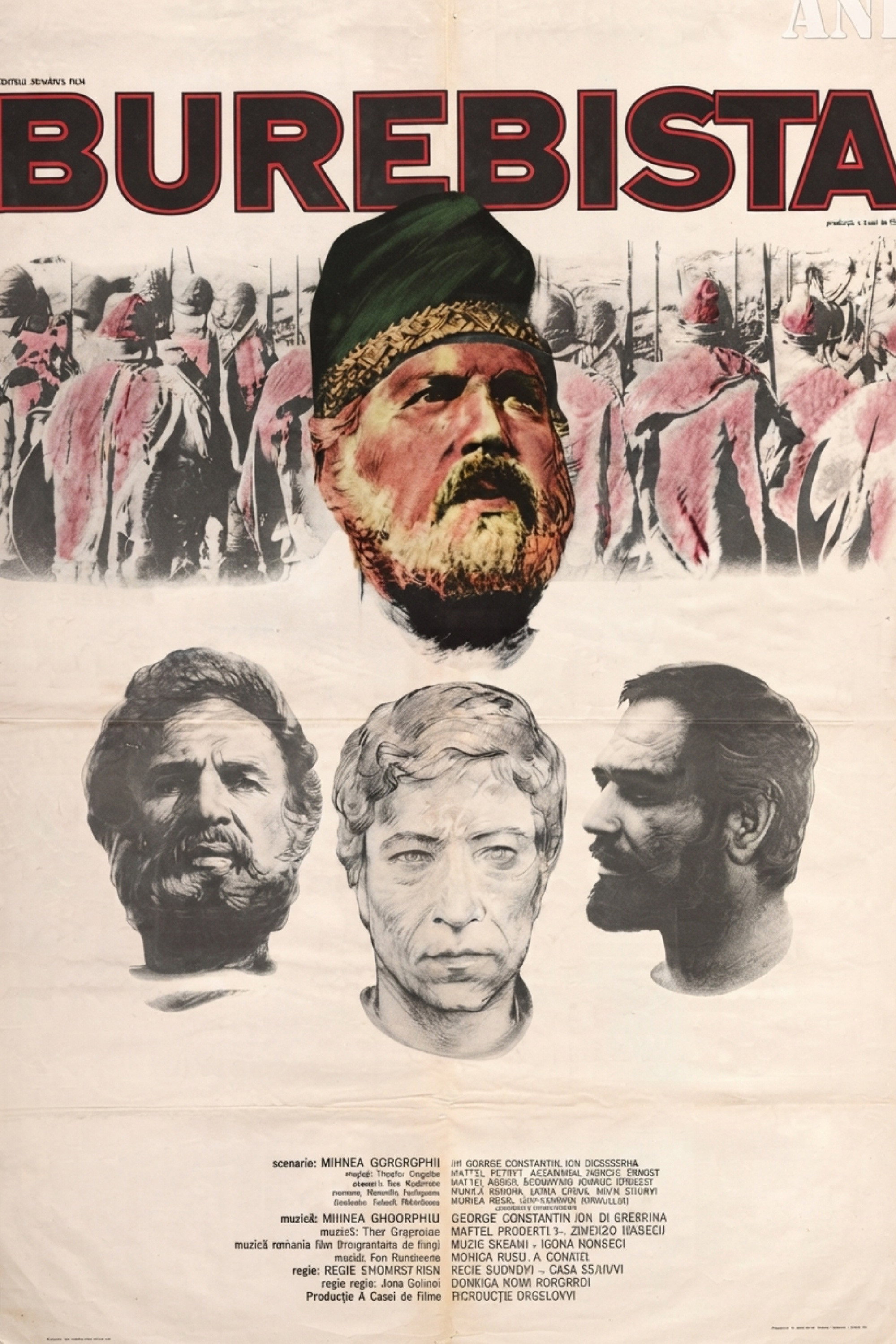
Burebista (1980) character relationship network mapped with AI analysis. Explore the connections, alliances, and conflicts between characters.
Characters
Calopor, Former Gladiator
(played by Ion Dichiseanu) — protagonist
A former gladiator who once served with Spartacus, Calopor arrives in Dacia as a refugee and earns Burebista's trust. Sent to assess events in Greece, he confronts Hibrida at the games and kills him a...
Dacian King Burebista
(played by George Constantin) — supporting
The ruler of Dacia and the film's central figure, Burebista unites the Dacian lords, trains his forces, and resists Roman expansion. He supports the struggle against Roman forces, defeats them, and la...
Boian, King of the Boii
(played by Ștefan Sileanu) — supporting
Breza the Druid
(played by Constantin Dinulescu) — minor
A fanatical Druid who influences the Celtic opposition to Burebista's attempt at negotiation. After the Celts surrender their Dacian captives, Breza flees and is pursued by Calopor. He fatally stabs C...
Canonical Relationships
Family, romantic, and professional connections based on plot evidence.
Dacian King Burebista → Calopor, Former Gladiator
(Family Father) — Illegitimate father and son relationship revealed at the end.
Story Dynamics
Alliances, conflicts, and narrative interactions that evolve throughout the story.
Dacian King Burebista → Boian, King of the Boii
(Conflict Enemy) — Celtic tribe invading and threatening Dacian sovereignty.
Calopor, Former Gladiator → Breza the Druid
(Conflict Enemy) — Direct combatants resulting in fatal confrontation.
Dacian King Burebista → Breza the Druid
(Conflict Arch Enemy) — Fanatical Druid leading hostile forces against Dacia.
Story Analysis
A Dacian kingdom unites against external threats, using military strength, diplomacy, and symbolic power to preserve its independence.
Plot Progression
The Kingdom Unites
— Roman expansion threatens Dacia, prompting the unification of its lords under a single ruler. Military training and diplomatic contacts prepare the kingdom for resistance.
War Beyond Dacia
— Requests for help draw Dacia into the struggle against Rome. A fatal gladiatorial spectacle sparks an uprising, followed by a decisive cavalry victory.
Letters and Betrayal
— Victory celebrations are interrupted by news of political upheaval and new appeals for support. A Celtic raid exposes internal weakness and creates a new danger.
The Eclipse Strategy
— Negotiations with the Celts fail, and war threatens to benefit Rome. A predicted eclipse is used to frighten the attackers into releasing their captives.
Unity Beyond Mortality
— The Celtic tribes accept Dacian rule while Caesar declares a future threat. Caesar's assassination removes the immediate danger, leaving national unity as the lasting legacy.