Story Structure — 6 Plot Phases
Desert Revenge
The film introduces the eternal triangle through silent-cinema imagery, desert sheiks, tents, and Persian brocades. The Arab version turns the Husband's discovery into revenge.
Key Events
-
The Eternal Triangle — The film establishes the husband, wife, and lover as its recurring triangle. Characters: The Husband, The Wife, The Lover
Location: Abstract cinematic frame
-
Silent Cinema Framework — The theme is introduced as a subject first explored by silent cinema. Characters: The Husband, The Wife, The Lover
Location: Silent-cinema styled setting
-
Desert Lovers Discovered — A desert setting presents the Husband discovering the Wife with the Lover. Characters: The Husband, The Wife, The Lover
Location: Desert camp
-
Persian Brocade Tableau — Persian brocades reinforce the deliberately stylized desert melodrama. Characters: The Husband, The Wife, The Lover
Location: Desert tent
-
Arab Husband's Revenge — The Arab version responds to the discovery with the Husband's revenge. Characters: The Husband, The Wife, The Lover
Location: Desert camp
Rain and Whisky
The English variation replaces hot-blooded revenge with rain interrupting cricket. The marital crisis is handled through a compromise over whisky.
Key Events
-
English Rain Arrives — The English variation shifts the triangle into rainy cricket culture. Characters: The Husband, The Wife, The Lover
Location: English cricket ground
-
Cricket Match Stopped — Rain stops the cricket during the English treatment of the affair. Characters: The Husband, The Wife, The Lover
Location: English cricket ground
-
Whisky Compromise — The English response favors a compromise over whisky. Characters: The Husband, The Wife, The Lover
Location: English domestic setting
Japanese Extremes
The Japanese version gives the triangle a severe response involving harakiri. It also presents resistance to American intervention.
Key Events
-
Japanese Severity — The Japanese variation gives the triangle a severe and ritualized tone. Characters: The Husband, The Wife, The Lover
Location: Japanese-styled setting
-
Harakiri Response — The Japanese characters resort to harakiri in response to the situation. Characters: The Husband, The Wife, The Lover
Location: Japanese-styled interior
-
American Intervention — The Japanese treatment cannot stomach American intervention. Characters: The Husband, The Wife, The Lover
Location: Japanese-styled setting
Italian Misreadings
The Italian treatment turns the affair into a parody of emotional language and subtitles. The Lover's feelings and the Husband's anger are deliberately mistranslated.
Key Events
-
Italian Subtitle Style — The Italian version shifts emphasis toward stylized subtitles and emotional excess. Characters: The Husband, The Wife, The Lover
Location: Italian-styled setting
-
Misread Lover's Feelings — A subtitle renders the Lover's hot-blooded feelings as admiration for the Wife's bust. Characters: The Husband, The Wife, The Lover
Location: Italian-styled interior
-
Husband's Italian Anger — The Husband's anger is rendered through a comic Neapolitan marriage line. Characters: The Husband, The Wife, The Lover
Location: Italian-styled interior
Swedish Gloom
A snow-bound Swedish house becomes a silent space of infidelity and temporal uncertainty. Poison and wild strawberries fail to stop the continuing affairs.
Key Events
-
Swedish Winter House — The Swedish variation moves the triangle into silence, snow, and gloom. Characters: The Husband, The Wife, The Lover
Location: Snow-bound Swedish house
-
Handless Clock Ticks — A ticking handless clock fails to tell the time in the surrounding gloom. Characters: The Husband, The Wife, The Lover
Location: Snow-bound Swedish house
-
Poison and Strawberries — Poison and wild strawberries are consumed within the Swedish episode. Characters: The Husband, The Wife, The Lover
Location: Snow-bound Swedish house
-
Infidelities Continue — The infidelities continue even after the poison and strawberries. Characters: The Husband, The Wife, The Lover
Location: Snow-bound Swedish house
French New Wave Surprise
The final variation uses excessive handheld camerawork and follows a search for a cigarette. Repeated “ça va?” leads into a surprise ending.
Key Events
-
French New Wave Shift — The final national treatment adopts French New Wave style and excessive handheld camerawork. Characters: The Husband, The Wife, The Lover
Location: French New Wave styled setting
-
Search for a Cigarette — The Lover searches for a cigarette during the French-styled episode. Characters: The Husband, The Wife, The Lover
Location: French New Wave styled setting
-
The Repeated Question — The phrase “ça va?” appears to cover most of the emotions. Characters: The Husband, The Wife, The Lover
Location: French New Wave styled setting
-
Surprise Ending — The French New Wave treatment ends with a surprise. Characters: The Husband, The Wife, The Lover
Location: French New Wave styled setting
-
Six Styles Reframed — The same triangle has been parodied through six national cinematic styles. Characters: The Husband, The Wife, The Lover
Location: Abstract cinematic frame
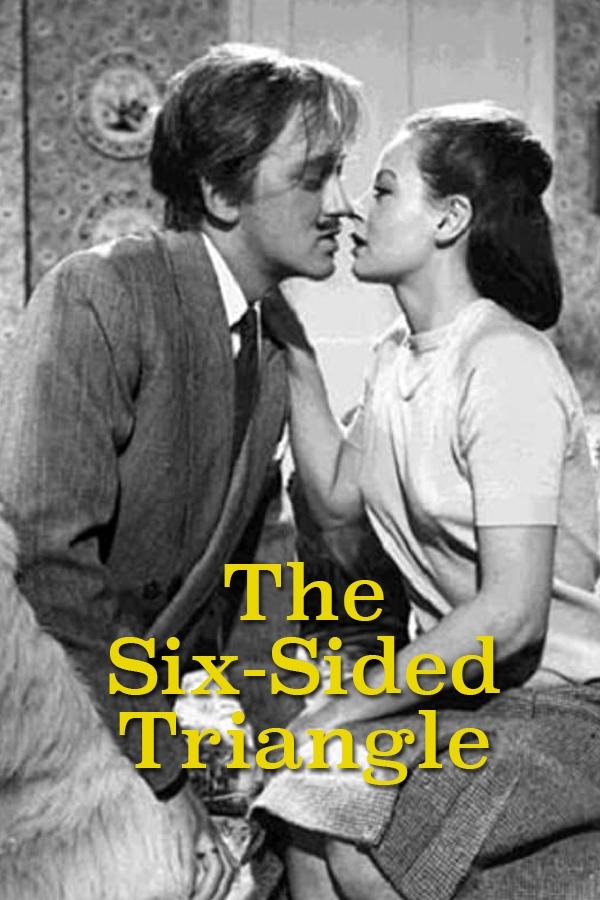
The Six-Sided Triangle is a 1963 short film directed by Christopher Miles, starring his younger sister Sarah Miles, Nicol Williamson, and Bill Meilen. It is about a husband who comes home and finds his wife with her lover - told from the perspectives of six different countries (the US, England, Japan, Sweden, Italy and France). The film was nominated for an Oscar for Best Live Action Short Film.