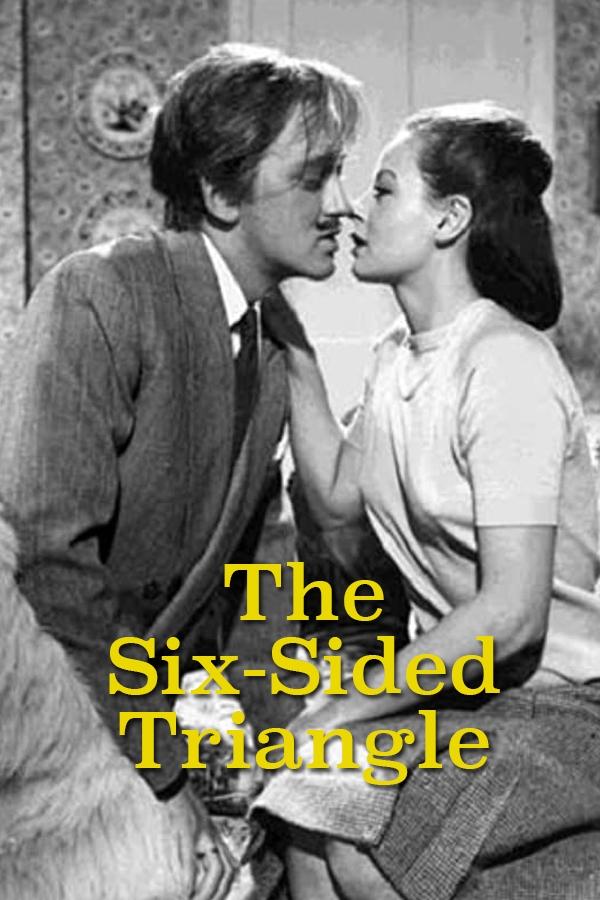
The Six-Sided Triangle (1963) character relationship network mapped with AI analysis. Explore the connections, alliances, and conflicts between characters.
A husband who unexpectedly returns home and finds The Wife with The Lover. His responses vary across the film's national parodies, including revenge, compromise over whisky, and a resort to harakiri.
The wife involved in the film's recurring eternal-triangle situation, being found with The Lover when The Husband returns unexpectedly. Her infidelity is revisited through the film's different nationa...
The lover discovered with The Wife by The Husband. Across the film's variations, this character is involved in the affair and becomes part of the resulting confrontations, including the Italian segmen...
Family, romantic, and professional connections based on plot evidence.
The film's central situation is the wife being discovered with a lover, and the national episodes repeatedly portray their affair.
The premise repeatedly describes the central couple as a husband and wife, with the husband returning home to find his wife with a lover.
Alliances, conflicts, and narrative interactions that evolve throughout the story.
The husband returns unexpectedly and finds the wife with the lover, producing revenge, anger, or other confrontations in the national versions.
A recurring marital triangle is reimagined through six national film styles, turning infidelity into a comic study of cinematic conventions.
Directed by Christopher Miles
The Six-Sided Triangle (1963) · 10/10 · drama
Plot analysis generated from content on Wikipedia, licensed under CC BY-SA 4.0.
Related entry on Wikidata (Q22323868), public domain (CC0).