Story Structure — 6 Plot Phases
A Theory of Resistance
Tenant farmers face evictions and rent grievances in County Mayo. Parnell presents a nonviolent strategy that impresses Davin and the gathered tenants.
Key Events
-
Tenant Grievances Rise — Tenant farmers demand lower rents, stronger rights, and protection from evictions. Characters: Hugh Davin
Location: County Mayo
-
Parnell Addresses the Crowd — Parnell explains that replacement tenants should reject farms taken from evicted tenants. Characters: Charles Stewart Parnell, Hugh Davin
Location: County Mayo gathering
-
Passive Resistance Inspires — The crowd abandons its hostile preparation and is impressed by Parnell's nonviolent proposal. Characters: Charles Stewart Parnell, Hugh Davin
Location: County Mayo gathering
-
Davin Organizes Ostracism — Davin urges tenants to socially isolate the local land agent with priestly moral support. Characters: Hugh Davin, Father McKeogh
Location: County Mayo farms
The Estate Falls Silent
Davin organizes the tenants to ostracize the local land agent. Servants leave and workers refuse to gather the estate's crops.
Key Events
-
Servants Abandon Estate — The land agent's servants leave his house after Davin asks them to abandon their service. Characters: Hugh Davin
Location: Land agent's house
-
Final Servant Confronted — The final servant is caught while leaving and identifies Davin as the organizer. Characters: Hugh Davin
Location: Land agent's house
-
Harvest Workers Refuse — Everyone refuses to gather the land agent's crops, extending the collective boycott. Characters: Hugh Davin
Location: Land agent's estate
-
Appeal to Parliament — The isolated land agent seeks support from the British Parliament as his situation worsens.
Location: Land agent's estate
Power Answers Protest
The dispute reaches Parliament, newspapers, and music halls. Press attention and military support turn the local boycott into a national confrontation.
Key Events
-
Boycott Enters Public Debate — The confrontation becomes newspaper material and the subject of music hall jokes.
Location: Newspapers and music halls
-
Press Reaches the Estate — The British press arrives at the estate, transforming the local dispute into an international story.
Location: Land agent's estate
-
Troopers Arrive — A squad of troopers arrives to support the isolated land agent.
Location: Land agent's estate
-
Davin's Farm Demolished — Authorities demolish Davin's farm at the land agent's word, sharply escalating the conflict. Characters: Hugh Davin
Location: Davin's farm
A Desperate Race
After his income collapses, the land agent stakes his survival on a race. The crowd blocks him at the finish despite the presence of troopers.
Key Events
-
Race Becomes Last Hope — The land agent risks his survival by entering a horse race after losing other income.
Location: The Curragh
-
Davin's Horse Is Ridden — The land agent rides a horse bought from Davin and acts as his own jockey. Characters: Hugh Davin
Location: The Curragh
-
Crowd Blocks the Finish — Despite mounted troopers, the crowd blocks the rider near the finish and mobs him. Characters: Hugh Davin
Location: The Curragh
-
Revolver Is Stolen — An armed supporter steals Davin's revolver and attempts to attack a tenant associated with eviction notices. Characters: Hugh Davin
Location: County Mayo
Violence Threatens the Cause
A stolen revolver leads to an attempted killing, a river fight, and a false murder report. Davin tries to stop the resulting mob violence.
Key Events
-
Revolver Is Stolen — An armed supporter steals Davin's revolver and attempts to attack a tenant associated with eviction notices. Characters: Hugh Davin
Location: County Mayo
-
River Fight and Rumor — A fight ends with the armed attacker falling into a river, and a false murder report spreads. Characters: Hugh Davin
Location: A river in County Mayo
-
Davin Stops the Mob — Davin tries to prevent the mob from lynching the tenant linked to the eviction notices. Characters: Hugh Davin
Location: County Mayo road
The Word Remains
Davin discovers Father McKeogh giving last rites to the wounded tenant. With the land agent and troops leaving, the priest frames the enduring meaning of boycott.
Key Events
-
Last Rites at the Cottage — Davin finds Father McKeogh giving last rites to the wounded tenant. Characters: Hugh Davin, Father McKeogh
Location: A tenant cottage
-
The Cause Collapses — The departing land agent and troops are indicated to the mob, while the priest defines the new term for passive resistance. Characters: Hugh Davin, Father McKeogh
Location: The tenant cottage
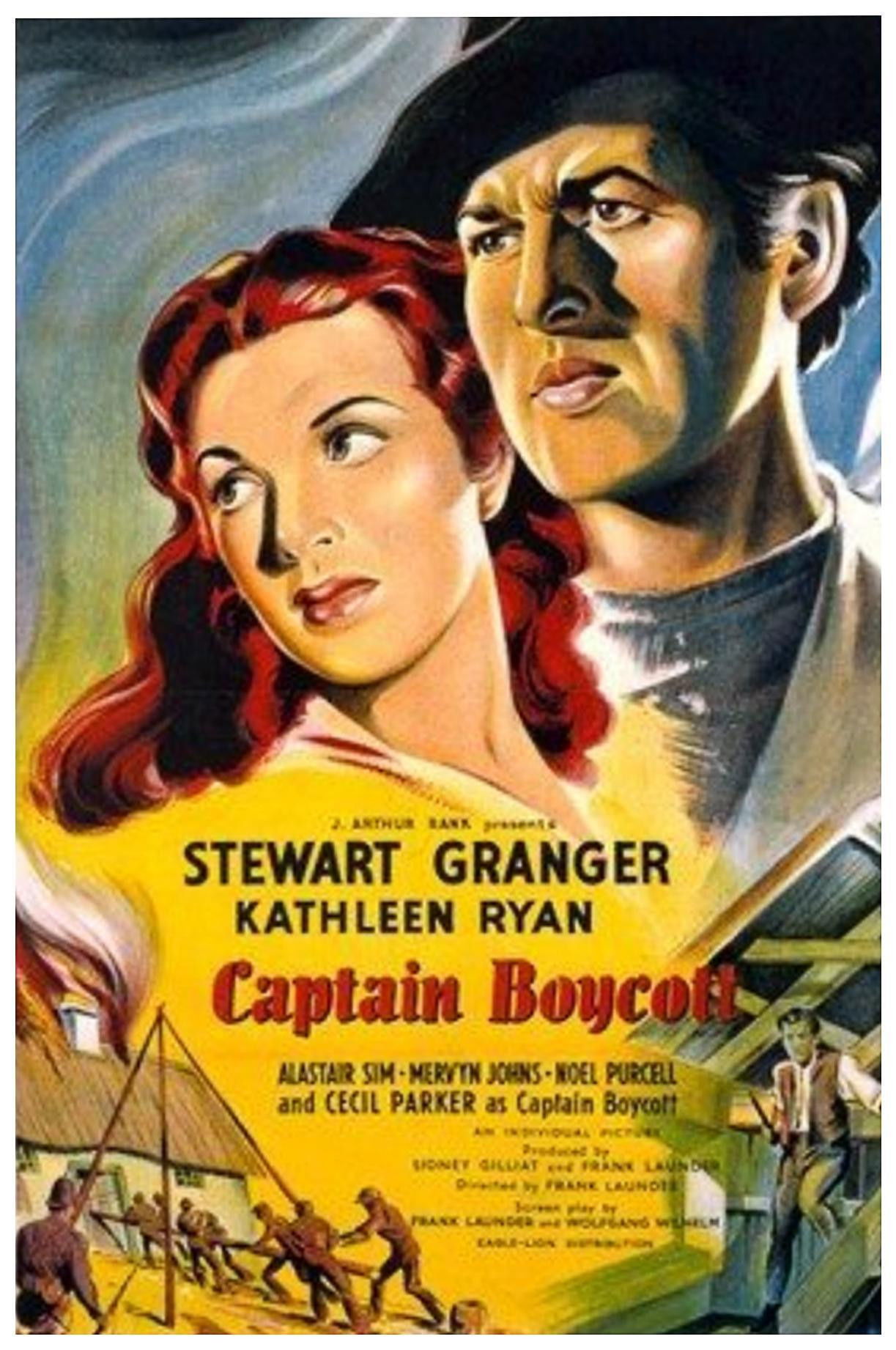
In 19th-century Ireland, when poverty-stricken tenants dispossessed by greedy landowner Captain Charles Boycott band together to assert their rights, patriotic farmer Hugh Davin leads the rebels. Choosing nonviolent resistance, the villagers ostracise their nemesis, who squanders his fortune to repair his ruined reputation and wagers what's left on a horse race.