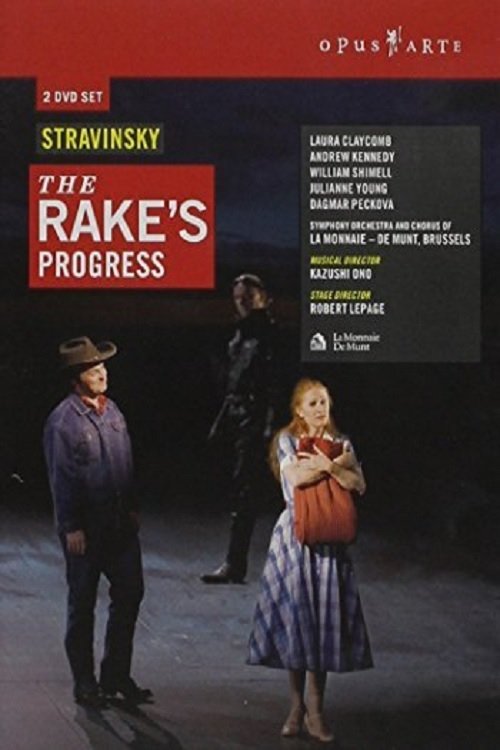
Stravinsky: The Rake's Progress (2007) — AI Story Visualization
Plot Analysis Summary
A visionary 2007 staging of Stravinsky's neo-classical opera, reimagined by Robert Lepage with a 1950s Las Vegas setting and jazz-infused musical direction.
Story Structure — 3 Plot Phases
Classical Origins & Literary Foundation
The opera is born from Stravinsky's neo-classical composition, drawing direct inspiration from William Hogarth's 18th-century prints. Auden and Kallman craft the libretto, establishing the moral tale structure.
Key Events
1951 Venice Premiere — Original creation of the opera at La Fenice. Location: Venice
Hogarth Prints Inspiration — 18th century prints inspire the narrative foundation. Location: 18th Century London
Libretto Collaboration — Auden and Kallman draft the opera's libretto. Location: Writing Studio
2007 Production Launch — La Monnaie De Munt initiates the 2007 staging. Location: Theatre Stage
Neo-classical Score — Original classical composition foundation. Location: Archive
18th Century London — Original sin city setting before adaptation. Location: London
Modern Reimagining & Directorial Vision
Robert Lepage takes the helm for the 2007 La Monnaie De Munt production, radically shifting the setting from London to 1950s Las Vegas. The stage transforms into a cinematic gallery of tableaux vivants.
Key Events
2007 Production Launch — La Monnaie De Munt initiates the 2007 staging. Location: Theatre Stage
Setting Shift to Vegas — London setting replaced by 1950s Las Vegas. Location: 1950s Las Vegas
Jazz Musical Adaptation — Music direction jazzifies the neo-classical score. Location: Orchestra Pit
Tableaux Vivants Staging — Cinematic gallery of living pictures inspired by early TV. Location: Main Stage
Morality Tale Theme — Core thematic structure of the opera. Location: Script Room
Visionary Staging Concept — Lepage develops the grand spectacle vision. Location: Director's Office
Musical Execution & Technical Mastery
Kazushi Ono leads the ensemble with energetic jazz-infused direction. The production culminates in a grand spectacle, meticulously captured in HD and surround sound for global release.
Key Events
Tableaux Vivants Staging — Cinematic gallery of living pictures inspired by early TV. Location: Main Stage
Lepage Visual Direction — Director's visual imagination shapes the spectacle. Location: Stage Direction Booth
Ono Musical Leadership — Energetic musical direction drives the ensemble. Location: Conductor's Podium
Auden & Kallman Libretto — Moral tale narrative structure
Hogarth Prints — 18th century visual inspiration
Creative Reimagining — Modern adaptation and directorial vision
Lepage Direction — Visionary theatre staging
Setting Shift — London to 1950s Las Vegas
Tableaux Vivants — Cinematic gallery concept
Musical & Technical Execution — Performance and recording mastery
Ono Musical Direction — Jazz-infused ensemble leadership
HD Recording — High definition capture
Surround Sound — True spatial audio mixing
Production & Release — La Monnaie De Munt presentation
2007 Staging — Grand spectacle realization
Critical Acclaim — Masterpiece recognition
Global Distribution — HD/Surround release
Stravinsky's masterwork The Rake's Progress, created for La Fenice in Venice in 1951, is based on a libretto by W. H. Auden and Chester Kallman, inspired by a series of 18th century prints by William Hogarth. This amazing production from La Monnaie De Munt jazzifies the setting by replacing Hogarth's sin city, London, with 1950s Las Vegas, turning it into a glittering, cinematic gallery of tableaux vivants inspired by the early days of television. Staged by one of the most visionary theatre directors of our age, the Québécois Robert Lepage, the neo-classical morality tale truly becomes a grand spectacle. Lepage's visual imagination works its magic superbly, while Kazushi Ono's energetic musical direction drives the sparkling ensemble to exhilarating heights. Recorded in High Definition and true surround sound.