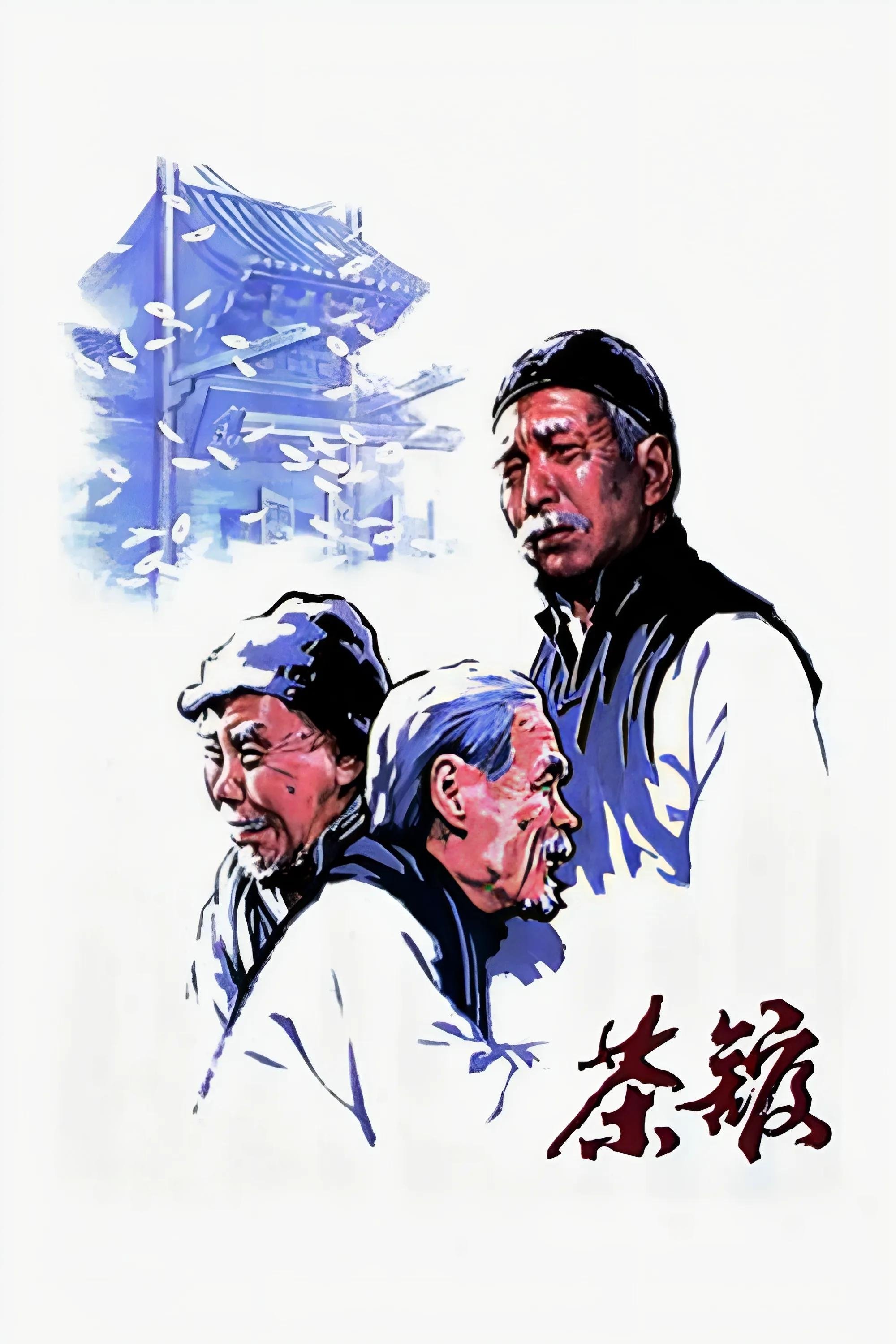
Teahouse (1982) character relationship network mapped with AI analysis. Explore the connections, alliances, and conflicts between characters.
Characters
Wang Lifa
(played by Yu Shizhi) — protagonist
Wang Lifa is the capable manager of Yutai Teahouse and the story’s central figure across changing political eras. He tries to preserve the business while avoiding political danger, later grows old ami...
Liu Ma Zi
(played by Ruocheng Ying) — supporting
Liu Ma Zi is an opportunistic broker operating within the troubled society surrounding Yutai Teahouse. He attempts to arrange the sale of a village girl to powerful patrons, revealing how vulnerable p...
Chang Si Ye
(played by Zheng Rong) — supporting
Chang Si Ye is an outspoken customer and social critic who refuses to remain silent about injustice and foreign pressure. Wang Lifa warns him and others not to discuss politics in the teahouse, yet Ch...
Eunuch Pang
(played by Tong Chao) — supporting
Eunuch Pang is an influential figure who uses his position for personal advantage during the declining Qing dynasty. His conduct reflects the corruption and dependence surrounding Yutai Teahouse, wher...
Pang Si Nainai
(played by Wu Shukun) — supporting
Pang Si Nainai is a threatening presence in the teahouse’s final period of decline. She threatens to damage Yutai Teahouse, increasing Wang Lifa’s anxiety as he struggles with poverty, fear, and the c...
Kang Liu
(played by Niu Xingli) — supporting
Tang Tie Zui
(played by Zhang Tong) — minor
Wang Xiaohua
(played by Wang Shuhua) — minor
Wang Xiaohua is a young member of Wang Lifa’s household during the impoverished final period of Yutai Teahouse. Despite unrest in the streets and the family’s insecurity, she is urged to attend school...
Canonical Relationships
Family, romantic, and professional connections based on plot evidence.
Liu Ma Zi → Eunuch Pang
(Connection To Powerful Patrons) — Both are associated with exploitation and the use of power for personal gain, though the plot does not state a direct partnership.
Liu Ma Zi attempts to arrange the sale of a village girl to powerful patrons, while Eunuch Pang is described as using his influence for personal advan...
Wang Lifa → Wang Xiaohua
(Family Household Relationship) — Wang Xiaohua is part of Wang Lifa's household.
The plot refers to Wang Xiaohua in connection with Wang Lifa's household, which struggles to keep going.
Story Dynamics
Alliances, conflicts, and narrative interactions that evolve throughout the story.
Chang Si Ye → Eunuch Pang
(Conflict Political Contrast) — The plot contrasts Chang Si Ye's outspoken concern with Eunuch Pang's self-serving use of influence.
Chang Si Ye speaks openly about injustice and foreign pressure, while Eunuch Pang uses influence for personal advantage.
Wang Lifa → Tang Tie Zui
(Social Teahouse Acquaintances) — Their connection is grounded in Tang Tie Zui's return to the teahouse's troubled social world.
Tang Tie Zui returns amid street chaos and enters the events surrounding the teahouse community.
Wang Lifa → Pang Si Nainai
(Conflict Threatened By) — Her threat puts pressure on Wang Lifa and the teahouse.
Pang Si Nainai threatens to damage the teahouse, while Wang Lifa worries about the threat.
Wang Lifa → Kang Liu
(Social Household Association) — Kang Liu, as listed in the character roster, is associated with the household situation described in the plot reference.
The plot says Kang Shunzi prepares to leave rather than remain a burden as Wang Lifa's household struggles.
Chang Si Ye → Liu Ma Zi
(Social Teahouse Acquaintances) — They share the teahouse's social setting, though the plot reference does not specify a closer bond.
Both are presented within the teahouse community during the period of political repression.
Wang Lifa → Eunuch Pang
(Social Teahouse Acquaintances) — Their association reflects the teahouse's exposure to people with political influence.
Eunuch Pang uses his influence for personal advantage in the world surrounding Wang Lifa's teahouse.
Wang Lifa → Liu Ma Zi
(Social Teahouse Acquaintances) — Their connection is part of the teahouse's shared social world.
The plot places Liu Ma Zi among the people in the teahouse community managed by Wang Lifa.
Wang Lifa → Chang Si Ye
(Social Teahouse Acquaintances) — They are connected through the teahouse and respond differently to political danger.
Chang Si Ye speaks openly in the teahouse, and Wang Lifa warns customers not to discuss politics. Years later, Chang Si Ye returns to the teahouse.
Story Analysis
Across successive political eras, Yutai Teahouse reveals how ordinary people remain exposed to exploitation, poverty, and fear despite changes in government.
Plot Progression
The Teahouse Under Watch
— Yutai Teahouse gathers a varied community while Wang Lifa tries to protect his business from political trouble. Authorities search the premises, and exploitation unfolds around the customers.
Public Cruelty
— The authorities continue their search for reform supporters as Liu Ma Zi is arrested and executed in the street. The violence forces the teahouse community to face the cruelty of its surroundings.
Change Without Security
— The empire falls and the country becomes a republic, but ordinary people remain insecure. Chang Si Ye's return and the conversation about exploitation show that political change has not resolved deepe...
Poverty at Yutai
— More than twenty years later, the teahouse is impoverished and nearly empty. Wang Lifa's household struggles with scarcity and uncertainty as unrest grows outside.
Fear at the Threshold
— Dasha Yang brings money and boasts of violence, while Wang Lifa cannot openly challenge him. Pang Si Nainai's threat leaves the teahouse standing but surrounded by fear and impending upheaval.
Directed by Jiao Juyin, 夏淳, Tian Xie
Teahouse (1982) · 8.6/10 · drama, history
Content sources
Related entry on
Wikidata
(Q65056880), public domain (CC0).
Plot breakdown and analysis on this page are AI-generated from the title's synopsis and metadata.