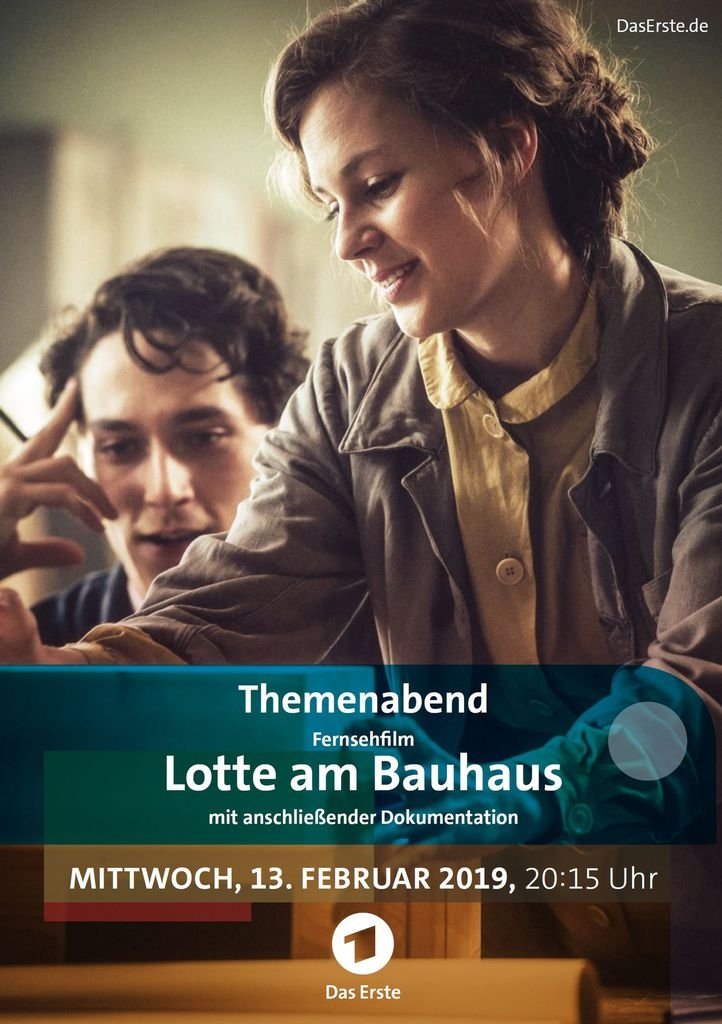
A fictionalized journey of a young woman navigating artistic education and creative identity in 1920s Germany.
Story Structure — 4 Plot Phases
Historical Backdrop
The film establishes the 1920s German setting and introduces Lotte as a young woman entering the Bauhaus movement.
Key Events
1920s Weimar Setting — Establishes the historical backdrop of 1920s Germany. Characters: Lotte BrendelLocation: Weimar
Protagonist Introduction — Fictional young woman Lotte is introduced as a student. Characters: Lotte BrendelLocation: Bauhaus Campus
Academic Beginnings
Lotte navigates early coursework and adapts to the rigorous Bauhaus curriculum in Weimar.
Key Events
Bauhaus Enrollment — Lotte begins formal studies at the renowned art institution. Characters: Lotte BrendelLocation: Bauhaus School
Relocation to Dessau — Narrative shifts as the school moves to Dessau. Characters: Lotte BrendelLocation: Dessau
Creative Evolution
Following the move to Dessau, Lotte faces artistic challenges and experiments with new techniques.
Key Events
Relocation to Dessau — Narrative shifts as the school moves to Dessau. Characters: Lotte BrendelLocation: Dessau
Artistic Exploration — Lotte engages in creative projects inspired by Alma Buscher. Characters: Lotte BrendelLocation: Workshop
Creative Struggles — Challenges arise as Lotte refines her artistic identity. Characters: Lotte BrendelLocation: Studio
Artistic Legacy
Lotte overcomes creative hurdles, solidifies her style, and leaves a lasting mark on the art world.
Key Events
Creative Struggles — Challenges arise as Lotte refines her artistic identity. Characters: Lotte BrendelLocation: Studio
Artistic Breakthrough — Lotte completes key works and gains recognition. Characters: Lotte BrendelLocation: Exhibition Hall
Legacy and Resolution — Story concludes with Lotte's lasting impact on modern art. Characters: Lotte BrendelLocation: Bauhaus Archive
Story Breakdown
Historical Context — Establishes the 1920s German era and cultural climate.
Weimar Republic Era — Post-war societal shifts and artistic freedom.
Bauhaus Movement — Rise of modernist design and architecture.
Protagonist Journey — Follows Lotte's personal and artistic development.
Fictional Origin — Lotte created as a composite character.
Alma Buscher Inspiration — Real artist influences Lotte's creative path.
Academic Life — Depicts daily experiences at the Bauhaus school.
Weimar Campus — Early studies and foundational training.
Dessau Relocation — Institutional move and new opportunities.
Creative Process — Explores Lotte's artistic experimentation and growth.
Workshop Experiments — Hands-on material and technique exploration.
Design Philosophy — Integration of form, function, and art.
Character Dynamics — Highlights interpersonal and mentor relationships.
Student Mentorships — Guidance from experienced instructors.
Peer Collaborations — Shared projects and creative exchanges.
Thematic Resolution — Concludes Lotte's arc and historical impact.
Personal Growth — Lotte achieves artistic maturity and confidence.
Legacy Preservation — Enduring influence on modern design education.
Weimar, 1921. The life of 20-year-old Lotte Brendel seems to be predetermined. Her father sees her as a future wife and mother on the side of a man who is to take over the parental carpentry business. But the idiosyncratic Lotte joins a group of young artists against the will of her family, applies at the Bauhaus and is accepted. The Weimar Bauhaus, under the direction of the visionary Walter Gropius, aspires not only to combine arts and crafts, but also to find the place for the "New Man". In the student Paul Seligmann Lotte finds a supporter and her great love.