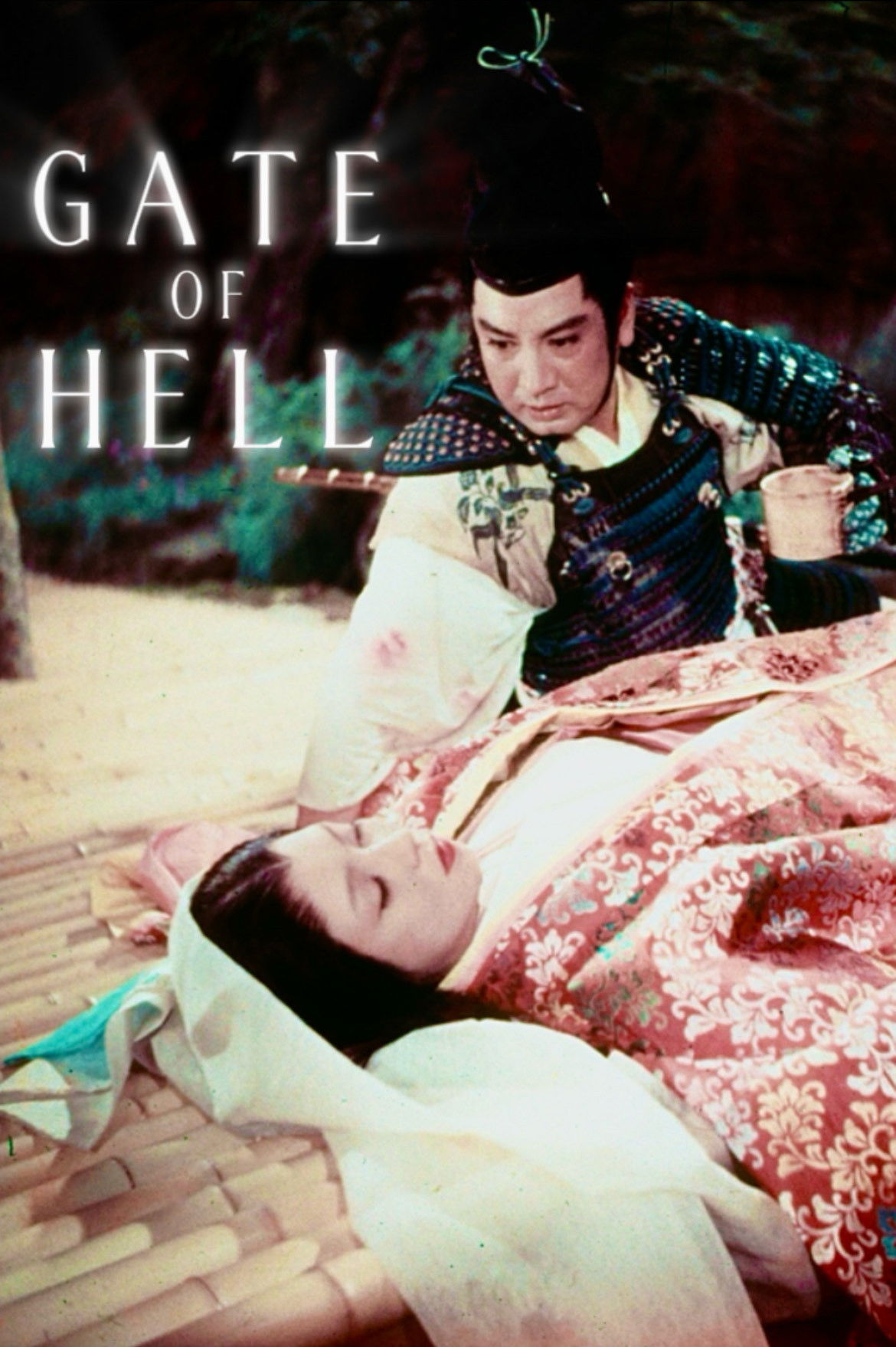
Gate of Hell (1953) character relationship network mapped with AI analysis. Explore the connections, alliances, and conflicts between characters.
Characters
Moritō Endō
(played by Kazuo Hasegawa) — protagonist
A samurai loyal to Gen Kiyomori, Moritō Endō escorts Lady Kesa during the rebellion and reports the insurrection, even revealing his brother’s disloyalty. Infatuated with the married Lady Kesa, he dem...
Lady Kesa
(played by Machiko Kyō) — protagonist
A lady-in-waiting who disguises herself to help the daimyō’s family escape during the rebellion, Lady Kesa becomes the object of Moritō Endō’s obsessive desire. Already married to Wataru Watanabe, she...
Wataru Watanabe
(played by Isao Yamagata) — supporting
A samurai of the Imperial Guard and Lady Kesa’s husband, Wataru Watanabe promises to protect her when Moritō Endō demands her hand. He competes against Moritō in the horse race, survives Moritō’s viol...
Tone
(played by Yoshie Minami) — minor
Lady Kesa’s handmaid, Tone helps protect her mistress when Moritō Endō seeks her out. At Lady Kesa’s request, Tone falsely tells Moritō that Lady Kesa has gone to visit her aunt, although Moritō disco...
Canonical Relationships
Family, romantic, and professional connections based on plot evidence.
Lady Kesa → Wataru Watanabe
(Romantic Spouses) — Their marriage becomes the central obstacle to Moritō's demand, and Kesa's death leaves Wataru mourning her.
The plot explicitly states that Kesa is already married to Wataru, and she returns home to behave lovingly toward him before Moritō's attack.
Story Dynamics
Alliances, conflicts, and narrative interactions that evolve throughout the story.
Moritō Endō → Tone
(Conflict Pursuer And Deceiver) — Tone's attempt to shield Kesa places her in opposition to Moritō's increasingly forceful search.
Tone gives Moritō a false explanation about Kesa's whereabouts, and Moritō discovers the lie while continuing to pursue Kesa.
Lady Kesa → Tone
(Alliance Trusted Protector) — Tone actively helps Kesa resist Moritō's pursuit, although Moritō discovers the deception and continues searching for Kesa.
At Kesa's request, Tone falsely tells Moritō that Kesa has gone to visit her aunt in order to help Kesa avoid him.
Moritō Endō → Wataru Watanabe
(Conflict Rivals Turned Enemies) — Their rivalry escalates from public competition into direct lethal hostility because Moritō wants Wataru's wife.
Moritō competes against Wataru in a horse race, nearly attacks him at the following dinner, and later threatens to kill him so he can claim Kesa.
Moritō Endō → Lady Kesa
(Conflict Obsessive Pursuer And Sacrificial Victim) — Moritō's desire develops into coercion and violence, while Kesa ultimately sacrifices herself to stop his obsession from harming Wataru or anyone else.
Moritō becomes infatuated with the married Lady Kesa and demands her as his reward. When he threatens her and others, Kesa arranges for him to kill he...
Story Analysis
A loyal samurai's unchecked desire destroys the woman he pursues and forces him to renounce his former life.
Plot Progression
Rebellion and Divided Loyalty
— Moritō escorts Kesa during the Heiji Rebellion after her disguise helps the daimyō's family escape. When the rebels attack, Moritō shelters her and rejects his brother's invitation to join the rebelli...
A Reward Turned Obsession
— After the coup fails, Moritō asks to receive Kesa as a reward for his loyalty. Her marriage to Wataru does not restrain him, and his desire becomes increasingly possessive.
Competition and Escalation
— Kesa's music leads to a chance for Moritō to compete for her, and he defeats Wataru in a horse race. His near-attack at the dinner reveals that the contest has not controlled his violent impulses.
The Fatal Bargain
— Tone tries to hide Kesa, but Moritō uncovers the deception and forces a meeting through a false note. Under threat, Kesa agrees to a plan that will make Moritō believe he can claim her after Wataru's...
Sacrifice and Renunciation
— Kesa prepares for the end by showing kindness to Tone and love toward Wataru. Moritō kills her by mistake, understands her sacrifice, seeks punishment, and renounces his samurai life.
Directed by Teinosuke Kinugasa
Gate of Hell (1953) · 7.1/10 · drama, history, romance