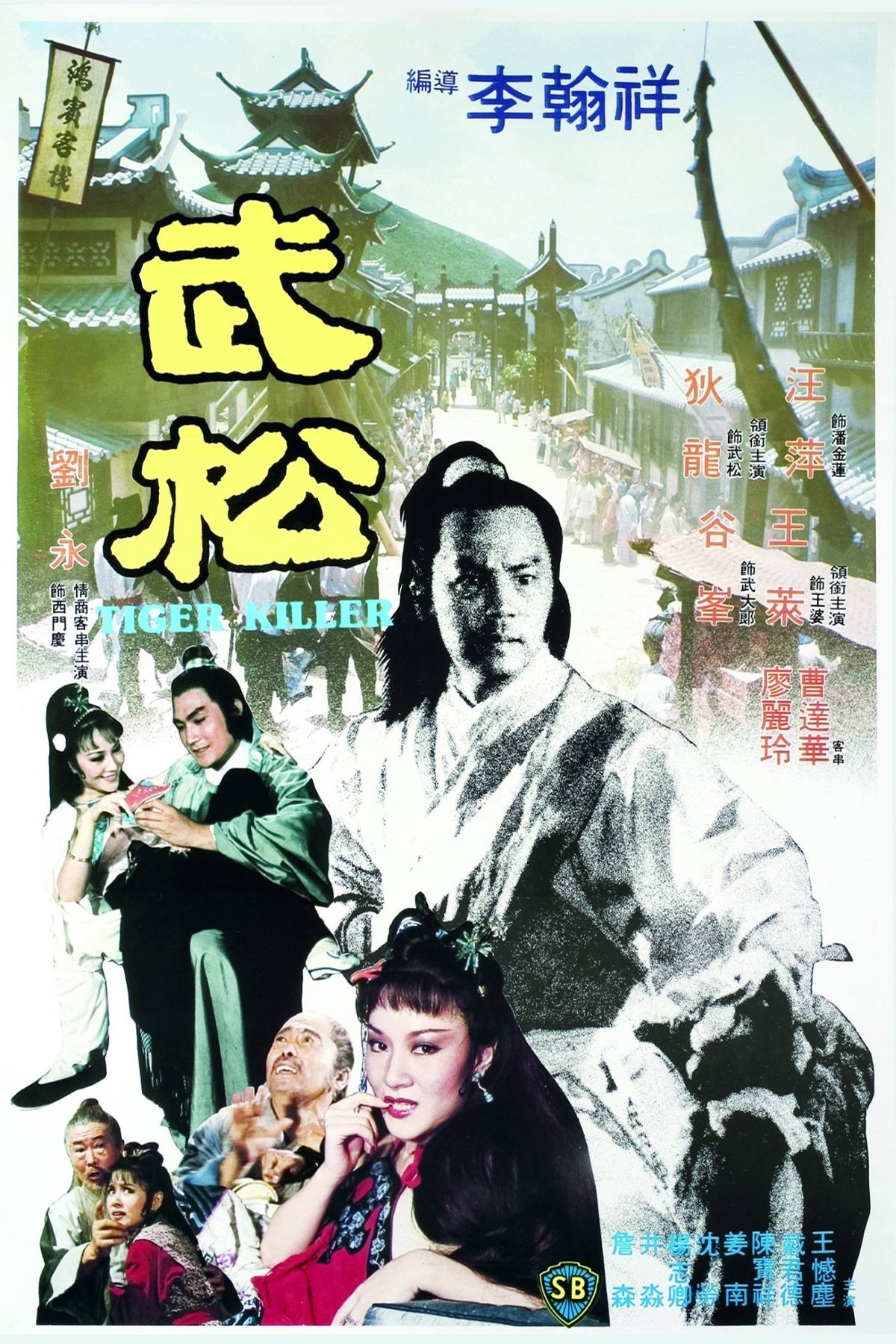
A violent and emotionally dependent man gains public status through killing a tiger, then becomes entangled in domestic and sexual tension.
Story Structure — 4 Plot Phases
A Violent Emotional World
The protagonist is presented as an alcoholic brute with repressed sexuality. His emotional dependence on his elder brother establishes the story's unstable domestic foundation.
Key Events
A Troubled Family Bond — An alcoholic brute depends emotionally on his physically small elder brother.
Location: Unspecified domestic setting
Suppressed Desire — His violent personality is linked to repressed sexuality and emotional dependence.
Location: Unspecified domestic setting
The Tiger Brings Fame
Killing a tiger transforms the protagonist's public image. The act makes him famous and changes his social prospects.
Key Events
Suppressed Desire — His violent personality is linked to repressed sexuality and emotional dependence.
Location: Unspecified domestic setting
The Tiger Killing — He becomes famous after killing a tiger.
Location: Unspecified location
A New Civic Position
His newfound fame leads to employment in the municipal police of his city. Public recognition becomes a path into official service.
Key Events
Fame Brings Employment — His fame allows him to join the municipal police of his city.
Location: The city of residence
Desire Inside The Family
He unintentionally attracts his sister-in-law, who is described as mistreated by life and dissatisfied with her sensual circumstances. Her physical features also become a focus of male fantasy in the community.
Key Events
An Unintended Seduction — He unintentionally attracts his sister-in-law, whose life and marriage are emotionally unsatisfying.
Location: Unspecified domestic setting
Desire and Public Fantasy — The sister-in-law's small feet become an object of male fantasy within the community.
Location: The surrounding community
Story Breakdown
Troubled Protagonist — The central figure is defined by brutality, alcoholism, repressed sexuality, and dependence on his elder brother.
Alcoholic Brutality — The protagonist is described as an alcoholic brute.
Brotherly Dependence — He maintains an emotionally dependent relationship with his elder brother.
Repressed Desire — The protagonist's violent identity is accompanied by suppressed sexuality and unstable emotional needs.
Suppressed Sexuality — The synopsis explicitly connects him with repressed sexuality.
Unstable Affection — His dependence on his brother reveals a strong but troubled emotional attachment.
Tiger Killing Fame — A dramatic act of violence changes the protagonist's reputation and opportunities.
Killing The Tiger — He becomes famous after assassinating a tiger.
Public Recognition — The tiger killing makes him known within his community.
Police Appointment — His fame provides access to a formal position in the municipal police.
Municipal Employment — He is hired by the municipal police of his city.
Status Transformation — Public fame turns a violent outsider into an official civic employee.
TIGER KILLER (1982) is a straightforward adaptation of one story from the sprawling Chinese literary epic, "The Water Margin." It tells the tale of Wu Song, who slays a man-eating tiger preying on farmers and villagers and becomes the hero of the province, getting appointed as a constable by the local magistrate. He is reunited with his older brother, the short, disfigured Wu the Elder, a peddler of buns, who invites Wu Song to move in with him and his new wife. The wife, Golden Lotus, is an attractive young former maid who had been forced to marry Wu the Elder as punishment for getting caught in bed with her master by the master's wife. She takes a liking to the handsome, strong Wu Song, who rebuffs her attempts to seduce him. When Wu Song is sent on a long journey, the wife begins an affair with a rich local merchant. When Wu Song returns from his mission, he is met with shocking news which sets off a series of violent acts of retribution.