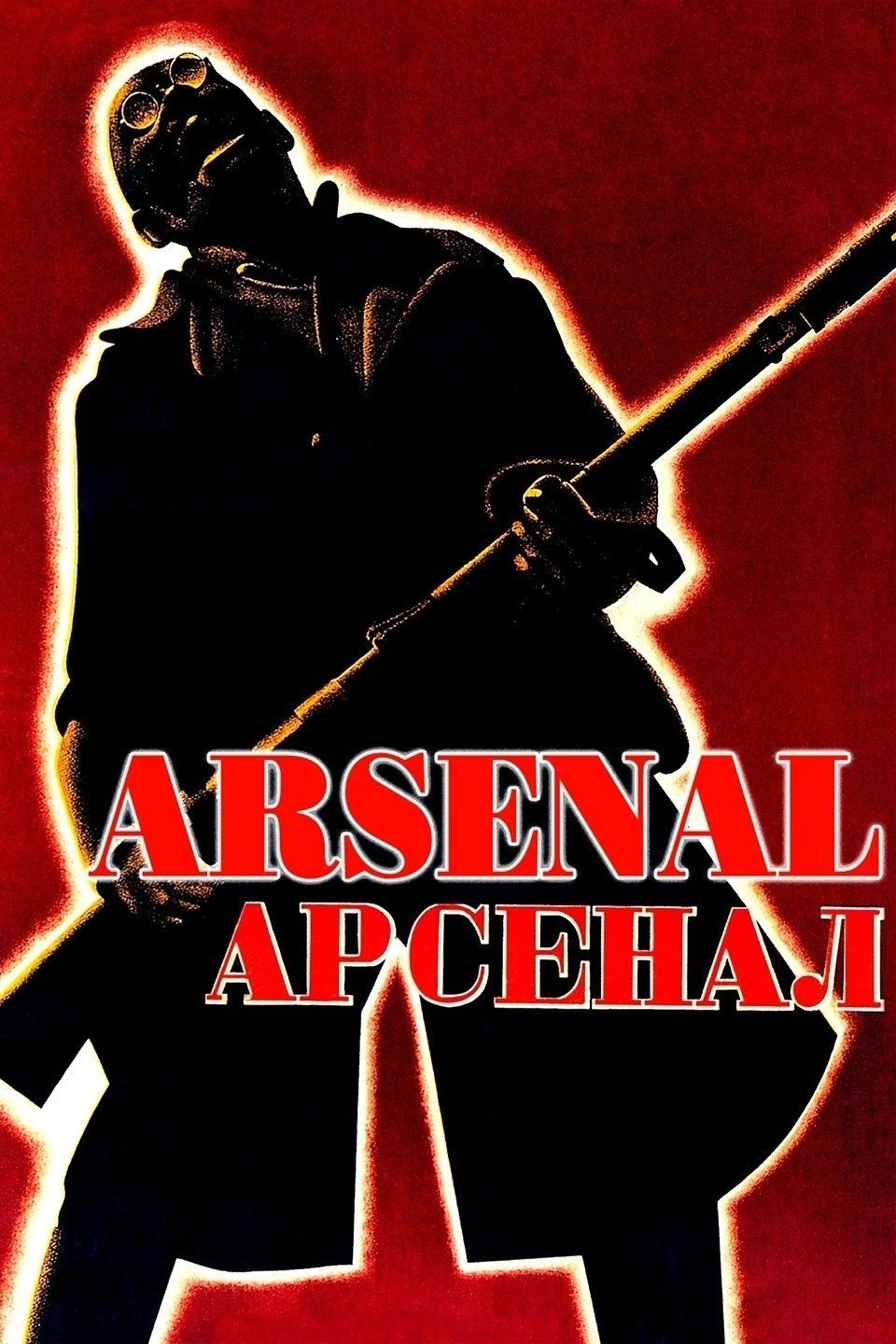
Arsenal (1929) character relationship network mapped with AI analysis. Explore the connections, alliances, and conflicts between characters.
Characters
Tymish
(played by Semen Svashenko) — protagonist
The central figure, a young worker returning from WWI. He witnesses capitalist exploitation, joins the Bolshevik movement, and organizes the January uprising in Kiev against the bourgeoisie and haidam...
a German soldier
(played by Amvrosii Buchma) — protagonist
a German officer
(played by Serhii Petrov) — supporting
A German military figure appearing in the wartime setting of the film.
Petliura
(played by Mykola Kuchynskyi) — supporting
a nationalist with a lamp
(played by Mykola Nademskyi) — supporting
a Red Army soldier
(played by Heorhii Khorkov) — minor
nationalist
(played by Andrii Mykhailovskyi) — minor
Canonical Relationships
Family, romantic, and professional connections based on plot evidence.
a German officer → a German soldier
(Professional Commander) — German officer commands German soldiers
Petliura → nationalist
(Power Leader) — Political leadership over nationalist forces
Story Dynamics
Alliances, conflicts, and narrative interactions that evolve throughout the story.
Tymish → a nationalist with a lamp
(Conflict Enemy) — Tymish confronts nationalist paramilitaries
Tymish → a German officer
(Conflict Enemy) — Tymish confronts German officers as symbols of authority
Tymish → a German soldier
(Conflict Enemy) — Tymish opposes the German soldiers representing oppressive forces
Tymish → a Red Army soldier
(Alliance Comrade) — Tymish and the Red Army soldier share revolutionary ideals
Tymish → nationalist
(Conflict Enemy) — Tymish confronts nationalist forces aligned with the bourgeoisie
Tymish → Petliura
(Conflict Political Opponent) — Tymish opposes Petliura and the bourgeois forces
Story Analysis
A non-linear revolutionary film depicting exploitation, collective resistance, violent repression, and the enduring ideal of proletarian liberation.
Plot Progression
Return to a Broken City
— A young worker returns to Kiev after wartime service and encounters poverty, exploitation, and the consequences of war. These conditions awaken revolutionary awareness.
Organizing Against Bourgeois Power
— Workers and peasants organize around revolutionary ideals while political intrigue and class conflict intensify. The struggle moves from social grievance toward open revolt.
The January Uprising
— Workers in Kiev begin an uprising against the ruling bourgeois order. Street resistance grows as opposing paramilitary forces enter the conflict.
Symbols of Revolution and Death
— Poetic images of a living Cossack statue and allegorical death expand the historical conflict into symbolic drama. Documentary footage reinforces the connection to real events.
Massacre and Revolutionary Memory
— The rebels are massacred, but the film preserves the sacrifices and heroism of ordinary people. Its conclusion affirms collective liberation as a revolutionary ideal.