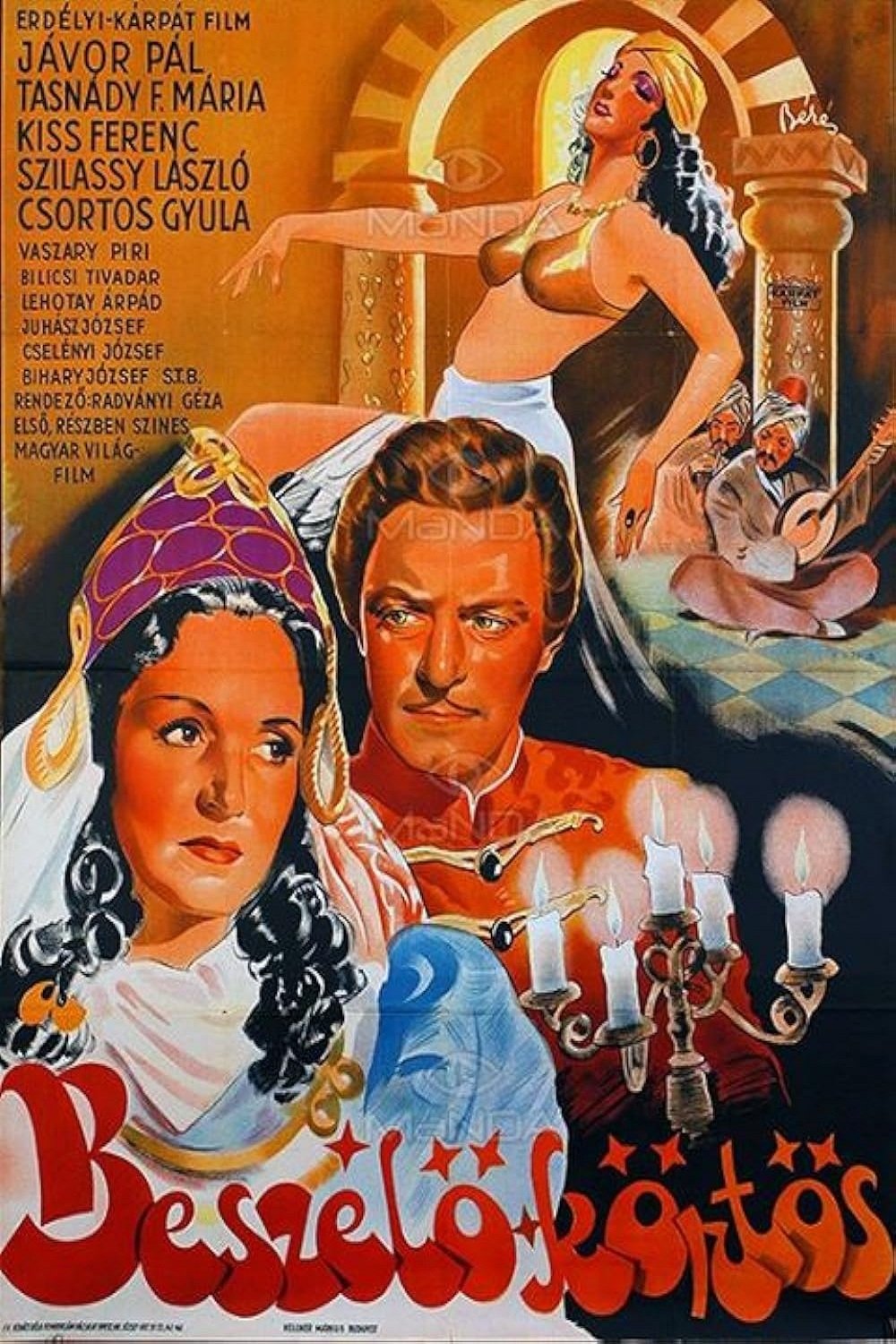
A historical fantasy adventure film pioneering Hungarian color cinema through literary adaptation and wartime distribution.
Story Structure — 4 Plot Phases
Studio Foundations
The film is produced at Hunnia Studios in Budapest with elaborate sets designed by István Básthy and Sándor Iliszi.
Key Events
Studio Production Begins — Filming commences at Hunnia Studios with sets designed by Básthy and Iliszi.
Location: Hunnia Studios, Budapest
Cinematic Innovation
The production pioneers Hungarian filmmaking by integrating Agfacolor technology for outdoor scenes.
Key Events
Color Technology Integration — Production pioneers Hungarian cinema by utilizing Agfacolor for outdoor sequences.
Location: Hunnia Studios, Budapest
Literary Adaptation Process — Screenplay adapts Mikszáth's 1889 historical fantasy novel of the same title.
Location: N/A
Literary & Cast Integration
The narrative adapts Kálmán Mikszáth's 1889 novel, featuring director Géza von Radványi and lead performers.
Key Events
Literary Adaptation Process — Screenplay adapts Mikszáth's 1889 historical fantasy novel of the same title.
Location: N/A
Wartime Distribution Strategy — Film is distributed in Italy by Titanus during the wartime alliance period.
Location: Italy
Distribution & Legacy
The film reaches Italian audiences through Titanus and establishes a historical footprint that leads to a 1969 remake.
Key Events
Cinematic Legacy & Remake — The 1942 production establishes a legacy that inspires a 1969 remake.
Location: N/A
Story Breakdown
Production Background — Studio setup and creative team assembly for the 1942 historical fantasy film.
Director & Crew — Géza von Radványi directs with art directors István Básthy and Sándor Iliszi.
Studio Location — Filmed at Hunnia Studios in Budapest with detailed set construction.
Cinematic Innovation — Technical breakthroughs and experimental formats in Hungarian filmmaking.
Agfacolor Technology — First Hungarian film to utilize Agfacolor technology for outdoor sequences.
Partial Color Format — Combines color and monochrome footage to enhance visual storytelling.
Literary Adaptation — Source material integration and narrative framework development.
Mikszáth Novel — Directly adapted from Kálmán Mikszáth's 1889 novel of the same title.
Genre Classification — Structured as a historical fantasy adventure with period-specific elements.
Cast & Performers — Lead actors and ensemble members featured in the production.
Lead Actor — Pál Jávor stars in the primary historical fantasy role.
Lead Actress — Maria von Tasnady portrays a central character in the ensemble.
Supporting Cast — László Szilassy provides additional character depth to the narrative.
Distribution & Legacy — Release strategy, cross-border distribution, and historical impact.
Wartime Release — Distributed in Italy by Titanus during the wartime alliance period.
1969 Remake — The original production inspires a later remake sharing the same title.
Historical Context — Cultural backdrop and industry development during the 1940s.
Hungarian Cinema Era — Represents a pivotal moment in 1940s Hungarian film industry growth.
Allied Distribution — Cross-border release strategy leveraging Hungary's wartime alliance with Italy.
In the 1600s, Hungary is plundered by the Turks and the Laban. Kecskemét, the free royal city, is not exempt from this. Miska, the wily son of Lestyák, a master tailor, suggests to the town council that they should ask for a permanent beacon from Buda, thus protecting Kecskemét from the harassment of raiding troops. The town assembles its gift of jewellery, cloth and a beautiful girl, and Miska sets off for Buda. On the way, the young gypsy girl falls in love with Mishka, who elopes with her in a boy's dress. He can do this because instead of the bewitchment he hopes for, he is given only a fancy robe to protect the city. Little do they know at the time how much the robe is worth. Before its wearer, all true believers will crumble to dust and do his bidding.