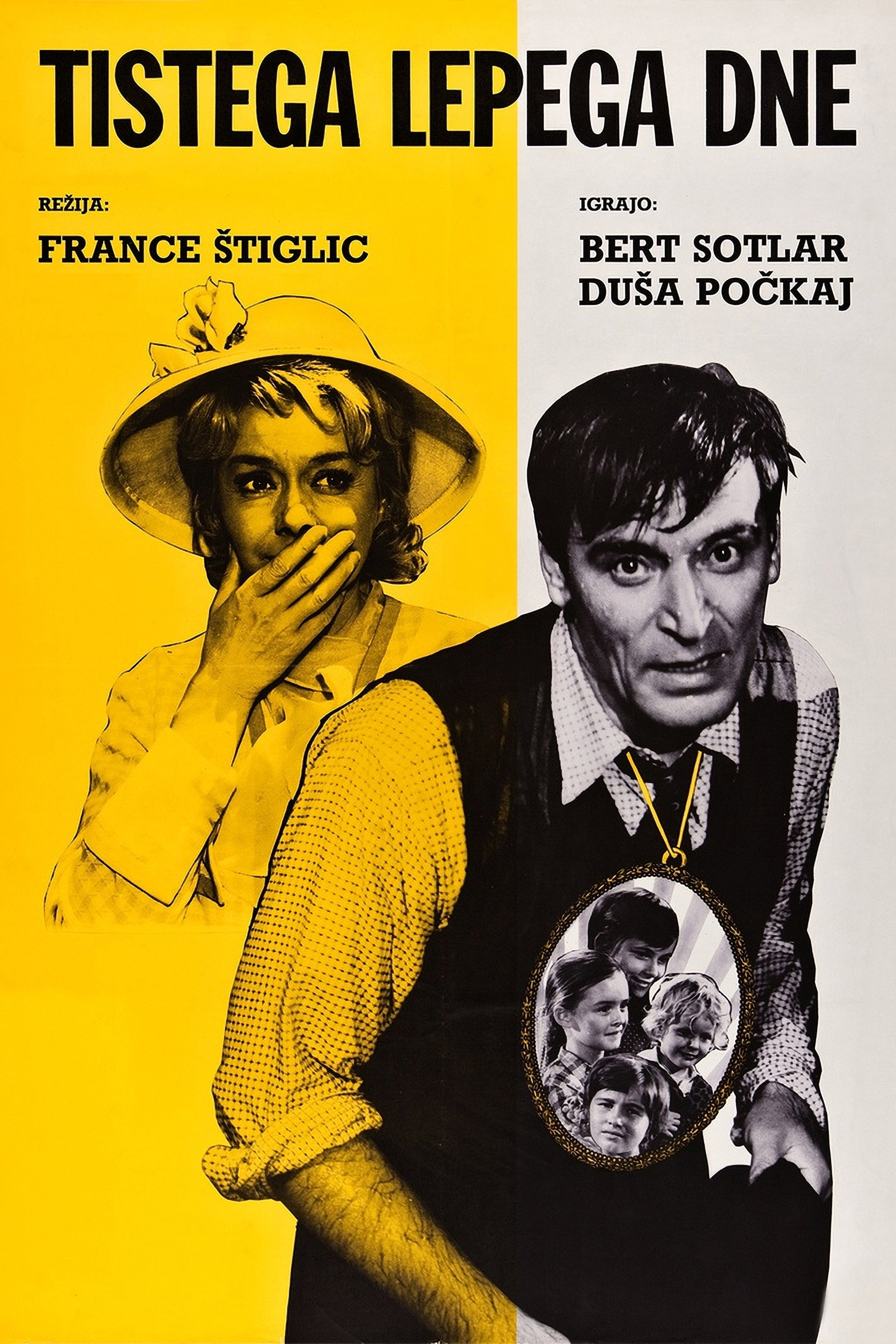
A 1962 Yugoslav comedy directed by France Štiglic, featuring a Slovenian script and black-and-white cinematography.
Story Structure — 4 Plot Phases
Creative Conception
Director France Štiglic initiates the project in Yugoslavia. The original screenplay is drafted in Slovenian to establish the cultural foundation.
Key Events
Comedy Film Conception — Director France Štiglic develops a comedy film set in Yugoslavia.
Location: Yugoslavia
Slovenian Script Writing — Original screenplay is written in the Slovenian language.
Location: Writing Studio
Production Execution
The main cast assembles for filming. The entire movie is captured in black and white format, emphasizing visual storytelling.
Key Events
Slovenian Script Writing — Original screenplay is written in the Slovenian language.
Location: Writing Studio
Black and White Filming — Entire production is shot using black and white cinematography.
Location: Film Set
Theatrical Premiere
The finished comedy film enters public distribution in 1962. Audiences experience the directorial vision and ensemble performances.
Key Events
1962 Theatrical Release — The completed comedy film is officially released to audiences.
Location: Cinema
Historical Preservation
The film enters archival records and cultural tracking. It is documented as part of the broader Slovenian cinema landscape through 2022.
Key Events
Archival Documentation — Film is recorded among over 210 Slovenian productions by 2022.
Location: Film Archive
Story Breakdown
Directorial Vision — France Štiglic leads the creative direction, establishing the comedic tone and narrative structure.
Genre Selection — Comedy format chosen for audience engagement.
Leadership Role — Director oversees all creative and production decisions.
Production Setting — The film is produced in Yugoslavia, grounding the story in a specific regional context.
National Origin — Yugoslav production framework provides cultural backdrop.
Visual Style — Black and white cinematography defines the aesthetic.
Linguistic Foundation — The screenplay is originally written in Slovenian, shaping dialogue and cultural authenticity.
Script Language — Slovenian serves as the primary narrative medium.
Cultural Context — Local language influences character interactions and themes.
Cast Assembly — Five main actors are selected to portray the central characters in the comedy.
Lead Performers — Lojze Potokar and Lojze Rozman anchor the ensemble.
Supporting Roles — Bert Sotlar, Duša Počkaj, and France Presetnik complete the cast.
Release Timeline — The film enters public distribution in 1962, marking its official debut.
Premiere Date — 1962 serves as the official release year.
Audience Access — Theatrical distribution allows public viewing and reception.
Archival Status — The production is cataloged within Slovenian cinema records for historical tracking.
Film Cataloging — Documented among over 210 Slovenian films by 2022.
Historical Record — Preserved as part of regional cinematic heritage.
A story set in a Slovenian village during Italian occupation. Stefuc, a man who has been widowed twice and has four daughters, wants to get married for the third time with Zana, who's already engaged and pregnant with Ludvik. Stefuc tries to separate them away, but realizes that he'll have to marry Hedvika, a nice looking girl who has just returned from Milan. In the meantime, Italian fascist authorities decide to eradicate five Slovenian songs with the help of local traitors.