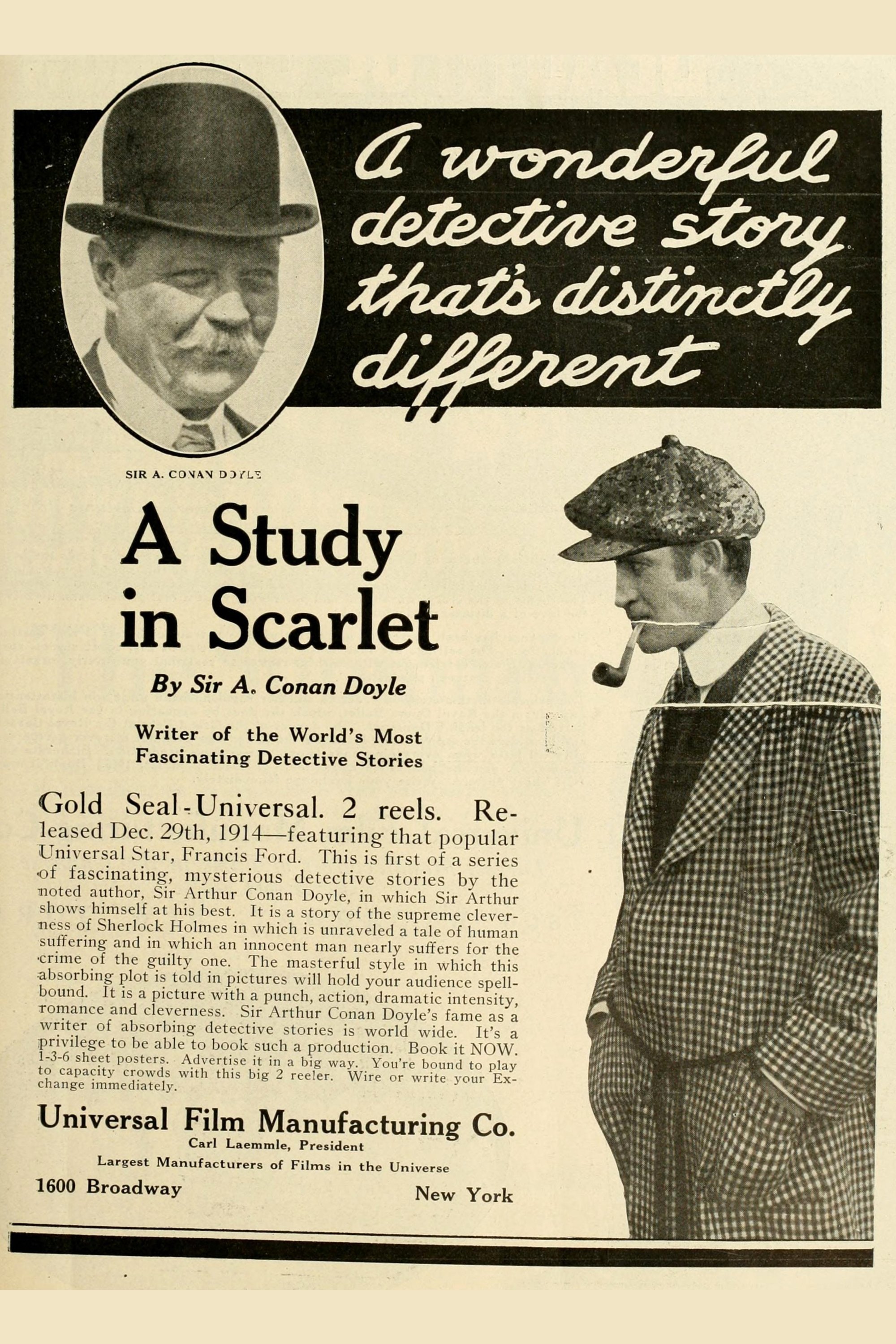
A Study in Scarlet (1914) — AI Story Visualization
Plot Analysis Summary
A historical analysis of the 1914 silent film adaptation focusing on production, release, and archival status.
Story Structure — 4 Plot Phases
Historical Origins
Establishes the film as a 1914 American silent production directed by Francis Ford. Introduces the foundational context of early cinema and the adaptation of Conan Doyle's 1887 novel.
Key Events
1914 Silent Film Production — Establishes the film as a 1914 American silent production. Location: American Cinema Studio
Francis Ford Direction — Francis Ford takes on the directorial role for the adaptation. Location: Production Studio
Francis Ford Starring — Francis Ford simultaneously stars as the titular detective. Characters: Sherlock HolmesLocation: Screen Set
Sherlock Holmes Portrayal — The protagonist is brought to life through silent performance. Characters: Sherlock HolmesLocation: Narrative Focus
Conan Doyle Literary Source — The film adaptation is grounded in Sir Arthur Conan Doyle's work. Location: Literary Archive
Casting & Production
Details the dual role of Francis Ford as director and lead actor. Explores the familial collaboration with John Ford in the potential portrayal of Dr. Watson.
Key Events
Conan Doyle Literary Source — The film adaptation is grounded in Sir Arthur Conan Doyle's work. Location: Literary Archive
1887 Novel Adaptation — Directly adapts the 1887 novel of the same name. Location: Publishing History
John Ford Potential Casting — Francis Ford's younger brother is believed to have portrayed Dr. Watson. Location: Casting Records
Dr. Watson Character Role — The loyal companion role is filled by a family collaborator. Location: Supporting Cast
December 29 Release Date — The film officially premiered on December 29, 1914. Location: Theatrical Circuit
Release & Competition
Tracks the precise December 29, 1914 theatrical launch. Highlights the tight one-day gap following the British film release, emphasizing market competition.
Key Events
December 29 Release Date — The film officially premiered on December 29, 1914. Location: Theatrical Circuit
British Film Competitor — A British production of the same title was released previously. Location: International Market
One-Day Release Gap — The American version followed the British release by exactly one day. Location: Distribution Timeline
Lost Film Status Reveal — The film is currently classified as a lost cinematic work. Location: Film Preservation Archive
Early Cinema Historical Context — Positions the film within the foundational era of American cinema. Location: Cinematic History
Legacy & Preservation
Examines the film's current status as a lost work. Reflects on its historical significance, archival challenges, and enduring place in silent era studies.
Key Events
Early Cinema Historical Context — Positions the film within the foundational era of American cinema. Location: Cinematic History
Silent Era Visual Storytelling — Relies entirely on visual performance and intertitles for storytelling. Characters: Sherlock HolmesLocation: Narrative Medium
Directorial Dual Role — Highlights the common early industry practice of dual creative roles. Location: Production Credits
Fraternal Collaboration — Demonstrates the reliance on familial networks in early filmmaking. Location: Behind the Scenes
Archival Preservation Status — Underscores the ongoing challenges of preserving early silent works. Location: Cultural Heritage
Cultural Legacy Assessment — Evaluated for its contribution to early detective genre adaptations. Location: Film Studies
Historical Film Documentation — Serves as a documented reference point for 1910s cinema research. Location: Academic Records
Legacy & Archival Conclusion — Concludes the film's journey from production to historical preservation status. Location: Cinematic Timeline
Story Breakdown
Production Framework — Core technical and creative foundations of the silent film.
Silent Era Format — Relies on visual storytelling without synchronized dialogue.
American Studio Origin — Produced within the early United States cinema industry.
Cast & Crew — Key personnel behind the camera and in front of it.
Francis Ford Direction — Manages overall creative vision and filming logistics.
John Ford Collaboration — Likely supports the production as a family member.
Character Portrayal — How the literary figures are adapted for the screen.
Sherlock Holmes Lead — Central detective figure portrayed by the director.
Dr. Watson Support — Narrative companion role filled by Ford's brother.
Literary Adaptation — Connection to the original source material.
Conan Doyle Novel — Directly based on the famous detective series.
1887 Source Material — Adapts the first published novel in the canon.
Release Strategy — Theatrical distribution and market positioning.
December 29 Launch — Specific premiere date in late 1914.
British Film Rivalry — Competes with a UK production of the same title.
Historical Status — Current preservation state and academic significance.
Lost Film Archive — Original reels are currently missing or destroyed.
Cinematic Legacy — Recognized as an important early detective adaptation.
This is the first of the Sherlock Holmes' stories by the famous English author. Sir Arthur Conan Doyle. Sherlock Holmes and his friend, Dr. Watson, receives an invitation from Mr. Gregson, of Scotland Yard, to assist in unraveling a murder mystery. Holmes makes a careful study of the case and as a result of his ingenious deductions rounds up the murderer, one Jefferson Hope, a cabman. The man confesses his guilt and tells his life story and of the vengeance of the many wrongs he has suffered at the hands of the dead man in the years gone by. Before the case comes to trial the prisoner dies from heart failure. This is another victory for Holmes and his wonderful deductive methods, as the officers of Scotland Yard had all but fastened the guilt upon another and an innocent person.