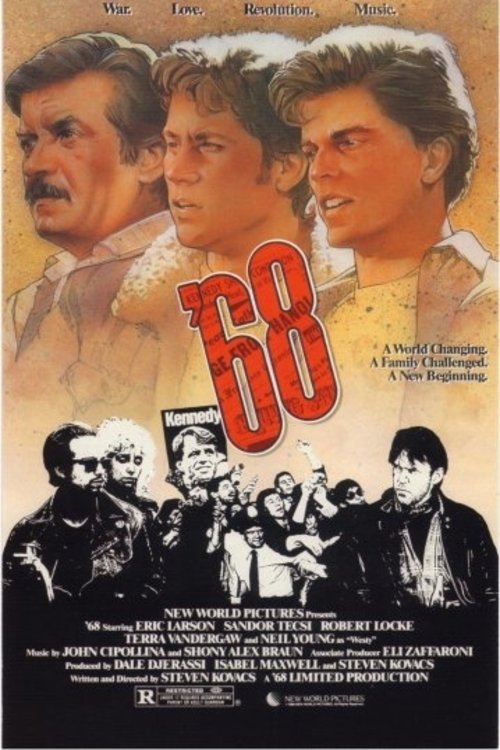
'68 (1988) character relationship network mapped with AI analysis. Explore the connections, alliances, and conflicts between characters.
Characters
Peter Szabo
(played by Eric Larson) — protagonist
The older son involved in counterculture. Gets kicked out of college, buys a motorcycle, dates a Maoist, and is disowned by his father. Later runs afoul of an outlaw motorcycle club and joins his brot...
Sandy Szabo
(played by Robert Locke) — protagonist
The younger son who is gay and struggles with coming out. Gets disowned by his father after revealing his sexuality. Gets drafted but rejected due to his homosexuality.
Zoltan Szabo
(played by Sándor Técsy) — supporting
The father who escaped the Soviet Invasion of Budapest. Runs a financially struggling Hungarian restaurant and disowns both sons when they diverge from his expectations.
Zsuzsa Szabo
(played by Anna Dukasz) — supporting
Canonical Relationships
Family, romantic, and professional connections based on plot evidence.
Zoltan Szabo → Sandy Szabo
(Family Father) — Hungarian immigrant father who disowns his gay son
Zoltan Szabo → Peter Szabo
(Family Father) — Hungarian immigrant father who escaped Soviet invasion
Zoltan Szabo → Zsuzsa Szabo
(Family Husband) — Married couple running a struggling Hungarian restaurant
Story Analysis
A divided family moves through political upheaval, personal rejection, and eventual brotherly solidarity.
Plot Progression
A Refugee Family Under Pressure
— The father’s escape from Budapest and his struggling Hungarian restaurant establish the family’s economic and generational pressures. The two sons begin moving in different directions.
Counterculture and Confrontation
— The older son is expelled from college, buys a motorcycle, dates a Maoist, and encounters an outlaw motorcycle club. Meanwhile, the younger son remains troubled by his sexuality.
Rejection Inside the Family
— The younger son comes out and is disowned by his father. The older son is also disowned, leaving both brothers isolated from their family.
Identity Against Institutions
— The younger son is drafted but rejected because of his homosexuality. National political violence, shown through stock footage, intensifies the surrounding sense of instability.
Brothers Stand Together
— The older son joins the younger son at a gay rights protest. Their shared public action offers solidarity after the family’s rejection.