Story Structure — 4 Plot Phases
The Crisis Context
The documentary opens by examining the 2008-09 global economic and financial crisis, establishing the urgent need to revisit historical economic theories. It sets the stage for re-examining Marx's ideas through contemporary lenses.
Key Events
-
Global Crisis Introduction — Film opens by examining the 2008-09 global economic and financial crisis. Location: Opening Sequence
-
Director Premise Setup — Jason Barker states his goal to reimagine Marx without totalitarian moralising. Location: Interview Setting
-
Cliché Critique Launch — Barker criticizes the cliché that Marx's diagnoses are valid but communism is utopian. Location: Verso Books Interview
-
Capitalism Diagnosis — Analysis of how Marx's critiques of capitalism remain highly relevant today. Location: Academic Setting
-
Political Convergence — Discussion on how modern political thinking converges on Marx's historical conditions. Location: University Lecture
-
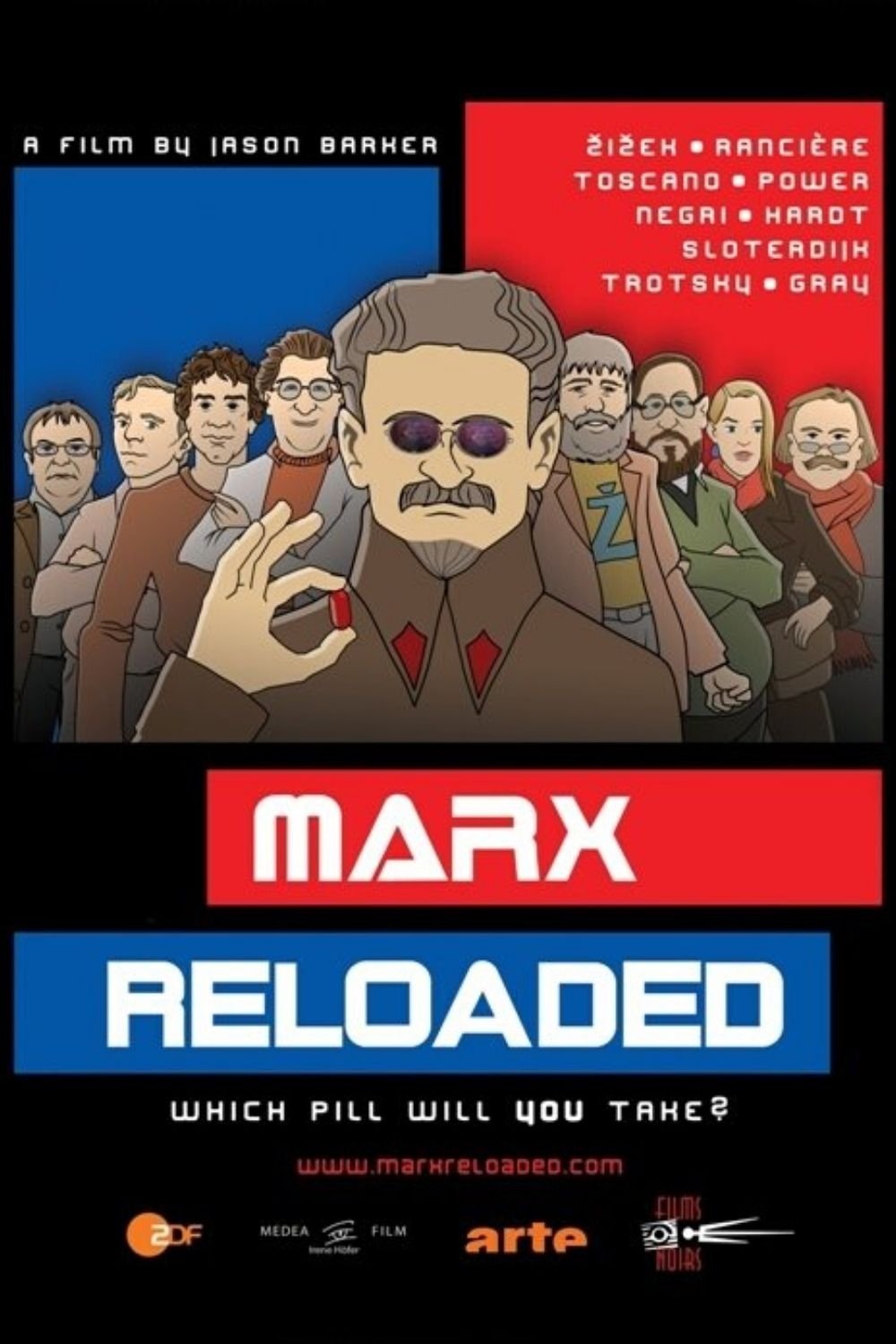
Animation Parody Setup — Transition into stylized animation parodying The Matrix for philosophical exploration. Location: Animated Sequence
Director Premise Setup
Writer-director Jason Barker outlines his intention to reimagine Marx without totalitarian moralising. He critiques the academic cliché that Marx's diagnoses are valid while his communist prescription is dismissed as utopian.
Key Events
-
Animation Parody Setup — Transition into stylized animation parodying The Matrix for philosophical exploration. Location: Animated Sequence
-
Trotsky Encounter — Animated Marx engages in philosophical dialogue with Leon Trotsky. Location: Animated Realm
-
Trotsky Insights — Trotsky provides historical and theoretical perspectives on revolution. Location: Animated Realm
-
Žižek Dialogue Begins — Animated Marx converses with contemporary philosopher Slavoj Žižek. Location: Animated Realm
-
Žižek Analysis — Žižek offers modern psychoanalytic and cultural critique of capitalism. Location: Animated Realm
-
Communism as Solution — Exploration of whether communism might solve growing economic and environmental challenges. Location: Theoretical Discussion
Animated Dialogues
Stylized animation sequences parody The Matrix to facilitate philosophical conversations. Marx engages with Leon Trotsky and Slavoj Žižek, exploring historical and modern critiques of capitalism.
Key Events
-
Communism as Solution — Exploration of whether communism might solve growing economic and environmental challenges. Location: Theoretical Discussion
-
Environmental Focus — Discussion on how Marxist theory addresses planetary environmental crises. Location: Global Context
-
Academic Spectre Debate — Debate on whether Marx's revival is just a spectre haunting academies. Location: Academy Setting
-
Utopian Critique Rebuttal — Direct challenge to the dismissal of communism as merely utopian. Location: Theoretical Debate
-
Historical Materialism — Examination of how Marx's materialist framework applies to modern finance. Location: Historical Analysis
-
Global Inequality Data — Presentation of data showing widening wealth gaps under late capitalism. Location: Economic Report
Theoretical Resolution
The film explores whether communism might solve growing environmental and economic challenges. It concludes by affirming Marx's enduring relevance in understanding modern political and financial conditions.
Key Events
-
Global Inequality Data — Presentation of data showing widening wealth gaps under late capitalism. Location: Economic Report
-
Financial System Flaws — Analysis of structural flaws in the 2008 financial system. Location: Banking Sector
-
Revolutionary Potential — Discussion on the potential for collective action and systemic change. Location: Mass Movement
-
Ideological Shift — Observation of shifting public attitudes toward socialist ideas. Location: Societal Change
-
Conclusion on Relevance — Film concludes that Marx's ideas remain essential for understanding contemporary crises. Location: Final Reflection
Marx Reloaded is a cultural documentary that examines the relevance of German socialist and philosopher Karl Marx's ideas for understanding the global economic and financial crisis of 2008-09. The crisis triggered the deepest global recession in 70 years and prompted the US government to spend more than 1 trillion dollars in order to rescue its banking system from collapse. Today the full implications of the crisis in Europe and around the world still remain unclear. Nevertheless, should we accept the crisis as an unfortunate side-effect of the free market? Or is there another explanation as to why it happened and its likely effects on our society, our economy and our whole way of life?