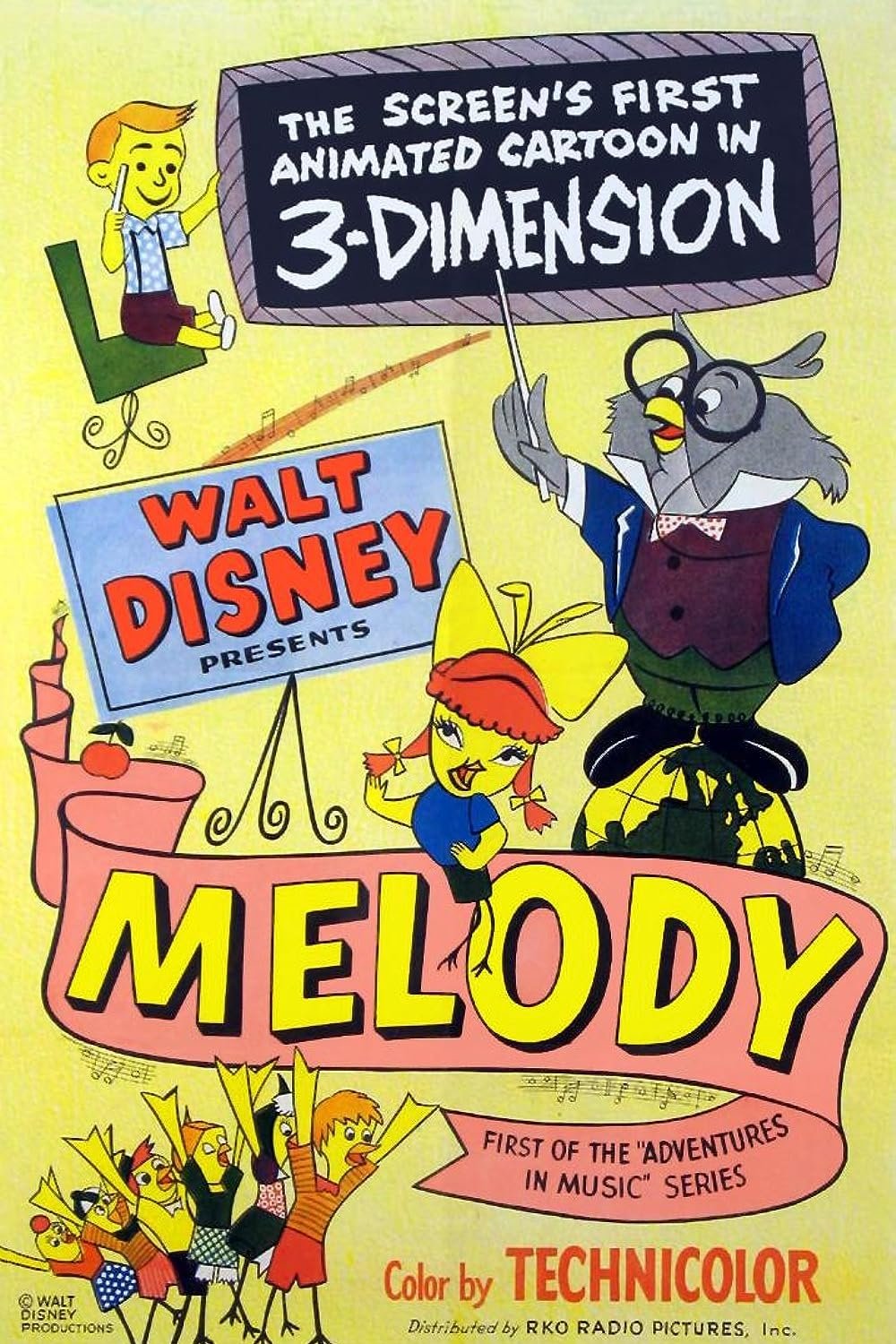
A musical lesson exploring how melodies exist in nature and mirror the stages of human life.
Story Structure — 4 Plot Phases
The Melody Lesson
Professor Owl introduces the concept of melody to his class of birds. He demonstrates musical assembly using a small piano before dismissing the students.
Key Events
Classroom Melody Lesson — Professor Owl teaches melody basics. Characters: Professor OwlLocation: Bird Classroom
Piano Demonstration — Professor Owl plays a tune. Characters: Professor OwlLocation: Bird Classroom
Class Dismissal — The class flies off to discover natural sounds. Characters: Professor OwlLocation: Bird Classroom
Nature Sound Hunt — Birds explore the environment for melodic inspiration. Characters: Professor OwlLocation: Forest
Nature's Chorus
The birds venture into the forest to discover natural sounds. A chorus performs about birds, crickets, and willow trees, highlighting vocal capabilities.
Key Events
Nature Sound Hunt — Birds explore the environment for melodic inspiration. Characters: Professor OwlLocation: Forest
Chorus Performance — The chorus sings about birds, crickets, and trees. Characters: Professor OwlLocation: Willow Tree
Vocal Capability Insight — Professor Owl notes only birds and humans can sing. Characters: Professor OwlLocation: Forest
Birth Melody Introduction — Rock-a-bye Baby illustrates the stage of birth. Characters: Professor OwlLocation: Narrative Space
School Years Melody — The Alphabet Song represents early education. Characters: Professor OwlLocation: Narrative Space
Life Stages Symphony
Various classic songs illustrate the progression of human life from birth to old age. Each stage is marked by a distinct musical theme.
Key Events
School Years Melody — The Alphabet Song represents early education. Characters: Professor OwlLocation: Narrative Space
College Life Melody — Far Above Cayuga's Waters depicts university years. Characters: Professor OwlLocation: Narrative Space
Courtship Melody — Drink to Me Only with Thine Eyes shows romance. Characters: Professor OwlLocation: Narrative Space
Wedding Ceremony Melody — Here Comes the Bride marks marriage. Characters: Professor OwlLocation: Narrative Space
Early Adulthood Melody — Home! Sweet Home! reflects settling down. Characters: Professor OwlLocation: Narrative Space
Birthday Celebration Melody — Happy Birthday to You marks another year. Characters: Professor OwlLocation: Narrative Space
Aging Process Melody — Silver Threads Among the Gold shows aging. Characters: Professor OwlLocation: Narrative Space
Twilight Years Melody — The Old Gray Mare represents old age. Characters: Professor OwlLocation: Narrative Space
Reflection Melody — Auld Lang Syne evokes nostalgia. Characters: Professor OwlLocation: Narrative Space
Golden Slippers Melody — Oh, Dem Golden Slippers concludes life stages. Characters: Professor OwlLocation: Narrative Space
Grand Finale
The initial simple tune expands into a full symphony, reaching a musical peak. The cartoon concludes with a peaceful reprise of the nature chorus.
Key Events
Golden Slippers Melody — Oh, Dem Golden Slippers concludes life stages. Characters: Professor OwlLocation: Narrative Space
Symphony Expansion — A simple melody is elaborated into a symphony. Characters: Professor OwlLocation: Narrative Space
Musical Climax — The symphony reaches its peak intensity. Characters: Professor OwlLocation: Narrative Space
Final Reprise — The cartoon ends with a reprise of the nature chorus. Characters: Professor OwlLocation: Narrative Space
Story Breakdown
Classroom Instruction — Professor Owl introduces melody concepts to his students.
Piano Demonstration — Professor Owl plays a tune to show melody assembly.
Nature Exploration — The class flies off to discover natural sounds.
Natural Sounds — Birds and chorus highlight melodic elements in the environment.
Chorus Performance — Singing about birds, crickets, and willow trees.
Vocal Revelation — Professor Owl notes only birds and humans can sing.
Life Stages — Classic songs illustrate the progression of a human lifespan.
Youth and Education — Birth, school, and college are represented by early tunes.
Romance and Marriage — Courtship and wedding songs mark adult milestones.
Aging and Reflection — Later life stages are depicted through nostalgic melodies.
Musical Expansion — A simple opening tune is elaborated into a complex symphony.
Symphony Construction — The melody grows in complexity and orchestration.
Climactic Peak — The symphony reaches its maximum emotional intensity.
Narrative Conclusion — The cartoon wraps up with a peaceful return to the opening theme.
Final Reprise — The nature chorus returns to close the lesson.
Educational Takeaway — Viewers learn to recognize melody in everyday life.
Thematic Elements — Underlying themes of music, nature, and human experience.
Music as Language — Melody serves as a universal connector across species.
Life Cycle Metaphor — Musical progression mirrors human growth and aging.
An owl teaches his class full of birds about melody. It's all around in nature. Only birds and man can sing; man "sings" even when he speaks. We see a quick survey of the stages of life, as captured by songs: the alphabet song for primary school, Here Comes the Bride, The Old Gray Mare, etc. Some inspirations for song are outlined in song: love, sailing, trains, the West, motherhood, etc., but "we never sing about brains." Finally, an example of how a simple melody can be expanded into a symphony: an elaborate version of the simple tune that opened the lesson