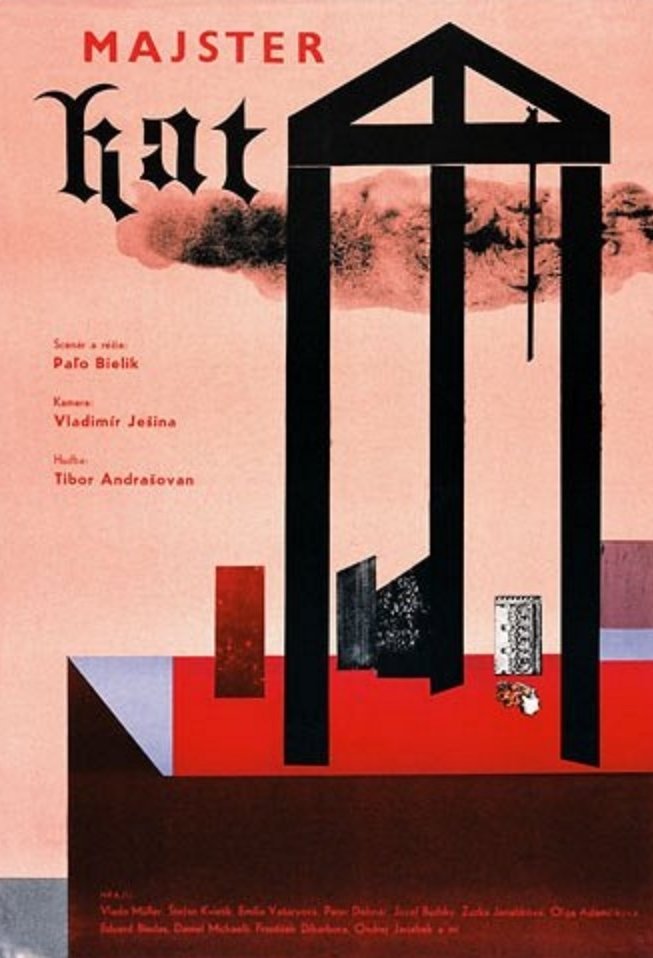
Master Executioner (1966) character relationship network mapped with AI analysis. Explore the connections, alliances, and conflicts between characters.
Characters
Emil Targo
(played by Vlado Müller) — protagonist
The town's executioner, Emil is immersed in the violence and drunken conflict of life under Ottoman rule. He loves a woman who turns away from him, and his bitterness leads him to threaten Richardus,...
Richardus
(played by Štefan Kvietik) — protagonist
Richardus is Emil Targo's friend and a father whose daughter is sentenced to death after killing a man who threatened her. He offers his wealth and himself to the judges, but they refuse to alter the...
Ganimédes
(played by Vlado Václav) — minor
Ganimédes advises the authorities on how to maintain control over the Christian population. He argues that encouraging division among Christians, including setting two men against each other through a...
Story Dynamics
Alliances, conflicts, and narrative interactions that evolve throughout the story.
Ganimédes → Emil Targo
(Narrative Political Manipulator) — Ganimédes presents interpersonal rivalry as a tool for controlling the town, while Emil is entangled in a painful rivalry over a woman.
Ganimédes says that setting two men against each other through a woman can be more effective than force.
Ganimédes → Richardus
(Conflict Political Adversary) — Ganimédes advocates division as a means of control, a strategy opposed to the survival of people such as Richardus.
Ganimédes argues that dividing Christians helps maintain control, while Richardus is described as trying to survive the dangers facing the town's Chri...
Emil Targo → Richardus
(Conflict Friend Turned Adversary) — Their friendship deteriorates into a personal confrontation as Richardus challenges Emil's conduct and warns him that threats cannot restore love.
The reference calls Richardus Emil Targo's friend, then describes their personal conflict: Emil threatens Richardus, who confronts him about the harm...
Story Analysis
Under oppressive rule, political division and personal attempts to control love converge around a condemned woman and an uncertain chance at life.
Plot Progression
Rule and Divided Loyalties
— Ottoman authorities exploit the Christian population, while Emil and Richardus navigate the town's danger. Ganimédes describes division and rivalry as instruments of control.
A Friendship Fractures
— Emil's painful romantic rivalry deepens when the woman turns away from him. Richardus challenges Emil's conduct, and their friendship becomes a personal conflict.
The Sentence and Its Escape
— Richardus's daughter is condemned after killing a man who threatened her. His pleas fail, but a legal precedent makes immediate marriage to the executioner's assistant a possible way to avoid executio...
A Marriage Without Affection
— The marriage gives the woman a chance to live, but does not guarantee affection. Emil's threat is stopped by her appeal, and she rejects her husband's demands from behind a locked door.
An Uncertain Future
— The story stresses that love cannot be obtained through prayer, begging, or threats. The closing advice offers the woman a chance to live elsewhere, but leaves the future unresolved.
Directed by Paľo Bielik
Master Executioner (1966) · 5.2/10 · drama, history
Content sources
Related entry on
Wikidata
(Q121775150), public domain (CC0).
Plot breakdown and analysis on this page are AI-generated from the title's synopsis and metadata.