Story Structure — 4 Plot Phases
Childhood Origins & Reflection
The film opens with a newly added introductory sequence detailing Aapeli's childhood and his internal contemplations before embarking on the traditional proposal journey.
Key Events
-
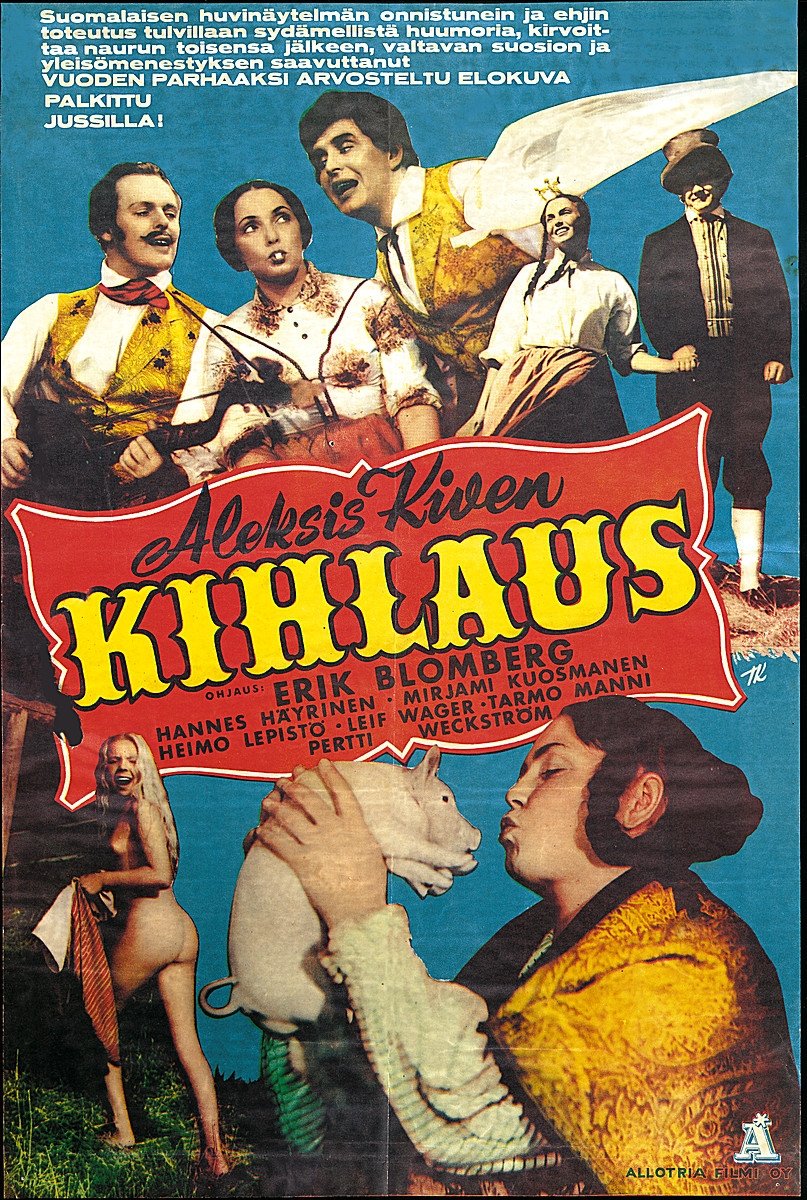
Film Premiere Context — Introduction of the 1955 film directed by Erik Blomberg. Characters: Aapeli
Location: Production Studio
-
Literary Adaptation Source — Establishes the film's foundation on the 1866 play Kihlaus. Characters: Aapeli
Location: Archival Records
-
Childhood Flashback Intro — Visualizes Aapeli's early life and formative experiences. Characters: Aapeli
Location: Childhood Home
-
Pre-Proposal Reflection — Aapeli contemplates his feelings before the proposal journey. Characters: Aapeli
Location: Private Quarters
-
Proposal Journey Begins — The protagonist departs on the traditional courtship expedition. Characters: Aapeli
Location: Village Path
The Proposal Expedition
Aapeli travels through the village landscape, engaging in dialogue adapted directly from Aleksis Kivi's 1866 play to advance the courtship narrative.
Key Events
-
Play Dialogue Integration — Adapted dialogue from the original 1866 play drives the narrative. Characters: Aapeli
Location: Village Square
-
Ceiling Camera Rig Setup — Technical workaround for camera movement due to equipment limits. Characters: Aapeli
Location: Studio Ceiling
Technical Execution & Finale
Production constraints lead to innovative ceiling-mounted camera techniques, culminating in a vibrant and energetic dance sequence that closes the story.
Key Events
-
Ceiling Camera Rig Setup — Technical workaround for camera movement due to equipment limits. Characters: Aapeli
Location: Studio Ceiling
-
Rope-Driven Camera Motion — Operator controls camera movement via foot-operated rope winding. Characters: Aapeli
Location: Studio Floor
Critical Reception & Legacy
Contemporary reviews present a divided perspective, with some praising the deliberate pacing while others critique the structural additions, cementing the film's historical context.
Key Events
-
Dance Sequence Finale — Energetic dance sequence concludes the narrative arc. Characters: Aapeli
Location: Celebration Hall
-
Mixed Critical Reception — Film receives both praise and criticism from contemporary reviewers. Characters: Aapeli
Location: Press Reviews
-
Structural Critique Analysis — Critics argue the added intro disrupts the original play's elegance. Characters: Aapeli
Location: Literary Journals
-
Pacing Appreciation Review — Reviewers praise the deliberate pacing as an effective stylistic choice. Characters: Aapeli
Location: Film Criticism
-
Historical Version Comparison — Contextualizes the 1955 version against earlier cinematic adaptations. Characters: Aapeli
Location: Film Archives
-
Comedic Tone Assessment — The film is recognized as a character-driven comedy with sparse pacing. Characters: Aapeli
Location: Audience Feedback
-
Cinematic Legacy Conclusion — The film secures its place in Finnish adaptation history. Characters: Aapeli
Location: Cultural History
Eeva serves two noblemen, who have treated their servant badly. She writes to her childhood friend Aapel and proposes marriage. The man does not believe the proposal, but leaves to fetch Eeva. Upon seeing the man's modest living conditions, Eeva regrets her decision, becomes ill-tempered, and refuses the engagement. At the same time, the cheerful gentlemen arrive to fetch Eeva, who dances with joy upon returning to her former life.