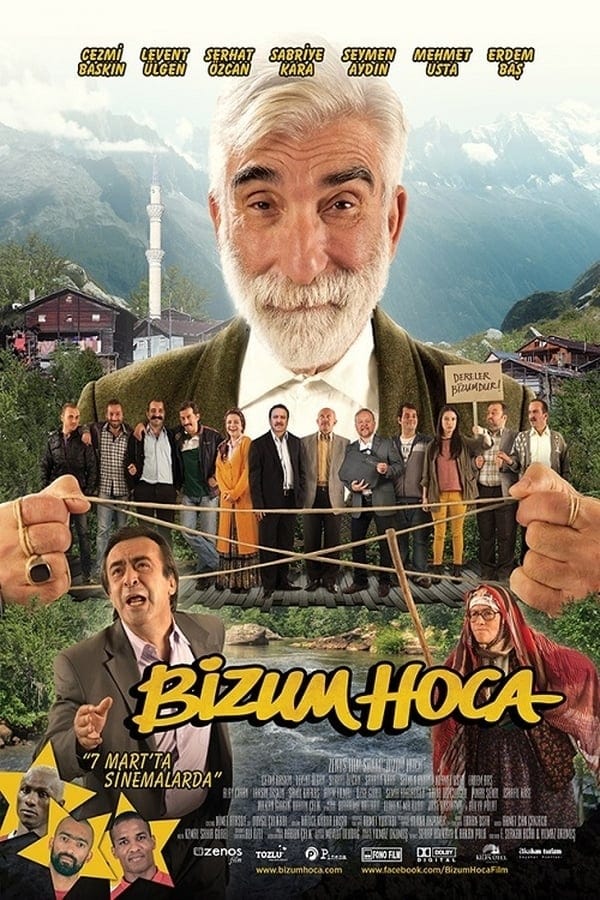
A village's search for religious leadership spirals into a comedic power struggle when an official imam clashes with an elected substitute.
Story Structure — 4 Plot Phases
The Vacant Pulpit
The village awaits its newly appointed imam, but days pass with no arrival. Elders decide to find a temporary substitute to maintain community order.
Key Events
Village Awaits Imam — Residents gather, expecting the newly appointed imam. Location: Village Square
Imam Fails to Arrive — Days pass with no sign of the official religious leader. Location: Village Square
Search for Substitute — Elders discuss finding a temporary replacement to maintain order. Location: Village Meeting Hall
The Unlikely Leader
Villagers nominate and elect Bizum Hoca as their acting imam. Shortly after, news of a hydroelectric dam threatens their livelihood, sparking immediate outrage.
Key Events
Nomination of Bizum Hoca — Community proposes the locally known Bizum Hoca as acting imam. Location: Village Meeting Hall
Election of Bizum Hoca — Villagers formally accept him as their substitute religious leader. Location: Mosque Courtyard
First Sermon — Bizum Hoca delivers his inaugural address to the congregation. Location: Mosque
Dam Construction News — Rumors of a hydroelectric plant threaten the village livelihood. Location: Village Square
The Dam Dilemma
Bizum Hoca organizes the community into a resistance movement to halt construction. Meanwhile, the officially appointed imam receives his transfer and begins his journey.
Key Events
Dam Construction News — Rumors of a hydroelectric plant threaten the village livelihood. Location: Village Square
Community Outcry — Residents express anger over potential displacement and environmental damage. Location: Village Square
Resistance Planning — Strategy meeting held to organize opposition against the dam. Location: Village Meeting Hall
Leadership Appointment — Bizum Hoca is unanimously chosen as the resistance movement leader. Location: Village Square
The Clash of Authority
The real imam arrives, creating a direct conflict with Bizum Hoca over leadership. The village descends into chaotic factionalism as both men demand obedience.
Key Events
Protest Mobilization — Organized march attempts to halt construction equipment. Location: Dam Construction Site
Official Appointment Letter — The real imam receives his transfer order to the village. Location: District Post Office
Journey to the Village — The appointed imam travels toward his new administrative post. Location: Rural Roads
Arrival at the Village — The official imam steps off the bus, greeted by confusion. Location: Village Square
Dual Authority Conflict — Both men claim religious and community leadership simultaneously. Location: Mosque
Public Debate — Heated discussion erupts over legitimacy and administrative roles. Location: Village Square
Community Division — Residents split into factions supporting each competing leader. Location: Various Locations
Administrative Intervention — Local officials attempt to mediate the leadership dispute. Location: District Office
Unmanageable Situation — Chaos ensues as neither side yields authority or compromise. Location: Village Square
Stalemate Resolution — The film concludes with unresolved but comedic tension between leaders. Location: Mosque
Story Breakdown
Religious Vacuum — The absence of the appointed imam creates administrative and spiritual disarray in the village.
Imam Absence — The official imam fails to arrive at his post.
Village Disarray — Lack of leadership disrupts daily community routines.
Community Mobilization — Residents take initiative to fill the leadership gap through collective decision-making.
Substitute Search — Elders deliberate on potential temporary replacements.
Bizum Election — The community formally votes for Bizum Hoca.
External Threat — An infrastructure project emerges, challenging the village's autonomy and livelihood.
Dam Announcement — News spreads about hydroelectric plant construction.
Protest Planning — Villagers organize strategies to halt development.
Leadership Transition — Bizum Hoca assumes dual roles as religious figure and resistance commander.
Acting Imam Role — He delivers sermons and guides spiritual matters.
Resistance Command — He directs protests and coordinates community defense.
Official Arrival — The legitimate imam completes his journey and enters the village sphere.
Transfer Order — He receives official documentation for his assignment.
Journey Completion — He travels through rural roads to reach the destination.
Authority Conflict — Two competing leaders emerge, fracturing community unity and administrative control.
Dual Claims — Both men assert legitimate right to village leadership.
Public Debate — Heated discussions expose ideological and procedural divides.
Resolution Stalemate — The narrative concludes without clear resolution, emphasizing comedic tension.
Faction Division — Residents align with either leader, creating social splits.
Comedic Tension — The unresolved power struggle drives the film's humor.
After the delay of an official imam sent to a little village, the villagers try to find an imam to lead them during pray. After discussions, they decide to make "Bizum Hoca" (Our hodja) the imam of village, a villager loved and respected by everyone, though he is not an official one. Hodja, a different man from stereotype imams, also wants to change some bad habits villagers have. Meanwhile, the construction of one of the hydroelectric power plants (HPP) causing intense discussions in the region, next to a river flowing through the village, becomes a hot issue on the village's agenda. The villagers are against this construction and the fight begins. "Bizum Hoca" finds himself leading the villagers who started the protests.