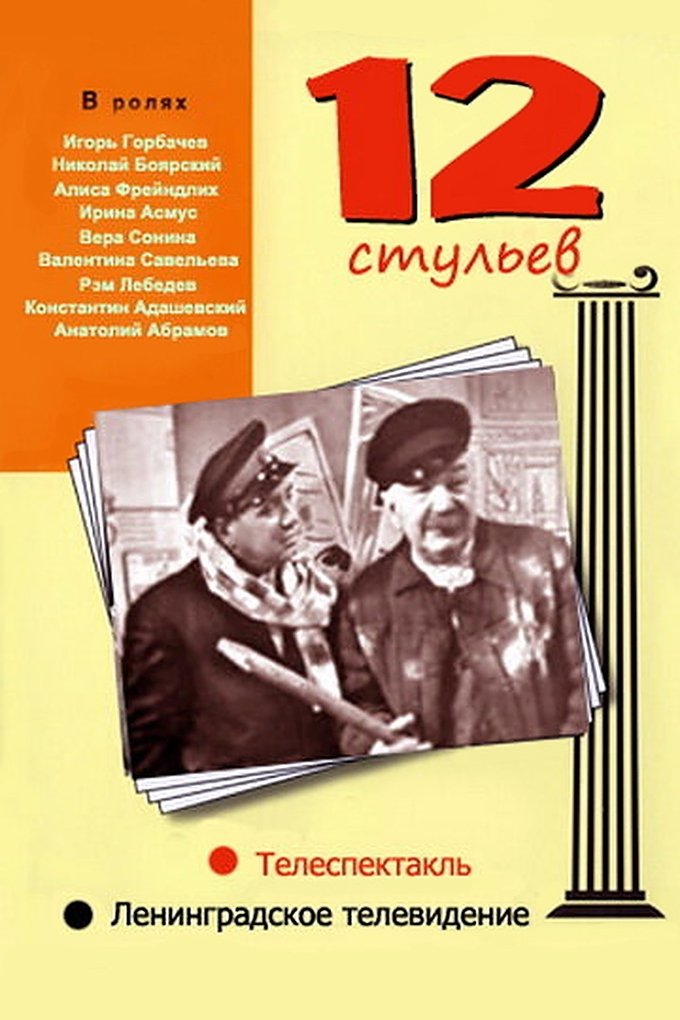
Meta-narrative exploration of the 1966 Leningrad television adaptation directed by Alexander Belinsky, focusing on production challenges, audience expectations, and reception.
Story Structure — 4 Plot Phases
The Adaptation Challenge
Introduction of the beloved novel and the immense difficulty faced by director Alexander Belinsky in bringing it to the 1966 screen.
Key Events
Novel Introduction — Introduction of the beloved novel as the adaptation source.
Location: Literary Context
Belinsky's Vision — Director Alexander Belinsky initiates the 1966 television project.
Location: Leningrad Television
Adaptation Difficulty — Acknowledgment of the immense challenge in filming a beloved classic.
Location: Production Studio
Audience Familiarity — Audience already knows the plot in extreme detail.
Location: Public Sphere
Winged Phrases Legacy — Iconic phrases from the story have entered common parlance.
Location: Cultural Memory
Character Expectations — Each viewer holds a unique idea of the main characters.
Location: Viewer Mindset
Casting and Production
Integration of the protagonist duo and supporting cast, followed by the execution of filming under Belinsky's direction.
Key Events
Character Expectations — Each viewer holds a unique idea of the main characters.
Location: Viewer Mindset
Protagonist Casting — Selection of lead actors for the central duo.
Location: Casting Room
Supporting Cast Integration — Integration of supporting characters into the adaptation framework. Characters: TikhonLocation: Ensemble Assembly
Filming Execution — Active filming of the adaptation under Belinsky's direction.
Location: Leningrad Sets
Director's Challenge — Navigating the tension between fidelity and creative interpretation.
Location: Production Office
Version Completion — Completion of the 1966 television adaptation.
Location: Post-Production
Audience Screening — Initial public viewing of Belinsky's version.
Location: Television Broadcast
Audience Reception and Clash
Initial screening reveals a divide between audience expectations and the director's interpretation, sparking critical discourse.
Key Events
Audience Screening — Initial public viewing of Belinsky's version.
Location: Television Broadcast
Expectation Clash — Audience dissatisfaction emerges due to differing character visions.
Location: Viewer Feedback
Gaidai Comparison — Reference to Gaidai's adaptation as a benchmark.
Location: Cultural Discourse
Version Differentiation — Analysis of how Belinsky's approach diverges from audience expectations.
Location: Adaptation Study
Character Interpretation — Evaluation of how protagonists are portrayed in this specific version.
Location: Performance Review
Supporting Role Analysis — Assessment of supporting cast contributions to the adaptation.
Location: Ensemble Review
Audience Dissatisfaction — Widespread acknowledgment that the version will not suit everyone.
Location: Public Reaction
Historical Reflection
Final assessment of the adaptation's legacy, acknowledging its unique place despite widespread dissatisfaction.
Key Events
Audience Dissatisfaction — Widespread acknowledgment that the version will not suit everyone.
Location: Public Reaction
Historical Placement — Positioning the 1966 adaptation within Soviet cinema history.
Location: Film History
Legacy Acknowledgment — Recognition of the adaptation's place despite mixed reception.
Location: Cultural Memory
Final Verdict — Conclusion on the adaptation's unique value and audience divide.
Location: Critical Consensus
Story Breakdown
Source Material & Context — The beloved novel '12 Chairs' and its cultural impact.
Audience Familiarity — Detailed plot knowledge and iconic phrases ingrained in public memory.
Character Expectations — Each viewer holds unique mental images of the protagonists.
Production & Direction — Alexander Belinsky's 1966 television adaptation process.
Director's Vision — Navigating the difficulty of adapting a fan-favorite classic.
Casting Strategy — Selection of Ostap Bender and Kisa Vorobyaninov as co-protagonists.
Ensemble Integration — Incorporation of supporting characters like Father Fyodor and Elena Bour.
Reception & Discourse — Audience reaction and comparative analysis with other adaptations.
Expectation Mismatch — Dissatisfaction arising from divergent character interpretations.
Comparative Benchmark — Reference to Leonid Gaidai's adaptation as a cultural touchstone.
Historical Legacy — Acknowledgment of the version's unique place despite mixed reception.
Who was the first to bring the great novel "12 Chairs" to the screen? You say "Leonid Gaidai" - and it will be a mistake. In our country, the first director was Alexander Belinsky (Leningrad television, 1966). Filming the favorite books of millions is a difficult task. The audience knows the plot in detail. Winged phrases have long gone to the people. Everyone has their own idea of the main characters. In general, dissatisfied will be sure. So the version of "12 chairs", proposed by Alexander Belinsky, of course, will not suit everyone.