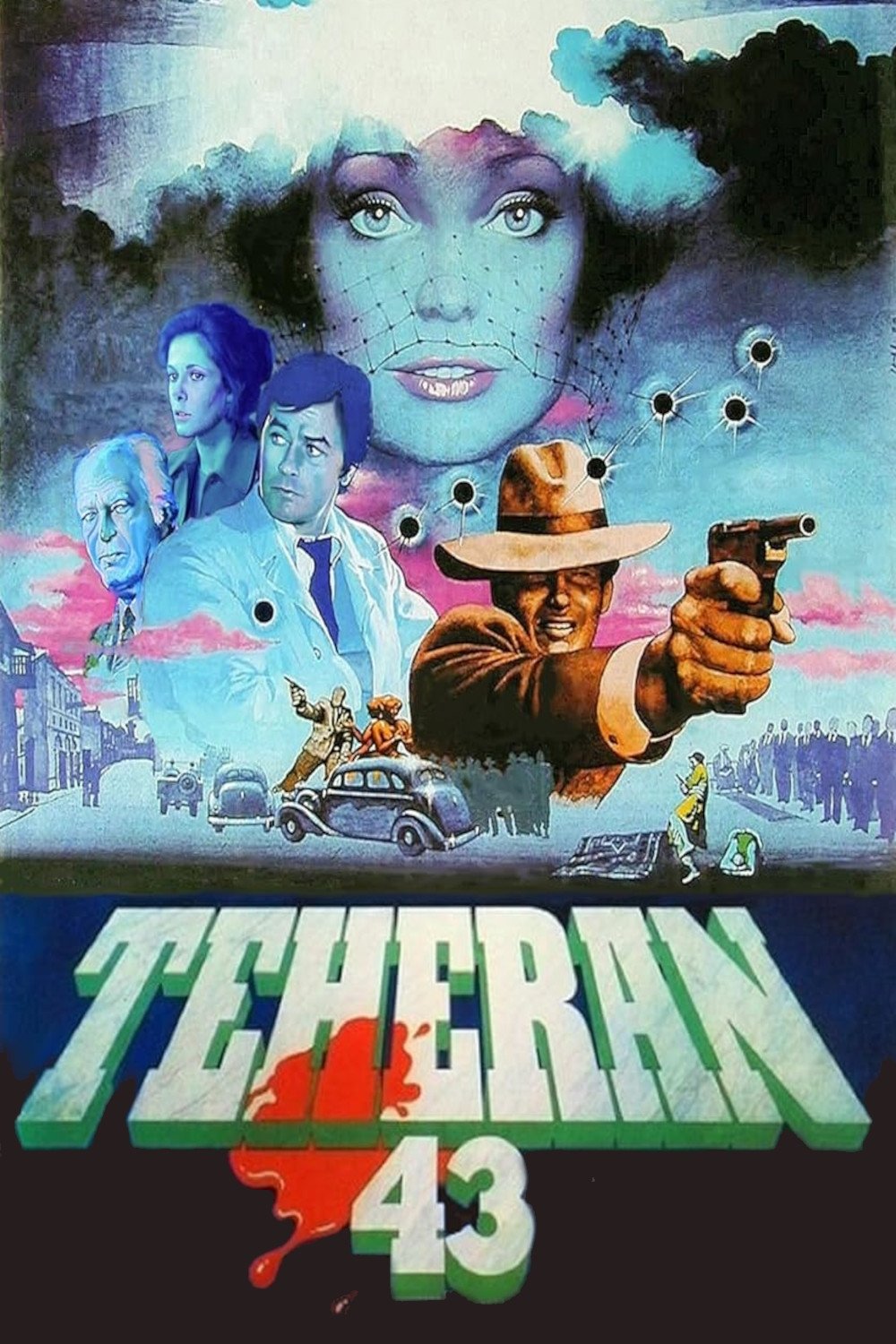
A wartime assassination conspiracy resurfaces decades later through memories, documents, hidden loyalties, and endangered witnesses.
Story Structure — 4 Plot Phases
The Tehran Assassination Plot
A German operation brings an assassin to Tehran under a false funeral-director identity. Investigators uncover the operation and begin disrupting its preparations.
Key Events
Paris Memories Begin — A present-day Paris setting introduces memories reaching back to the 1943 Tehran assassination plot.
Location: Paris
Tehran Assassination Plan — German planners prepare to assassinate three Allied leaders during the Tehran Conference.
Location: Tehran
Funeral Director Cover — An assassin enters Tehran under the cover of a previously murdered Persian funeral director.
Location: Tehran
Lawyer Murdered — The undercover assassin kills the lawyer connected to the deceased Persian.
Location: Tehran
Interpreter Investigates — An interpreter and a young Russian secret agent discover the danger and pursue the assassin.
Location: Tehran
The Conference Under Threat
A disguised operative carries a gun inside a movie camera while the investigators race to protect the conference. The assassination attempt is ultimately thwarted, but the wartime relationship is broken by separation.
Key Events
Assassin Escapes — The investigator pair help the endangered assassin escape, creating a temporary reversal.
Location: Tehran
False Photographer Found — A supposed photographer is exposed as an operative carrying a gun inside a movie camera.
Location: Tehran
Assassination Thwarted — The planned attack on the three Allied leaders is prevented.
Location: Tehran Conference
Separation for France — The young Russian agent sends the interpreter to France for her safety, ending their wartime contact.
Location: Tehran
Memoirs Planned — In the present, the former assassin plans to publish memoirs and documents with legal assistance.
Location: Paris
Secrets Return to Paris
Decades later, memoirs and documents revive the unresolved history. A resemblance, a hidden allegiance, and an international auction reconnect the surviving figures with the past.
Key Events
London Document Auction — An auction of wartime documents brings the former Russian agent into contact with a woman resembling the past interpreter.
Location: London
Hidden Allegiance Revealed — The young Parisian woman admits that she works for the former Nazi organizer and had previously hidden the assassin.
Location: Paris
Paris Paths Intersect — The wartime survivors, the daughter of the interpreter, and a police inspector become connected in Paris.
Location: Paris
Airplane Hijacking — A hijacking initiated by the former Nazi organizer forces the former Russian agent and the young woman together again.
Location: Airplane
Inspector Assassinated — The police inspector is killed from behind while attempting to protect the interpreter's daughter.
Location: Paris
Witnesses in Danger
The Paris investigation becomes violent as a hijacking, an inspector's murder, and the killing of a former witness expose the continuing reach of the old conspiracy.
Key Events
Witness Murdered — The former interpreter is killed after a brief reunion with the former Russian agent.
Location: Paris
New Hiding Place — The Parisian woman moves the frightened former assassin to another hiding place.
Location: Paris
Daughter Reveals Lost Love — The former Russian agent learns that the interpreter had loved him and described shared dreams to her daughter.
Location: Paris
Hideout Shooting — The former assassin is shot by men working for the former Nazi organizer.
Location: Hideout
Return to Moscow — Legal negotiations over the manuscript continue while the former Russian agent travels back to Moscow.
Location: Moscow
Story Breakdown
Paris Memory Frame — The present-day investigation is introduced through memories of the 1943 conspiracy.
Present-Day Paris — The story begins in Paris in 1980.
Wartime Flashback — Memories return the narrative to Tehran in 1943.
Tehran Infiltration — The assassination operation begins with a carefully constructed identity and a deadly cover story.
Funeral Director Cover — The assassin enters Tehran posing as a funeral director.
Lawyer Murder — The lawyer associated with the deceased Persian is killed.
Secret Counteroperation — The interpreter and the Russian secret agent uncover the attack and pursue its organizers.
Investigation Begins — The suspicious murder exposes the hidden operation.
Assassin Escapes — The investigators help the targeted operative evade immediate capture.
Conference Sabotage — A disguised operative attempts to bring a weapon into the Tehran Conference.
Camera Weapon — A gun is hidden inside a movie camera.
Attack Prevented — The planned assassination of the three Allied leaders fails.
Lost Wartime Romance — The successful defense of the conference cannot prevent a painful personal separation.
Safety Decision — The young woman is sent to France for protection.
Unfinished Love — The two central wartime figures do not meet again during the war.
Documents Resurface — Memoirs and historical documents reconnect the present with the old conspiracy.
Memoir Publication — The former assassin seeks help publishing his account.
London Auction — An auction reveals a woman resembling the wartime interpreter.
Paris Conspiracy Returns — Old loyalties and new investigations converge as the conspiracy continues to threaten witnesses.
Hidden Allegiance — The Parisian woman reveals her connection to the former Nazi organizer.
Intersecting Paths — The survivors, the daughter, and the police inspector become connected.
Violent Reckoning — The renewed conspiracy culminates in hijacking, assassination, and a final attack on the hidden witness.
Airplane Hijacking — A hijacking forces an unexpected reunion during the investigation.
Hideout Shooting — The former assassin is shot by the organizer's men.
History's Aftermath — The surviving investigator confronts the emotional truth of the past before returning to Moscow.
Lost Love Revealed — The daughter explains that her mother had preserved her love and memories.
Return to Moscow — The surviving investigator travels back to Moscow while manuscript negotiations continue.
This story starts in 1980 in Paris as the memories of Andrei Borodin, a Soviet agent, take the action back to 1943 during the Teheran meetings of Stalin, Roosevelt and Churchill. A high-ranking Nazi officer developed a plan to assassinate the three world leaders in order to undermine the Allied forces. He commissioned the German agent Max Richard to carry out his plan, but it failed miserably due to the quick action and thinking of Andrei. While in Teheran, Andrei met a French woman, Marie Louni, living in the city and they had a brief but intense affair. Nearly four decades later, the Nazi officer has been captured - but not for long. Freed by terrorists, the officer is hunting down the German agent who failed to carry out the planned assassinations. Max lives at Françoise, a young French woman, who hides him.