Plot Analysis Summary
Two parallel stories connect violent rebellion, private apathy, parental consequences, and postwar German continuity.
Story Structure — 5 Plot Phases
Two Germanys, Two Rebellions
The film opens by contrasting Bonn Germany with Hitler's Germany, then introduces the silent cannibal story on Etna. A separate 1967 villa narrative begins with emotional confinement and political disconnection.
Key Events
-
Bonn Germany Contrasted — The narration contrasts Bonn Germany with Hitler's Germany.
Location: Opening narration
-
Pigsty Opening Images — The credits play over pigsty images, sounds, and an instrumental political song.
Location: Pigsty
-
Cannibal Wanders Etna — A young man wanders through the volcanic landscape without speaking.
Location: Slopes of Etna
-
Small Animals Killed — The young man kills and eats insects and small animals.
Location: Volcanic landscape
-
Garrisons Avoided — He flees from soldiers and approaches only corpses.
Location: Etna region
-
Hunger Turns Human — Animal flesh no longer satisfies him, and he seeks human flesh.
Location: Slopes of Etna
-
Soldier Lured Away — He attracts a soldier from the same garrison seen earlier.
Location: Near a military garrison
The Hunger Becomes Human
The young wanderer moves from eating animals to desiring human flesh. He kills a soldier, attracts followers, and becomes the source of raids feared by a village.
Key Events
-
Soldier Lured Away — He attracts a soldier from the same garrison seen earlier.
Location: Near a military garrison
-
First Human Killing — The young man kills the soldier and commits his first act of cannibalism.
Location: Etna region
-
Cannibal Group Forms — Other people, including women, join the cannibal's journey.
Location: Volcanic landscape
-
Raids Reach Village — News of the cannibals' raids reaches a nearby village.
Location: A Sicilian village
-
Cannibals Surrounded — The villagers surround the cannibals and begin capturing them.
Location: Outside the village
-
Final Cannibal Declaration — During the capture, the young man finally speaks his famous declaration.
Location: Village capture site
Punishment At The Village
The cannibals are surrounded and captured by locals. Their leader speaks for the first and only time before the group is tied to poles and left to stray dogs.
Key Events
-
Cannibals Bound To Poles — The captured cannibals are tied to erected poles.
Location: Village outskirts
-
Dogs Devour Prisoners — The bound cannibals are left to be devoured by stray dogs.
Location: Village outskirts
-
Godesberg Villa Introduced — The parallel story shifts to a German villa in 1967.
Location: Villa in Godesberg
Secrets In The Villa
The German story develops through emotional neglect, a secret connection with pigs, and a trance-like withdrawal. Herdhitze's arrival turns private scandal and political history into leverage.
Key Events
-
Ida Is Neglected — Ida is neglected while the young man's life remains flat and confined. Characters: Ida
Location: Villa in Godesberg
-
Julian Enters Pigsty — The young man secretly lies with pigs whenever possible.
Location: Pigsty beside the villa
-
Trance In Armchair — He falls into a trance on an armchair and remains indifferent to events.
Location: Villa interior
-
Herdhitze Arrives — Herdhitze arrives and is introduced as an old rival and comrade. Characters: Herdhitze
Location: Villa in Godesberg
-
Company Proposal Made — Herdhitze proposes that the industrialist join his company. Characters: Herdhitze
Location: Villa in Godesberg
-
Macabre Past Revealed — Herdhitze's alleged experiments with Jewish bodies become part of the negotiation. Characters: Herdhitze
Location: Villa in Godesberg
-
Pig Secret Exposed — Herdhitze reveals the young man's scandalous dealings with pigs. Characters: Herdhitze, Ida
Location: Villa in Godesberg
Silence After Devouring
The young man discusses love with Ida, but she leaves to marry someone else. As a company is formed, he returns to the pigsty and his death is concealed through Herdhitze's order to Maracchione.
Key Events
-
Pig Secret Exposed — Herdhitze reveals the young man's scandalous dealings with pigs. Characters: Herdhitze, Ida
Location: Villa in Godesberg
-
Ideas About Love Discussed — The young man decides to discuss his ideas about love with Ida. Characters: Ida
Location: Villa in Godesberg
-
Ida Leaves Villa — Ida leaves the villa to marry someone else. Characters: Ida
Location: Outside the villa
-
Business Alliance Forms — Herdhitze and the industrialist proceed with forming a company. Characters: Herdhitze
Location: Villa in Godesberg
-
Julian Returns To Pigsty — The young man goes to the pigsty and allows the pigs to devour him.
Location: Pigsty beside the villa
-
Death Reported Quietly — Herdhitze tells Maracchione that nothing remains and orders him to keep silent. Characters: Herdhitze, Maracchione
Location: Villa grounds
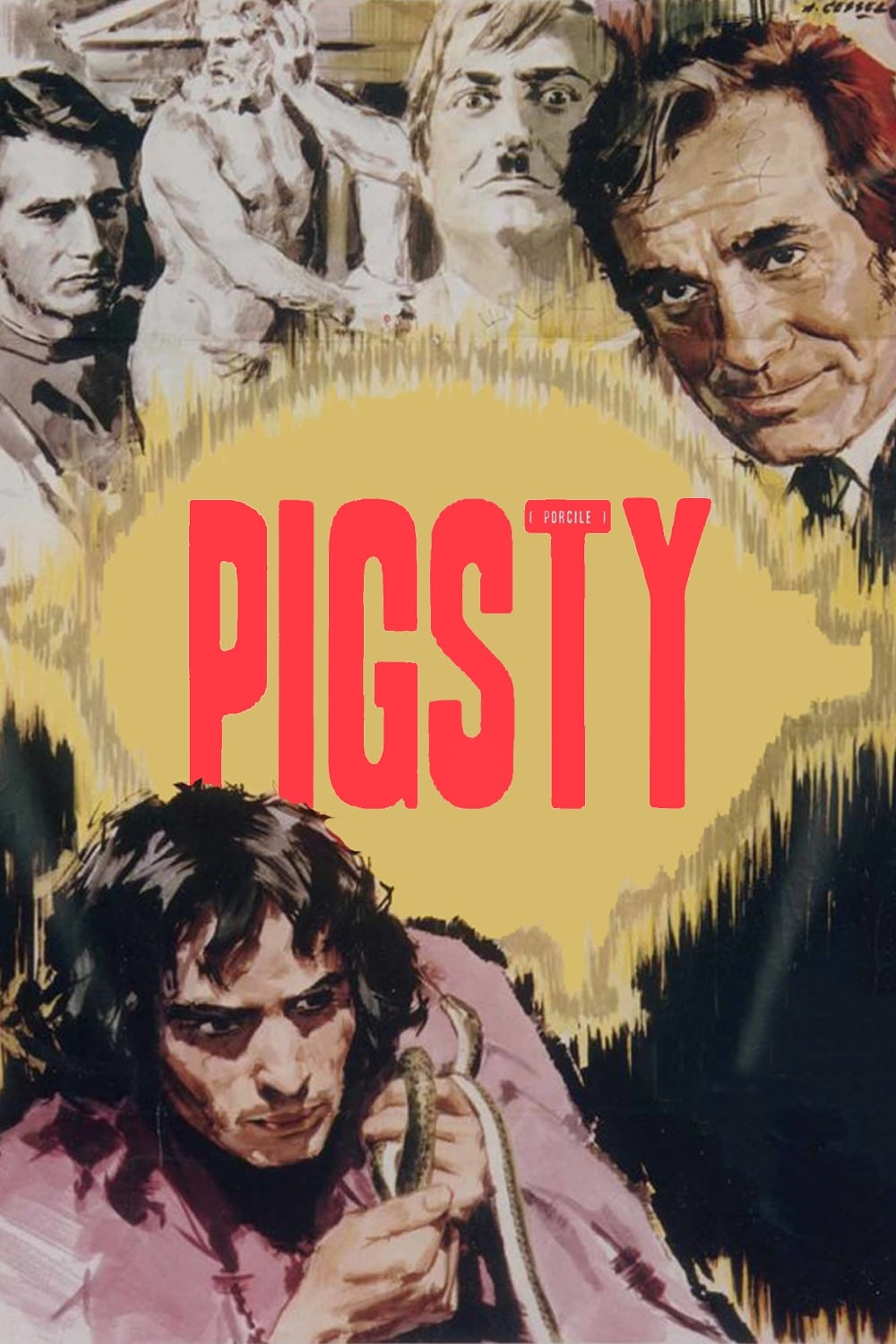
Two dramatic stories. In an undetermined past, a young cannibal (who killed his own father) is condemned to be torn to pieces by some wild beasts. In the second story, Julian, the young son of a post-war German industrialist, is on the way to lie down with his farm's pigs, because he doesn't like human relationships.