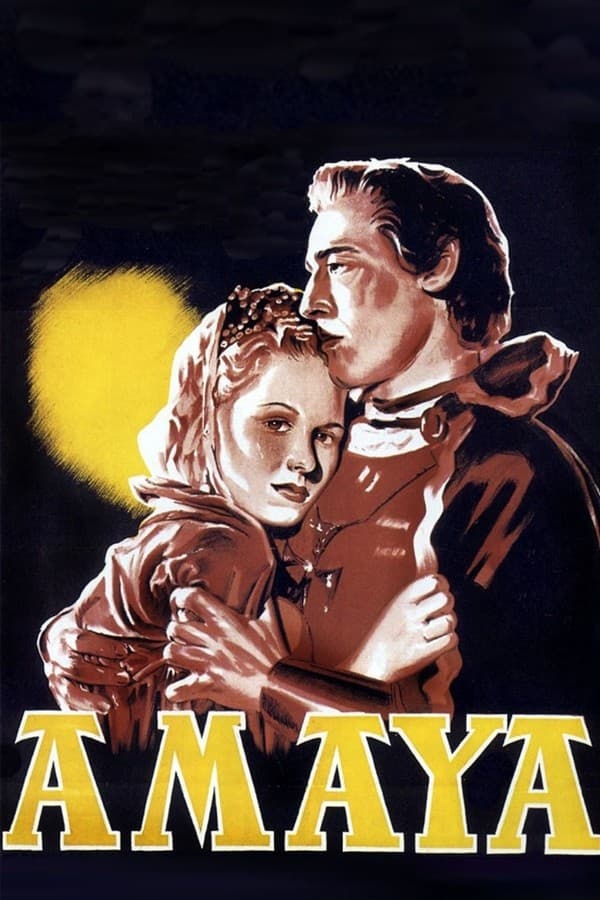
A historical drama that frames eighth-century Basque conflict through a conspiracy narrative surrounding Spain's loss in 711.
Story Structure — 4 Plot Phases
Basque Historical Foundations
The film establishes a historical setting connected to eighth-century Basque history. It adapts Francisco Navarro Villosladas's novel.
Key Events
Historical Basque Setting — The film presents a historical drama based on eighth-century Basque history.
Location: Basque territories
Novel Adaptation — The story adapts Francisco Navarro Villosladas's historical novel Amaya o los vascos en el siglo VIII.
Location: Spain
The Conspiracy Takes Shape
The adaptation amplifies a conspiracy narrative concerning the loss of Spain in 711. The narrative assigns responsibility to a Jewish plot.
Key Events
Conspiracy Narrative Emerges — The film amplifies a conspiracy narrative about the loss of Spain in 711.
Location: Spain
Political Blame Assigned — The narrative attributes the 711 loss of Spain to a Jewish plot.
Location: Spain
Violence In Pamplona
The film depicts an uprising involving Pamplona's Jewish community. These sequences strongly express the film's antisemitic sentiment.
Key Events
Pamplona Uprising — A sequence depicts an uprising involving Pamplona's Jewish community.
Location: Pamplona
Religious Persecution Intensifies — The film strongly displays antisemitic sentiment through its treatment of the uprising.
Location: Pamplona
Imprisonment And Historical Blame
Basque Christians are shown being imprisoned as the religious conflict intensifies. The conspiracy framework remains tied to the loss of Spain in 711.
Key Events
Basque Christians Imprisoned — Another sequence shows Basque Christians being imprisoned.
Location: Pamplona
Historical Loss Reframed — The conspiracy framework connects religious conflict with Spain's loss in 711.
Location: Spain
Ideological Conclusion — The film closes its historical framing around conflict, imprisonment, and the alleged conspiracy.
Location: Spain
Story Breakdown
Historical Setting — The film places its story within a historical Basque context.
Eighth Century — The source novel is explicitly associated with the eighth century.
Basque History — The adaptation presents itself as a story about Basque historical experience.
Literary Adaptation — The film draws its narrative from a historical novel.
Navarro Villosladas — The film adapts a novel by Francisco Navarro Villosladas.
Historical Novel — The source is identified as Amaya o los vascos en el siglo VIII.
Conspiracy Framework — The adaptation intensifies a conspiracy explanation for Spain's historical defeat.
Loss Of Spain — The narrative focuses on the loss of Spain in 711.
Alleged Plot — The loss is attributed within the film to a Jewish plot.
Pamplona Uprising — Pamplona becomes the setting for a violent sequence involving its Jewish community.
Jewish Community — The plot reference specifically mentions Pamplona's Jewish community.
Uprising Sequence — The film includes a sequence depicting an uprising in Pamplona.
Religious Conflict — The film's conflict is shaped by strongly displayed antisemitic sentiment.
Antisemitic Sentiment — The reference explicitly characterizes the film's sentiment as antisemitic.
Communal Tension — The uprising sequence presents tension between religious communities.
Imprisoned Christians — The narrative includes the imprisonment of Basque Christians.
Basque Prisoners — Basque Christians are explicitly described as being imprisoned.
Escalating Repression — The imprisonment forms part of the film's broader conflict sequences.
The Gothic prince Ranimiro and his daughter Amaya have been taken prisoner by the Basques. He will be tried by the Council of Elders, while the Basque leader Íñigo, who arrested him, falls in love with his daughter Amaya, unaware that she is the current owner of the golden bracelet that symbolizes Basque tradition and that, according to legend, the man who marries her will be proclaimed king of Vasconia.