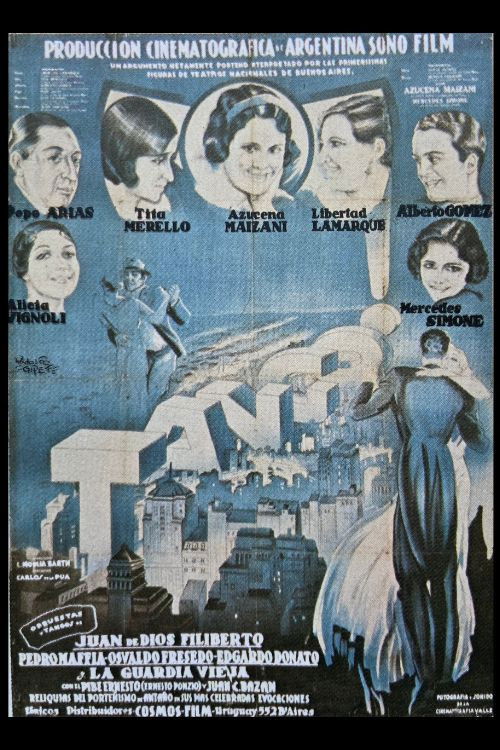
¡Tango! (1933) character relationship network mapped with AI analysis. Explore the connections, alliances, and conflicts between characters.
Characters
Elena
(played by Libertad Lamarque) — protagonist
The female lead representing the classic tango archetype of an innocent slum girl. She is seduced by promises of a glamorous life and abandons her humble lover, ultimately facing the consequences when...
Pepe el bonito
(played by Pepe Arias) — protagonist
A supporting character, likely serving as a comedic foil or loyal companion to the protagonist, balancing the sentimental tone with humor as typical of the genre.
Tita
(played by Tita Merello) — supporting
A supporting cast member contributing to the film's melodramatic and revue structure. Her specific narrative role is not detailed in the synopsis but fits the ensemble format.
Alberto
(played by Alberto Gómez) — supporting
The central protagonist and heartbroken hero. He is a young man abandoned by his girlfriend for an older, wealthier rival, and the narrative follows his subsequent misfortunes. He appears in the final...
Alicia
(played by Alicia Vignoli) — supporting
A supporting character within the film's social or neighborhood settings. Her role supports the stylized narrative and musical segments.
Berretín
(played by Luis Sandrini) — supporting
The older, affluent antagonist figure who embodies the seductive rich man trope from tango songs. He lures Elena away from her past, setting the melodrama in motion.
Mecha
(played by Meneca Taihiada) — supporting
A supporting character appearing in the film's revue-style sequences, contributing to the overall tango cultural atmosphere.
Malandra
(played by Juan Sarcione) — supporting
A supporting character, possibly representing a figure within the tango-themed social circles or underworld depicted in the stylized plot.
Canonical Relationships
Family, romantic, and professional connections based on plot evidence.
Berretín → Malandra
(Professional Colleague) — Both participate in the local entertainment circuit and musical revue performances.
Elena → Alberto
(Romantic Seducer & Victim) — Alberto represents the older rich man who seduces Elena with promises of glamour.
Pepe el bonito → Elena
(Romantic Lovers) — Core romantic couple in the slums, bound by youthful passion before the betrayal.
Story Dynamics
Alliances, conflicts, and narrative interactions that evolve throughout the story.
Elena → Alicia
(Social Friend) — Alicia accompanies Elena in the slum community before her departure for wealth.
Pepe el bonito → Berretín
(Alliance Teammate) — Street companion who stands by Pepe and helps him navigate his misfortunes.
Tita → Mecha
(Social Friend) — Fellow slum resident sharing the community's daily struggles and camaraderie.
Pepe el bonito → Tita
(Social Confidante) — Tita provides emotional support and companionship during Pepe's period of isolation.
Pepe el bonito → Alberto
(Conflict Rival) — Direct love triangle conflict; Alberto steals Elena, leaving Pepe heartbroken.
Story Analysis
A song-driven melodrama combines tango performance with a story of seduction, abandonment, heartbreak, and musical expression.
Plot Progression
A Tango-Built World
— The film establishes a melodramatic format influenced by Carlos Gardel's earlier work. Music is given more space than dialogue, creating a revue-like structure.
Songs Become Narrative
— The plot is derived from tango songs rather than presented as a dialogue-heavy dramatic construction. Their themes introduce seduction, social aspiration, and emotional loss.
Promises And Abandonment
— An innocent slum girl is seduced by a rich man who promises glamour. The song-derived pattern turns toward abandonment when her looks fade.
The Young Man's Heartbreak
— The central situation focuses on a young man whose girlfriend leaves him for an older rich man. His heartbreak and misfortunes become the film's main emotional thread.
The Final Milonga
— Music continues to carry the emotional weight as the narrative approaches its conclusion. The hero finally appears as a compadrito and sings Milonga del 900.