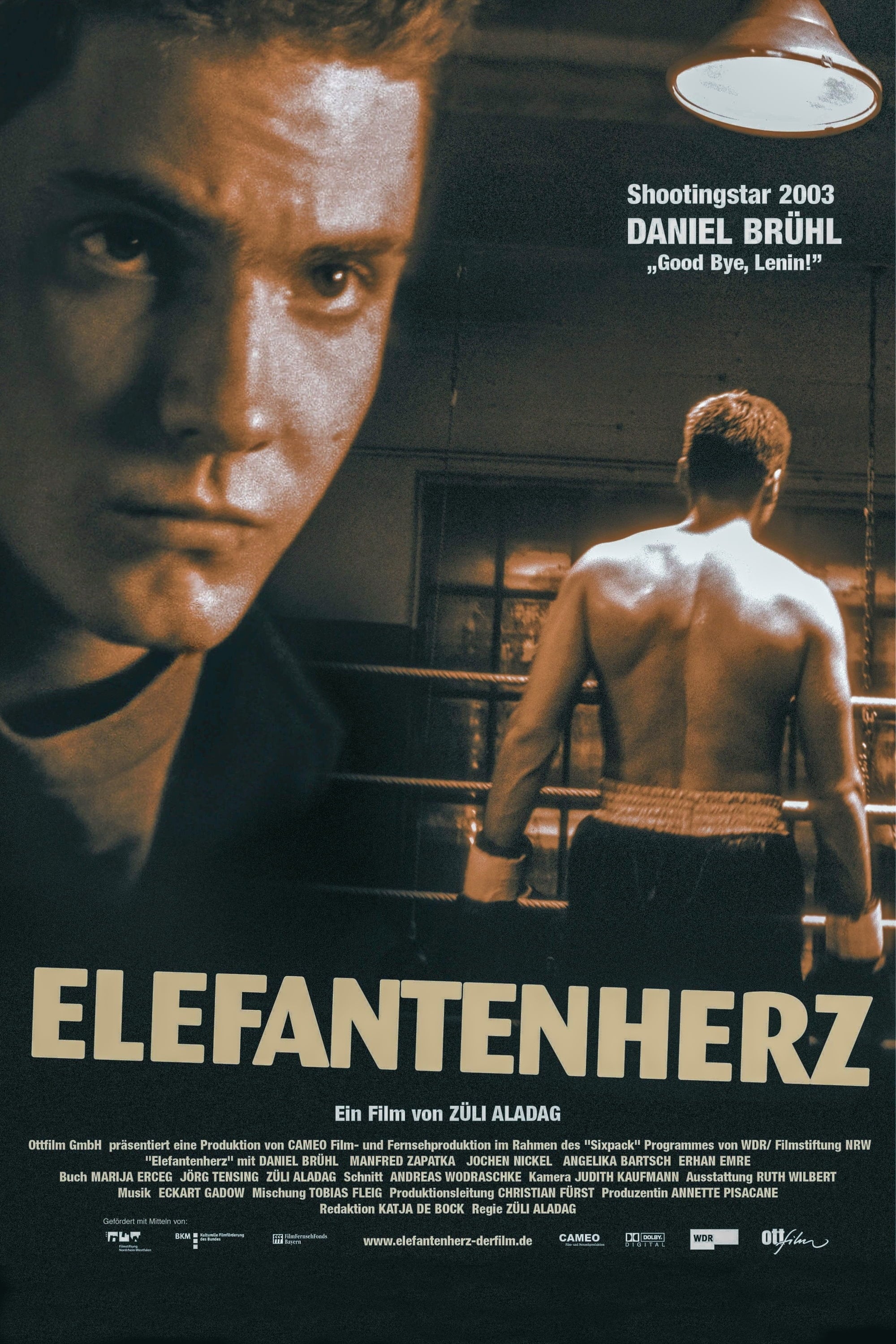
A structural breakdown of the 2002 German drama's creative and release milestones.
Story Structure — 4 Plot Phases
Creative Genesis
The film is introduced as a German drama directed by Züli Aladağ, who also penned the original screenplay in German.
Key Events
Film Introduction — Drama film Elefantenherz introduced as a 2002 German production.
Location: Germany
Director Credit — Züli Aladağ credited as the director and scriptwriter.
Location: Production Studio
Script Development — Original screenplay drafted in German by the director.
Location: Writing Room
Cast & Crew Assembly
Key creative personnel are identified, including lead actors Daniel Brühl, Manfred Zapatka, Jochen Nickel, and Angelika Bartsch.
Key Events
Main Cast Assembly — Daniel Brühl, Manfred Zapatka, Jochen Nickel, and Angelika Bartsch selected for lead roles.
Location: Casting Office
Cinematography Setup — Judith Kaufmann appointed as cinematographer for visual storytelling.
Location: Film Set
Visual & Production Framework
Judith Kaufmann takes on cinematography duties, establishing the visual tone for the German production.
Key Events
Cinematography Setup — Judith Kaufmann appointed as cinematographer for visual storytelling.
Location: Film Set
German Production Context — Film positioned within the landscape of contemporary German cinema.
Location: Germany
Release & Industry Context
The film debuts in 2002, entering a competitive cinematic landscape and drawing comparisons to major franchise releases.
Key Events
Theatrical Release — Elefantenherz officially released to audiences in 2002.
Location: Cinemas
Critical Reception — Film evaluated alongside major 2002 releases like Harry Potter.
Location: Film Industry
Story Breakdown
Director Vision — Züli Aladağ's dual role as writer and director shapes the narrative core.
Script Authorship — Original German screenplay drafted by the director.
Thematic Direction — Drama genre focus established through writing.
Cast Dynamics — Ensemble of established German actors drives the performance.
Lead Actor Selection — Daniel Brühl and Manfred Zapatka cast for central roles.
Supporting Ensemble — Jochen Nickel and Angelika Bartsch complete the core cast.
Visual Craft — Cinematography defines the film's aesthetic and pacing.
Camera Direction — Judith Kaufmann handles visual composition.
Lighting & Tone — Dramatic lighting supports the genre classification.
Production Context — German film industry framework supports the project.
National Funding — Production backed by German cinematic infrastructure.
Language Execution — Full German dialogue and cultural setting.
Release Strategy — 2002 theatrical rollout positions the film in its era.
Theatrical Debut — Wide release across German cinemas.
Market Positioning — Competes alongside major franchise releases.
Critical Reception — Industry evaluation and historical placement.
Genre Classification — Categorized as a drama within German cinema.
Legacy Tracking — Documented in film databases and archives.
Marko Stemper, 19 years old, comes from a disadvantaged background and works as a window cleaner. His father, an alcoholic, tyrannizes the whole family, so Marko's only joy in life is boxing. As he is the most promising talent in his club, Gerd Hermsbach, a local demimonde boss, offers him the opportunity to become a professional. Marko accepts, but has to pay a high price...