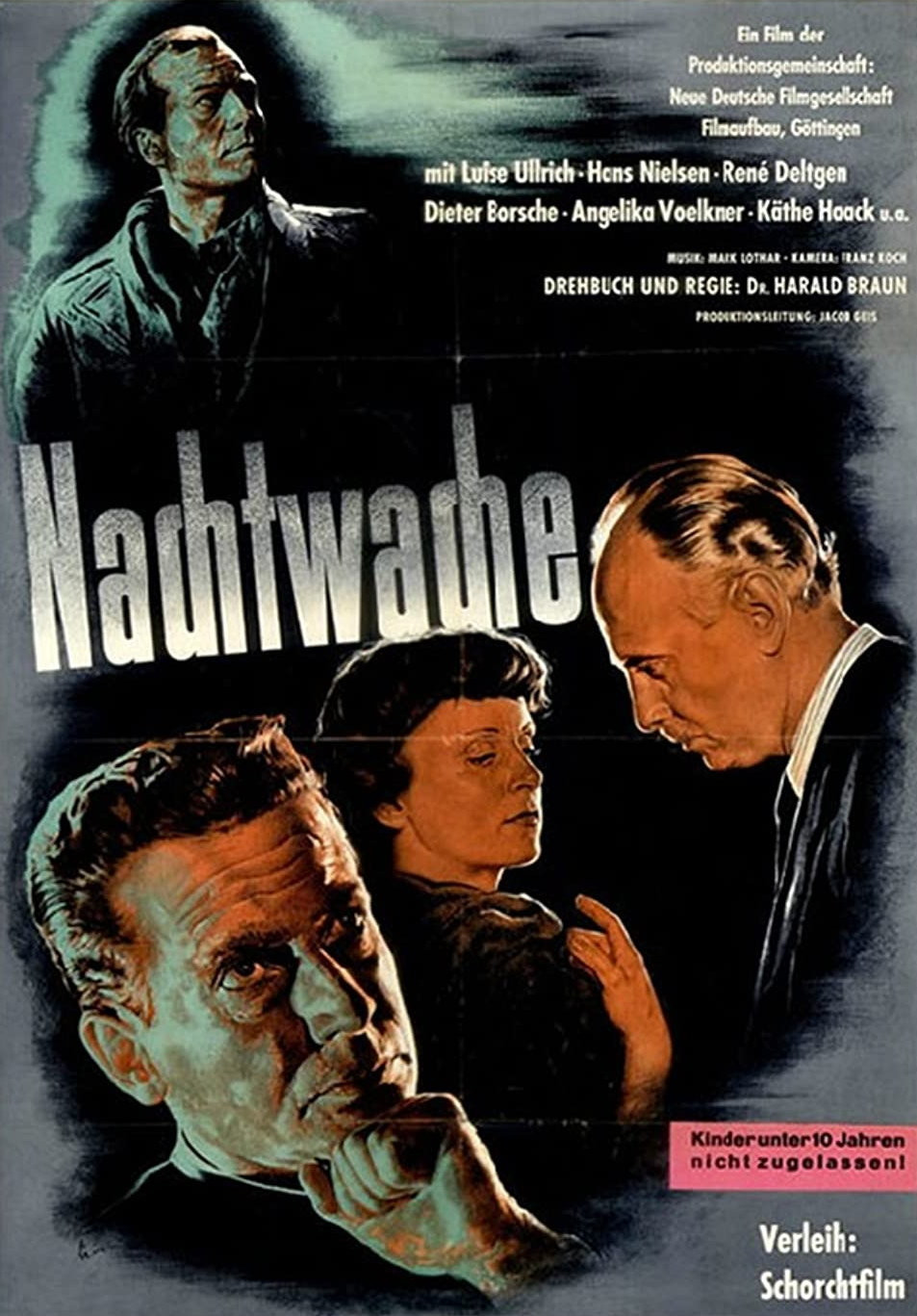
A meta-analysis of the film's historical constraints, thematic departure, and production context based on critical reception.
Story Structure — 4 Plot Phases
Historical Context Setup
The film emerges from the Occupation era, shaped by strict censorship and lingering war guilt. Production constraints force an austere handling of the narrative.
Key Events
Clergy Cooperation Theme — Catholic and Protestant clergy cooperate, marking a major departure Location: Post-War Germany
Thematic Departure
Catholic and Protestant clergy cooperate on screen, marking a significant departure for German audiences. This unity challenges historical divisions and sets the core dramatic tension.
Key Events
Occupation Era Constraints — Film produced under strict censorship and war guilt Location: Germany
Resource Limitations — Lack of resources shapes the austere cinematic handling Location: Production Studio
Production & Career Background
Limited resources and censorship shape the film's aesthetic. The director delivers their most substantial work, while star Neilsen brings experience from diverse cinematic eras.
Key Events
Director's Substantial Work — Identified as the director's most substantial work Location: N/A
Neilsen's Career Context — Star Neilsen known for diverse roles across multiple eras Location: N/A
Audience Impact & Legacy
The clergy cooperation theme resonates deeply with the intended audience. Historical context elevates the viewing experience into a complex and rewarding encounter.
Key Events
Neilsen's Career Context — Star Neilsen known for diverse roles across multiple eras Location: N/A
Audience Impact — Cooperation theme delivers remarkable impact on intended viewers Location: German Theaters
Critical Reception — Viewed as a passable drama with a soapy tendency Location: N/A
Complex Viewing Experience — Historical context invests incidents with greater density Location: N/A
Story Breakdown
Thematic Departure — Clergy cooperation breaks historical religious divisions
Catholic-Protestant Unity — Cross-denominational collaboration on screen
Audience Challenge — Tests viewer expectations of religious norms
Historical Constraints — Occupation era limits creative freedom
Strict Censorship — Government oversight shapes narrative choices
War Guilt Burden — Post-war trauma influences thematic weight
Resource Challenges — Material scarcity dictates production style
Complex Experience — Historical context enriches viewing density
In a hospital, the Protestant pastor Heger and the Catholic chaplain von Imhoff are responsible for pastoral care. Cornelie, a senior doctor, has lost her faith in God after the death of her daughter in the war. One day, Cornelie's former lover and father of her deceased daughter, the actor Gorgas, turns up to visit his friend von Imhoff. During these days, Gorgas invites Heger's ten-year-old daughter to visit him at the fairground, where she has a fatal accident on the swing boat. Hegers seems to be broken by this stroke of fate, but finds support in von Imhoff, who even gives him the strength to stop Gorgas from committing suicide. Cornelie regains her faith and stays with Heger.