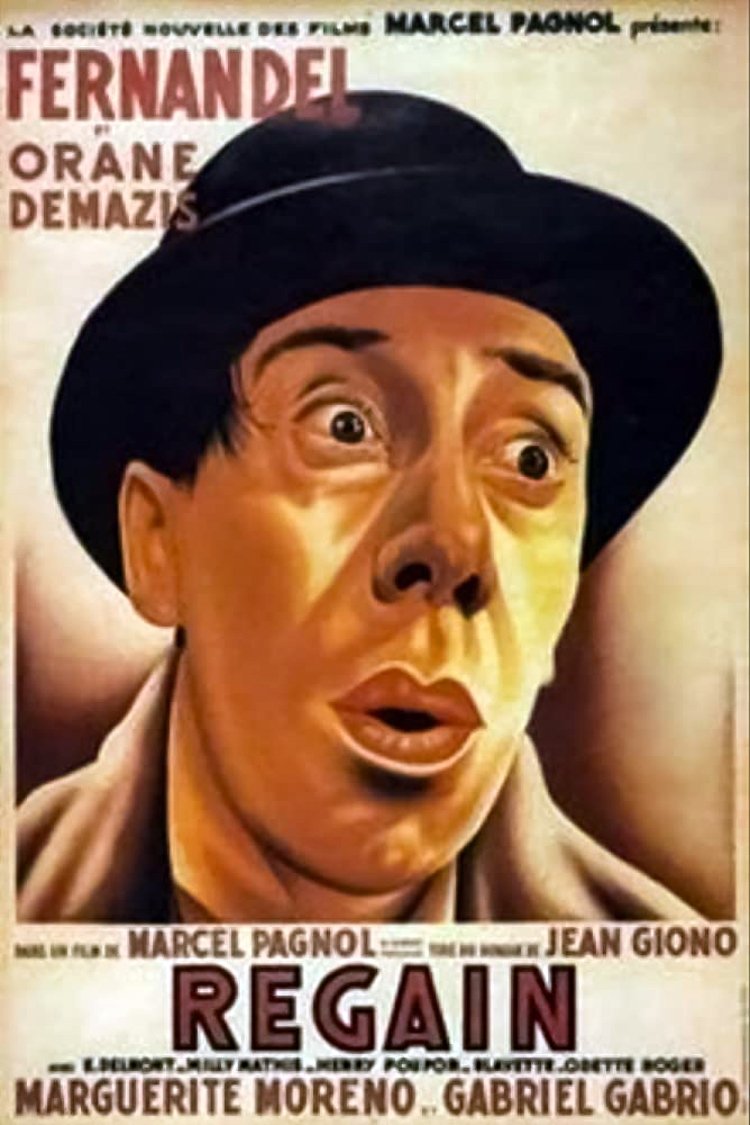
Harvest (1937) character relationship network mapped with AI analysis. Explore the connections, alliances, and conflicts between characters.
Characters
Urbain Gedemus
(played by Fernandel) — protagonist
A traveling knife-grinder who brings Arsule to the village. He acts as an oppressive figure, treating Arsule like a slave and representing the external hardships that contrast with the village's rusti...
Panturle, le paysan d'Aubignane
(played by Gabriel Gabrio) — supporting
The central protagonist, a poacher and farmer in a depopulating 1930s Provence village. He dreams of revitalizing his community, establishing a family, and finding a wife through honest agricultural w...
Mlle Irène alias « Arsule », la compagne d'Urbain
(played by Orane Demazis) — supporting
A young woman traveling with a knife-grinder, initially forced into slave-like conditions out of desperation. She seeks refuge and freedom, ultimately choosing to build a new life with Panturle.
Belline
(played by Milly Mathis) — minor
A minor village resident, part of the small group of elderly locals left behind by the departing youth.
le père Gaubert, forgeron
(played by Édouard Delmont) — minor
The village blacksmith, a supporting community figure who likely provides essential tools and maintenance for the farming life depicted.
Jasmin Gaubert, le fils
(played by Charles Blavette) — minor
The son of the village blacksmith, a minor supporting character with no specific plot actions outlined.
Canonical Relationships
Family, romantic, and professional connections based on plot evidence.
Jasmin Gaubert, le fils → Panturle, le paysan d'Aubignane
(Temporal Departing Generation) — His action reinforces the village's depopulation.
Jasmin comes to the station to arrange his father's departure from Aubignane, reflecting the younger generation's movement away from the village.
Panturle, le paysan d'Aubignane → Mlle Irène alias « Arsule », la compagne d'Urbain
(Romantic Future Partners) — Their relationship represents the possibility of domestic and communal renewal.
The character profile states that Arsule ultimately chooses to build a new life with Panturle, while the plot links her refuge to the village's renewa...
le père Gaubert, forgeron → Panturle, le paysan d'Aubignane
(Professional Craftsman And Client) — The blacksmith's work enables Panturle's agricultural hopes.
Panturle visits the old blacksmith and asks him to make a plow for his newly fertile land.
Belline → le père Gaubert, forgeron
(Family Caregiver) — Belline is part of the household that receives the displaced blacksmith.
The blacksmith is moved to live with Belline and their family after leaving Aubignane.
Jasmin Gaubert, le fils → le père Gaubert, forgeron
(Family Son) — Jasmin is the son responsible for relocating his aging father.
Jasmin Gaubert is identified as the blacksmith's son and asks for time off to take his elderly father away from Aubignane.
Story Dynamics
Alliances, conflicts, and narrative interactions that evolve throughout the story.
Urbain Gedemus → Panturle, le paysan d'Aubignane
(Unknown Intruding Traveler) — His arrival disrupts the village's apparent stillness.
Urbain arrives at Aubignane with Arsule, settles in a house, and becomes the subject of a mistaken murder investigation.
Mlle Irène alias « Arsule », la compagne d'Urbain → Panturle, le paysan d'Aubignane
(Social Potential Newcomer) — Her arrival links personal escape with communal renewal.
Arsule reaches the deserted village, seeks refuge there, and is later associated with the possibility of building a new life in the community.
le père Gaubert, forgeron → Panturle, le paysan d'Aubignane
(Social Rooted Craftsman) — His forge symbolizes the village's lost productive life.
The blacksmith made hundreds of plows in Aubignane and takes his anvil with him because he cannot leave it beside the cold furnace.
Urbain Gedemus → le père Gaubert, forgeron
(Narrative Contrasting Outsider) — They embody opposing forms of displacement and attachment.
Urbain's harsh traveling life is contrasted with the blacksmith's rooted craft and regret over abandoning Aubignane.
Urbain Gedemus → Mlle Irène alias « Arsule », la compagne d'Urbain
(Alliance Traveling Companions) — They share a precarious journey despite their abusive dynamic.
Urbain travels with Arsule, and the plot repeatedly describes them as a couple moving together toward Aubignane.
Story Analysis
A declining village confronts displacement, coercion, and isolation before farming and human connection create a fragile hope of renewal.
Plot Progression
The Village Falls Silent
— Aubignane is shown as nearly abandoned, while Jasmin removes his father from the village. The blacksmith's departure symbolizes the loss of local work and independence.
Strangers In The Ruins
— Urbain and Arsule travel through hunger and fear before reaching the deserted village. Their arrival introduces an unstable relationship into an already fragile community.
The False Murder
— A bloodstain triggers Urbain's arrest, while Arsule secretly asks that her safety remain hidden from him. The discovery that she is alive turns the investigation into a humiliating mistake.
A Plow For Tomorrow
— Panturle finds fertile land and asks the old blacksmith to make a plow. His request reconnects traditional craft with the hope of farming and family life.
Signs Of Return
— Urbain and Arsule reunite, while farming and trade begin to suggest that Aubignane can recover. The ending remains fragile but points toward communal renewal.
Directed by Marcel Pagnol
Harvest (1937) · 6.8/10 · drama, romance
Content sources
Related entry on
Wikidata
(Q3423326), public domain (CC0).
Plot breakdown and analysis on this page are AI-generated from the title's synopsis and metadata.