Story Structure — 4 Plot Phases
Ecclesiastical Appointment & Early Hesitation
The Vatican appoints Oscar Arnulfo Romero as Archbishop, expecting political neutrality amid rising election fraud fears and military suppression. Initially hesitant due to government hostility, Romero maintains a cautious distance from the escalating conflict.
Key Events
-
Election Day Unrest — Military blocks voters and shoots vans to suppress turnout.
Location: San Salvador Streets
-
Vatican Appointment — Romero is elevated to Archbishop with political neutrality expected.
Location: Vatican
-
Initial Hesitation — Romero fears government hostility and initially avoids politics.
Location: San Salvador
-
Death Squad Terror — Military death squads abduct and disappear human rights critics.
Location: Streets
Moral Awakening & Public Defiance
Witnessing systemic murder and state deception forces Romero to abandon neutrality. He begins publicly condemning the government, defies the president-elect by holding Mass in a military barracks, and initiates a political boycott.
Key Events
-
Witnessing Oppression — Romero sees deception and systemic murder, shifting his conscience.
Location: San Salvador
-
Public Condemnation — Romero begins speaking out against the government openly.
Location: Church
-
Ransom Failure — Botched attempt to rescue a pro-government hostage fails.
Location: Negotiation Site
-
Conscience Shift — Romero realizes he cannot support the government in good conscience.
Location: Cathedral
-
Pro-Soviet Ties — Pro-Soviet guerrillas clash with the anti-communist military regime.
Location: Border Regions
Hostage Crises & Personal Loss
A botched ransom attempt and the capture of his friend Father Osuna escalate tensions. Romero is arrested while negotiating, and despite his efforts, Osuna is tortured to death, deepening the personal and political tragedy.
Key Events
-
Osuna Captured — Militant priest Osuna is captured and tortured by state forces.
Location: Prison
-
Osuna Released — Romero successfully secures his friend's release from captivity.
Location: Prison
-
Barracks Mass — Romero defies the regime by holding Mass in a military-occupied church.
Location: Church Barracks
-
Inauguration Boycott — Romero publicly instigates a boycott of the president-elect's inauguration.
Location: Church
Martyrdom & Historical Aftermath
Romero publicly rejects guerrilla violence but is assassinated while consecrating the Eucharist. The film concludes with historical text detailing the civil war's death toll and the enduring struggle for justice.
Key Events
-
Hostage Negotiation — Romero attempts to secure the release of a soldier held by guerrillas.
Location: Guerrilla Camp
-
Romero Arrested — Romero is arrested while intervening in the hostage crisis.
Location: Streets
-
Osuna's Death — Father Osuna dies from torture despite Romero's desperate pleas.
Location: Prison
-
Rejecting Violence — Romero publicly rejects guerrilla violent methods after Osuna's death.
Location: Church
-
Final Consecration — Romero prepares to consecrate the Eucharist during his final Mass.
Location: Altar
-
Assassination — Romero is shot and killed while consecrating the Eucharist.
Location: Church
-
Historical Text — Film displays casualty statistics and the ongoing struggle for justice.
Location: Text Screen
-
Civil War Context — Civil war ends in 1992 with over 75,000 total Salvadorian deaths.
Location: El Salvador
-
Aftermath Reflection — Text notes that many chose not to listen to Romero's disturbing truth.
Location: Text Screen
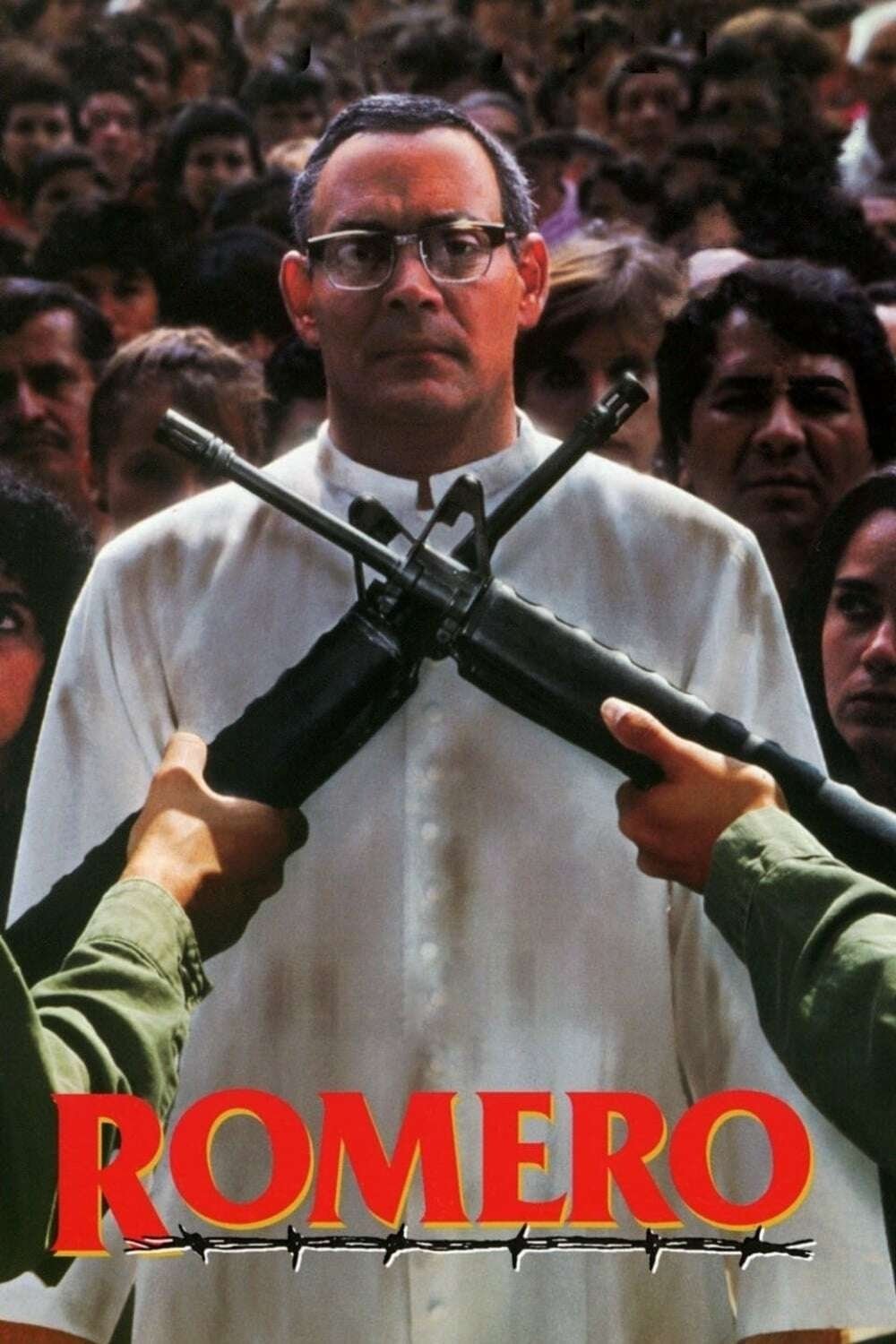
Romero is a compelling and deeply moving look at the life of Archbishop Oscar Romero of El Salvador, who made the ultimate sacrifice in a passionate stand against social injustice and oppression in his county. This film chronicles the transformation of Romero from an apolitical, complacent priest to a committed leader of the Salvadoran people.