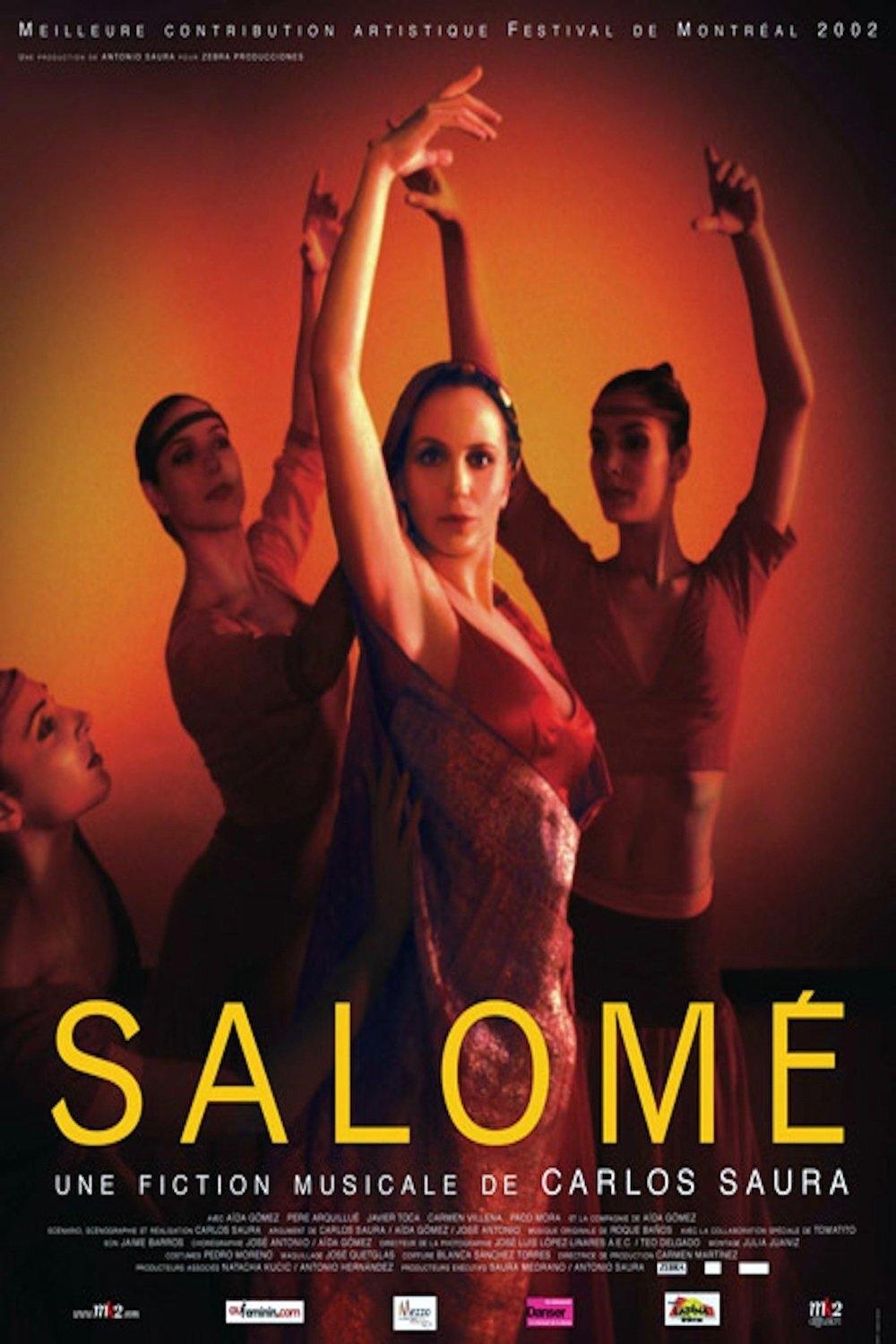
Salomé (2002) character relationship network mapped with AI analysis. Explore the connections, alliances, and conflicts between characters.
Principal dancer portraying Salomé, who overcame scoliosis to become director of the Spanish National ballet company. Her character is the stepdaughter of King Herod, desires the prophet John the Bapt...
The stage director who conceptualizes the flamenco production, summarizes the biblical narrative, and guides the troupe through rehearsals and preparation for the performance.
Principal dancer portraying King Herod Antipas. He is devoted to his stepdaughter Salomé and offers to grant her any wish after watching her dance. He reluctantly orders the execution of John the Bapt...
Principal dancer portraying the prophet, an emigrant from Cuba. He remains steadfast in his holy status and rejects Salomé's advances. His execution and decapitated head serve as the climax of the sta...
Principal dancer portraying Herodias. She has faced parental resistance to her dance career. In the performance, she acts as Salomé's mother, encouraging her to dance for King Herod to fulfill his des...
Family, romantic, and professional connections based on plot evidence.
El Director describes Salomé's attraction to John the Baptist, and the staged story shows her trying to seduce him.
Herodias encourages her daughter Salomé to dance for King Herod.
The staged story states that King Herod is devoted to his stepdaughter Salomé.
El Director prepares the troupe through rehearsals, while Herodias is named as one of the principal dancers.
El Director develops the stage adaptation, and John the Baptist is presented as one of its principal dancers.
El Director prepares the troupe and rehearsals, while King Herod is identified as one of the principal dancers in the production.
El Director prepares the flamenco production, while Salome is presented as its principal dancer and portrays Salomé.
The performance narrative states that King Herod married Herodias, his brother's widow.
Alliances, conflicts, and narrative interactions that evolve throughout the story.
The narrative states that King Herod fears John the Baptist and later fulfills Salomé's demand for John's execution.
A flamenco stage adaptation transforms forbidden desire, rejection, revenge, and grief into a tragic performance.
Directed by Carlos Saura
Salomé (2002) · 6.4/10 · drama, music
Plot analysis generated from content on Wikipedia, licensed under CC BY-SA 4.0.
Related entry on Wikidata (Q5679453), public domain (CC0).